Category: Features

Featured posts

  • Feature- ASUU: Private Varsities Experience Surge in Students Transfer from Public Varsities as Strike Lingers

    Feature- ASUU: Private Varsities Experience Surge in Students Transfer from Public Varsities as Strike Lingers

    by Oluwatosin Ojebisi

    The establishment of public universities in Nigeria can be traced back to the 1940s with the University College, Ibadan was established. From the 1940s to date, we have witnessed the establishment of 170 universities, according to Statista. Of these 170 universities, 79 are private, 43 are federal, and 48 are state universities.

    Both public and private universities have experienced an evolution since the establishment of the first university in Nigeria. However, the major concern is not the number of universities in the country, but the quality of education they provide to learners who seek knowledge. As we continue to experience steady growth in population, year on year, we have also observed a rise in the number of students applying to different universities across the country. However, some public universities have encountered several challenges in accommodating students who are qualified, thereby leaving them to seek admission in private universities or outside the country.

    But the question is, how many Nigerian parents can afford the tuition fees for private universities with the current situation of the economy?

    The situation of the economy is not the only thing biting hard as we speak. The state of education in Nigeria is a cause for enormous worry as it is currently at an all-time low. Among the problems plaguing the educational system are; poor funding, poor infrastructure, incessant strike actions, lack of autonomy, political interference, inadequate academic personnel, low revenue generation, and unstable administration, among others.

    Significantly among the highlighted problems is the incessant strike actions by the Academic Staff Union of Universities (ASUU). It may interest you to know that the union is on its 16th strike since Nigeria’s return to democracy in 1999. The shutting of academic activities for a long time mostly characterised these strike actions. In the last 23 years, the union has embarked on an aggregate of over 4 years of strike action–a sufficient time frame to begin and conclude a degree programme.

    The latest among its strikes began on 14th February 2022, with the union demanding a renegotiation of the 2009 FGN/ASUU Agreement, deployment of the University Transparency and Accountability Solution (UTAS), payment of outstanding arrears of Earned Academic Allowances (EAA), the release of the agreed sum of money for the revitalisation of public universities (Federal and States), addressing proliferation and governance issues in State Universities, settlement of promotion arrears, the release of withheld salaries of academics, and payment of outstanding third-party deductions. Unfortunately, these demands are still yet to be met by the Nigerian government, which has led to several extensions, with the most recent extension being indefinite.

    Notwithstanding, a lot of Nigerian students and parents who are frustrated with the ongoing situation and see no hope have started seeking admission to private universities, as Visa restrictions in some countries have posed a great challenge for some Nigerians.

    It is rather unfortunate that the fate that befell government primary and post-primary institutions will gradually befall tertiary institutions also. Recently, when the Ondo State government through the Chairman of the Universal Basic Education Board, SUBEB, Mr. Victor Olabimtan, declared that it has become an offense for any teacher in its public schools across the state to enrol their children in private schools as a result of the dwindling population of pupils in public primary schools across the state.

    Nigerian parents are striving to ensure that they get the least of quality education for their wards but the lackadaisical attitude of the government over the years have made people gravitate towards private schools and we are heading towards that when it comes to tertiary education. At the end of this industrial action, what will redeem the time wasted by the students? There has been an astronomical rise in the number of students on forced internships in various offices while there are some learning various skills across the country. Unfortunately, there would also be a rise in teenage pregnancies, drug addiction, and other vices.

    In a recent report by Vanguard, Dr. Joshua Suleiman of Babcock University, Ilisan Remo, Ogun State stated that; “It is true we have been receiving requests in huge number, from students in federal and state universities to switch to our university. The requests for transfer cut across many courses.

    “I can tell you for sure that I receive not less than five of such on a daily basis. The phone numbers put on our school’s website are daily jammed with such requests. Some requests come from students in 300 level and even 400 level. But that is not possible. Any student that is past 200 level cannot transfer to another university according to regulations”.

    Babcock isn’t the only university experiencing a surge in student enrolment, private universities like the American University of Nigeria (AUN), Yola, recently declared that it has admitted over 3,000 students into various academic programmes run by the institution.

    As the strike continues to take its toll on both the students and parents, there is a need for the government and relevant stakeholders to rethink and make provisions for the improvement of the education sector rather than ignoring the current situation. We acknowledge that the challenges, peculiarities, and practicalities are extensive, but notwithstanding, it is time for the government to take deliberate steps to build a stable system, save the sector to avoid losing its best brains, and secure the educational heritage of Nigerian public universities.
  • Feature: How Kemi Badenoch can facilitate Trade for Nigeria

    Feature: How Kemi Badenoch can facilitate Trade for Nigeria

    by Ayo Akinfe

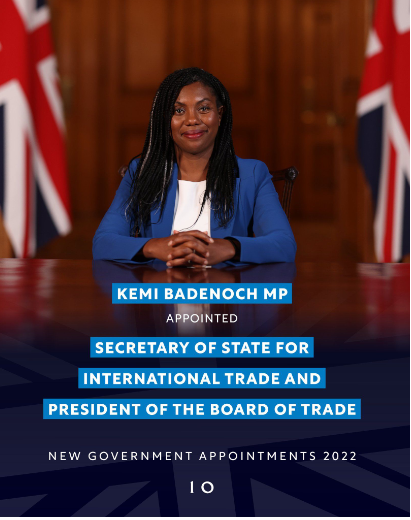
    Now that Kemi Badenoch has been confirmed as international trade secretary and president of the board of trade. I expect the Nigerian government to tell her it is payback time

    [1] Do you know that Nigeria is the only country in the world that had three slave shipping ports? We had Calabar, Lagos and Badagry, all of which shipped human cargo to the New World in mega quantities. It is crystal clear that without Nigeria there simply would never have been the Trans-Atlantic Slave Trade or the global industrial buying and selling of human cargo. It is payback time. Britain owes us big time!

    [2] By my estimation, about one-quarter of all the slaves in the New World came from Nigeria. It is no accident that our shores were called Slave Coast and the word Nigger became a generic term for referring to all negroes. As compensation, Britain should be compelled to build a shipyard in Nigeria

    [3] While every other country along the African Atlantic coast had one slave exporting port, we had three. Also, most other countries only had one slave route but we had two. Yoruba slaves captured in the aftermath of the collapse of the Oyo Empire were marched to Badagry and Lagos, while Igbo slaves rounded up by the Arochukwu Confraternity were marched to Calabar

    [4] By the 18th century, most ships that transported slaves from Calabar were English, with around 85% of these ships being owned by Bristol and Liverpool merchants. In Badagry, the peak period of the slave trade was between 1736 and 1789. As many as 10,000 slaves were believed to have been shipped to the Americas between 1518 and 1880 from Gberefu Island off the coast of Badagry

    [5] In Lagos, the slave trade was largely a Portuguese affair. Do you know that after Brazilian independence in 1822, many Portuguese merchants returned home bringing with them their slaves who upon arrival should have been set free but the king allowed their owners’ special privileges to keep them. Many of these slaves later made their way to Lagos after the abolition of slavery, hence why we still have that Brazilian connection in Lagos today

    [6] A certain lady known as Madame Tinubu was arguably the biggest slave trader in Lagos. According to an extract from her biography, referring to a slave trading deal gone sour in 1853, Madam Tinubu tells another slave trader Domingo Martinez that she would rather drown the slaves (20 of them) than sell them at a discount. Just bear this in mind when you see some of these rich Awori families from Lagos Island. They made their money from the slave trade. Under normal circumstances, we should make them pay reparations

    [7] Now, how come we were exporting record numbers of slaves, ships were always anchored on our shores, we had three shipping ports and the British Navy was always on our coast but alas, we never became a maritime power? We also exported more palm oil than any other nation on earth but never thought about building an infrastructure around this trade? This is blatant stupidity. For starters, why did those Lagos families like the Tinubus, Dosunmus, Kosokos, Gbadamosis, Agoros, Fernandez’s etc not invest the millions they made from the slave trade in ship building?

    [8] I find it perplexing that Nigeria does not have one shipyard today. Our coastline should be like the northeast of England where cities like Newcastle, Middlesboro and Sunderland grew on the back of shipbuilding on the country’s maritime prowess. We also saw this in cities like Liverpool and Bristol. Why Badagry and Calabar are not similar marine cities is beyond me. How come nobody has thought of this since 1960?

    [9] Given the growth of piracy along the African coastline recently, Nigeria should be the continent’s naval policeman with locally manufactured military gunboats patrolling the entire continent. We should be selling vessels to the navies of other African nations too

    [10] Just imagine how we would quadruple the size of the Nigerian economy within five years if we were manufacturing say 10 merchant ships a year at Badagry and Calabar and had say five shipping lines trading across our continent? With a little bit of imagination we can make this nation wealthy overnight. Britain is shipping its asylum seekers to Rwanda. Nigeria now wants her to send us her shipbuilding skills!

  • Feature: Women-related Policy Commitments to be made by Nigerian Presidential Candidates

    Feature: Women-related Policy Commitments to be made by Nigerian Presidential Candidates

    By Ayo Akinfe

    Have you all not noticed that our presidential candidates have very few women around them. It is time for our women’s groups to get them to sign up to policy commitments like this-

    [1] Upon assuming office you will scrap all laws which limit a woman’s right to inherit family property

    [2] Child marriages will become criminalised immediately with a minimum 10 year prison sentence for convicted criminals

    [3] Across Nigeria, 50% women’s representation will be guaranteed in all elected and appointed positions

    [4] Free smear tests will be made available in all states of the federation

    [5] Free childcare will be made available in all 774 local government areas

    [6] Paid maternity leave will become compulsory and statutory

    [7] Free breast cancer treatment will be available in every state capital

    [8] The federal government will provide free maternity centres in every local government area

    [9] Sex with a minor becomes statutory rape carrying a five year prison sentence

    [10] Domestic violence carries a minimum of a five year sentence.

  • Feature: Nigeria needs an Ambitious Tourist Policy

    Feature: Nigeria needs an Ambitious Tourist Policy

    by Ayo Akinfe

    With Dubai restricting the entry of Nigerians into the country, it is time for our presidential candidates led by Atiku who lives there to introduce an ambitious Nigerian tourist policy.

    [1] We must develop the Eyo Festival in Lagos and make it an international tourist magnet. Why should it not compete with London’s Notting Hill Carnival?

    [2] Usman Dan Fodio’s tomb must be turned into an African Mecca. Let us try and make it a pilgrimage site for Muslims that competes with the Kaaba

    [3] Samuel Ajayi Crowther’s tomb should be an equally important tourist site. It should be a Christian pilgrimage site that competes with Bethlehem’s Church of the Nativity

    [4] Badagry’s slave castle. It needs its own railway station, hotels, restaurants, cafes, bars, etc

    [5] Lokoja’s confluence status should be made as attractive a tourist destination as Canada’s Niagara Falls

    [6] Sambisa Forest should be turned into a folklore destination similar to General Custer’s Battle of the Little Big Horn

    [7] One of our northern Durbars should emerge as the primary one. Maybe the Kano one given the economic importance of the city

    [8] I would build an unprecedented one mile long aquarium across the River Niger between Illah in Delta State and Nzam in Anambra State. Make it the worlds first river crossing aquarium with accompanying shopping centres, hotels, cafes and bars

    [9] Obudu Cattle Ranch is already doing its bit but we need to build on this. Why not build a world class casino there and try and make it Africa’s Las Vegas

    [10] For me, Taraba is Nigeria’s most beautiful state. Its Gashaka Wildlife Park is the closest thing we have to the Serengeti. We should cordon off about half of the state and turn it into a haven for lions, elephants, giraffes, hyenas, leopards, impala, zebra, buffalo, warthogs, etc. If properly run, Taraba State alone should generate more revenue for Nigeria than crude oil

  • Stanbic IBTC Bank Nigeria PMI: Private sector activity growth eases in August

    Stanbic IBTC Bank Nigeria PMI: Private sector activity growth eases in August

    Business conditions in Nigeria’s private sector improved modestly midway through the third quarter, but the rate of growth slowed from that seen in July. Softer upticks were recorded in output, new orders and purchasing activity while employment rose at a quicker pace. At the same time, overall input price inflation rose at the second-fastest rate on record while sentiment moderated to the weakest since last November. The headline figure derived from the survey is the Purchasing Managers’ Index™ (PMI®).

    Readings above 50.0 signal an improvement in business conditions on the previous month, while readings below 50.0 show a deterioration. The headline PMI registered at 52.3 in August, down from 53.2 in July, signalling another improvement in business conditions. That said, the rate of growth was weaker than the long-run series average. New orders rose for the twenty-sixth month running in August which panellists linked to general improvements in customer demand. The rate of growth did ease from July, however, amid elevated prices. Higher sales underpinned a second successive uptick in output in the Nigerian private sector.

    The rate of growth was broadly in line with that seen in July but was softer than the long-run series average. Of the four monitored subsectors, three registered output growth. Agriculture topped the rankings, followed by wholesale & retail and services, respectively. Manufacturers, meanwhile, recorded a fall in output levels during August. Despite slowdowns in output and new order growth, firms added to their headcounts at a quicker pace in August. The overall rate of job creation was modest and the highest for three months. Subsequently, firms continued to reduce their backlogs, but the rate of decline was fractional amid difficulties sourcing some key inputs. Advance payments led to quicker supplier delivery times in August.

    In fact, vendor performance improved to the greatest extent in three months. Quicker lead times allowed firms to add to their inventory holdings. Stocks of purchases rose at a slower pace to that seen in July, however. On the price front, higher commodity and transportation expenses exerted upward pressures on purchase costs. At the same time, firms raised their staff wages to motivate their workforces and in light of higher living expenses. The overall rate of input price inflation was the second-fastest in the survey’s history, surpassed only by that seen in November 2021. Looking ahead, firms remained optimistic of output growth in the year ahead, as has been the case since the survey began in January 2014, but the degree of positivity was the weakest for nine months.

  • Feature: Nigeria needs a National Bamboo Plan

    Feature: Nigeria needs a National Bamboo Plan

    by Ayo Akinfe

    Which of our presidential candidates will be audacious enough to launch a National Bamboo Plan that will enable the sector take over from crude oil as Nigeria’s main foreign exchange earner

    [1] Do you know that the bamboo industry in Nigeria is estimated to be worth $22bn a year if we tap into it? One does not need to be a genius to realise that you simply cannot sustain 200m people being wholly dependent on one source of government revenue. At the moment, crude oil exports account for over 90% of government income, fetching the treasury between $25bn and $50bn annually depending on global petroleum prices. Now, do you know that bamboo alone can match that if we exploited the sector?

    [2] In India for instance, their demand for bamboo totals 30m tonnes a year, and this is expected to grow significantly. So, the Indian government decided to establish the National Bamboo Mission, which in turn set up the Cane and Bamboo Technology Centre, whose mission is to develop a bamboo value chain for improved livelihood

    [3] Even in Kenya, the government plans to construct 500,000 housing units using bamboo and other related agricultural waste materials by 2030. It is part of a plan to move away from sub-standard housing such as mud huts

    [4] In China, there are about 10m bamboo farmers and the industry creates over 35m jobs in the construction, housing, furniture and utensils industry. If you want to see innovation, go to China and see how they are using bamboo to manufacture toilet paper and paper towels

    [5] Globally, the bamboo market is said to be worth about $70bn at the moment and this figure is rising as producers keep coming up with innovative ways of using the plant for new things. In these days of eco-friendly buildings, bamboo is used to construct green hotels and even stadia

    [6] Globally, over 1bn persons live in shelters made from bamboo, mostly in Asia. The housing sector is responsible for about one third of global greenhouse gas emissions and consumes some 40% of global resources. Using bamboo in building and construction would eventually minimise this major challenge. In addition, it will also access to housing more affordable. I ask why none of the housing commissioners in any of Nigeria’s 36 states have even tried a pilot project. Maybe they could start with a small housing estate of say 50 homes to see how it will go

    [7] According to the Raw Materials Research and Development Council, Ogun, Oyo, Osun, Ondo, Edo, Delta, Rivers, Akwa-Ibom, Cross-River, Abia, Ebonyi, Enugu, Anambra and Imo states are awash with bamboo. In these states, at least 10% of the natural vegetation is dominated by bamboo with existing clumps showing appreciable gregarious growth that is contiguous over large areas

    [8] For me, the challenge is simple. If you are from any of these main producing states, please pressurise your commissioner for trade and industry to woo processors. He should get both foreign and local investors to open processing plants in the state. In addition, your commissioner for housing should offer building contracts to one or two property developers to build a few housing units made of bamboo for low-income earners

    [9] Over the long term, if we want to make serious revenue from bamboo, we have to tap into the global furniture market. Why is Nigeria not awash with furniture factories making sofas, beds, chairs, tables, cabinets, cupboards, etc out of bamboo?

    [10] Maybe one area we could enjoy real growth is in the sanitary towel and tissue paper industry. Come to think of it, if condoms are manufactured and given away for free, why are sanitary towels not free too? It is not as if a woman has any choice in the matter. What stops Nigeria becoming to first country to give out free sanitary towels to all females between the ages of say 12 and 25? If they are made cheaply from local bamboo, this should be possible. Who is our minister for women’s affairs again?

    Ayo is a London-based journalist who has worked as a magazine and newspaper editor for the last 31 years. He was the founding editor of Nigerian Watch, the UK-based paper for the Nigerian community in the UK.  

    He is the current president of Ondo Union UK, the chair of Uncelebrated Nigerian Awards UK and was the chairman of the Nigerian Centenary Awards UK organising committee. He was recently appointed as the Chairman of the Central Association of Nigerians in the UK

    He is also the author of two books on Nigeria. Fuelling the Delta Fires is an expose which reveals the depth of the challenges in the Niger Delta, while Black Ladder is a narrative about the life of a Nigerian immigrant in the UK. In addition, Ayo is a columnist for several publishing houses in both Nigeria and the UK.

    Ayo has a history degree from the University of Ibadan and post-graduate studies in journalism at the University of Westminster.

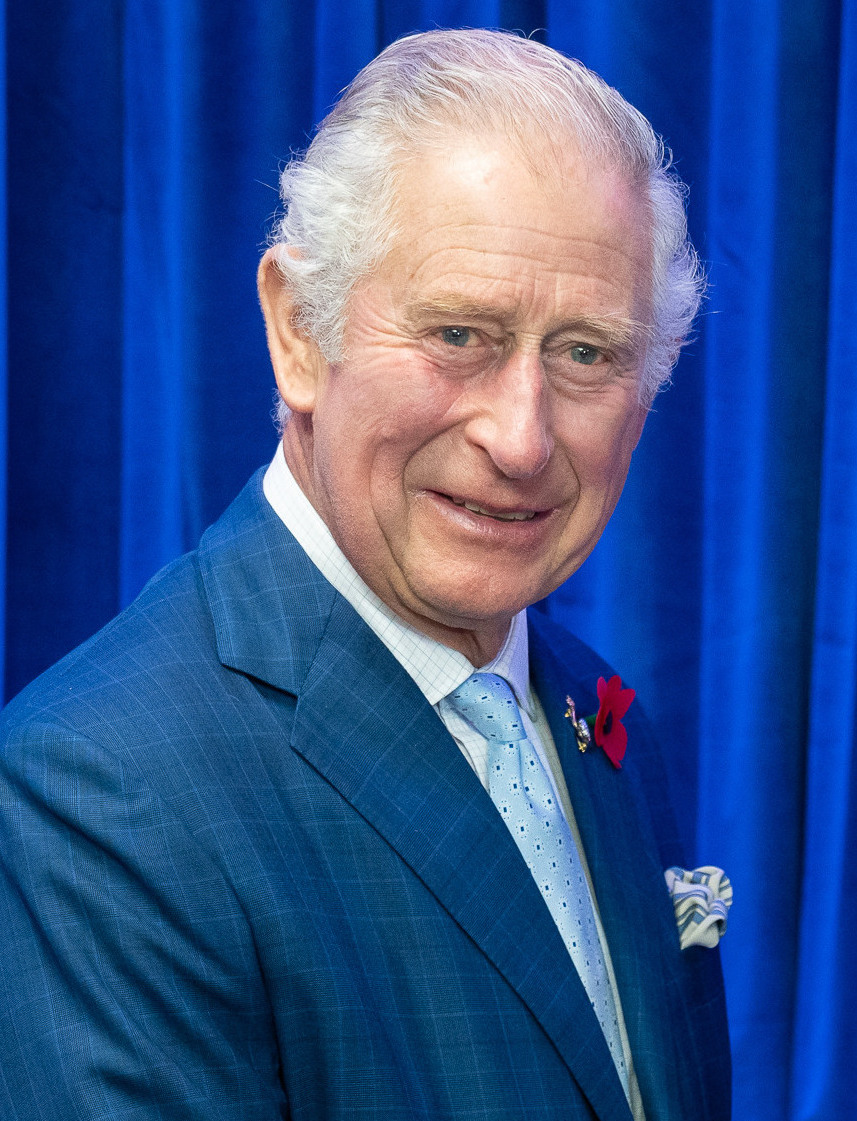
  • Feature: Visit Prince Charles on the Paltry British Investment in Nigeria

    Feature: Visit Prince Charles on the Paltry British Investment in Nigeria

    by Ayo Akinfe

    I would have loved it if all these recent meetings of Nigerian leaders in London had included visiting Prince Charles to press him on the serious matter of inadequate British investment in the Nigerian economy

    [1] A lot of people may not be aware of it but the British royal family has been trying to re-brand itself of late, positioning its members as investment ambassadors

    [2] Lead by the heir to the throne Prince Charles, the British royals not only seek to attract foreign direct investment (FDI) into Britain but they also push British investment into foreign markets. Prince Andrew played this role well in the past and now, Prince William is serving in that capacity too

    [3] Over the last week, the Who is Who in Nigeria have all been in London, holding meeting after meeting. Just imagine if a delegation made up of Obasanjo, Atiku, Tinubu, Obi, Wike, Ortom, Makinde, Fintiri, Ikpeazu, etc, had all visited Clarence House together to make the case for increased British investment in Nigeria

    [4] For starters, Britain is a country well renown for its expertise in several sectors including tunnelling, coal mining and steel production for instance. How many people know that the man known as the world’s father of tunnelling was a British engineer named John Norton-Griffiths? During World War One, he was the man who came up with the idea of digging tunnels beneath the German trenches, allowing the allied powers to get behind their lines and subsequently win the war.

    [5] After the war, Mr. Norton-Griffith was awarded contracts to carry out major engineering projects in Africa and South America. These included work on the first 197km of the Benguela Railway in Angola between 1903 and 1908. His construction firm also took on a contract to carry out the heightening of Egypt’s Aswan Low Dam. His pioneering work was what led to the construction of the London Underground. His methods are still being used to this very day as the UK expands the network to build the Crossrail sector of London Underground. Lagos in particular desperately needs such skills as a city of 12m simply cannot survive without an urban underground network

    [6] In the area of coal mining too, Nigeria could benefit from British expertise. Just imagine what British coal miners could do if taken to Enugu to revive that coal mine

    [7] Do you know that Sheffield was at one time renowned as the European steel capital? Yet, we have the Ajaokuta, Aladja and Katsina steel mills rotting away and we watch on helplessly

    [8] Britain created Nigeria and left her sitting on a keg of gunpowder. As far as I am concerned, the British have to take responsibility for a lot of the problems they created. I cannot believe that our leaders visited London in this number and did not fight for Nigeria

    [9] I believe they should have visited Clarence House and Downing Street and given Britain a minimum annual investment figure Nigeria requires each year

    [10] We have poverty, restlessness and violence in our land because of a lack of industrialisation and job creation. Britain should be obliged to address this by investing at least £1bn a year in Nigeria. Such investment should be tax deductible with the British treasury underwriting such outgoings to encourage it!

  • Agusto & Co estimates a 23% return on equity in 2022 for the Nigerian  Banking Industry

    Agusto & Co estimates a 23% return on equity in 2022 for the Nigerian Banking Industry

    Agusto & Co. Limited, the pan-African credit rating agency and the foremost business information provider has released its 2022 Nigerian Banking Industry Report. The 2022 edition of the annual report provides a comprehensive review of Nigeria’s banking industry and the near-term expectation for the Industry.

    In FY 2022, Agusto & Co projects a decline in the Industry’s net interest spread as the prevailing low yields on government securities, which dominate the Industry’s investment securities, will moderate the impact of the uptick in interest rates. However, we anticipate an increase in the net earnings driven largely by higher trading income and electronic banking fees. Nevertheless, we note that the forthcoming elections and growing budget deficit have forced the FGN to modify several extant tax legislations, which will moderate the banking industry’s profits. Overall, Agusto & Co expects the Industry’s pre-tax return on average equity to increase to 23% (FY 2021: 20.6%) in FY 2022.

    Agusto & Co. notes positively the resilience shown by the Nigerian banking industry in FY 2021, as the Industry’s loan portfolio grew by 21% despite the weak economy and regulatory constraints. Notwithstanding the prevailing global supply constraints, the Russian-Ukraine crisis and insecurity challenges that continue to hamper food and crude oil production in Nigeria, we anticipate a 16.5% year-on-year loan growth in 2022 as more banks now have a better understanding of the macroeconomic headwinds. Traditional sectors such as oil and gas, manufacturing, general commerce and the agricultural sectors are expected to drive the loan growth given the backward integration initiatives of obligors, the intervention activities of the CBN and the import-dependence nature of the Nigerian economy. While the arbitrary cash reserve deductions and foreign exchange illiquidity would remain limitations to the growth of the Industry’s loan portfolio, we note that more banks are now favourably disposed to accessing the differentiated cash reserve requirement (DCRR) window to reduce the value of sterile restricted funds with the CBN. In the near term, we believe the Industry’s asset quality will remain acceptable, with the impaired loan ratio hovering around 6% as at 31 December 2022. In our view, a proactive tightening of controls around loan origination and intensified loan monitoring will moderate the impact of the tough operating climate on the loan portfolio.

    Nigeria’s banking industry remains well capitalised relative to the business risks undertaken and should remain so in the near term. In preparation for the full implementation of Basel III and based on the scheduled growth plans, we expect an increased appetite for perpetual bond issuances which qualify as additional tier 1 capital. We also believe that some banks will raise common equity tier 1 capital that will keep the Industry’s capital adequacy ratio above 17%.

    Our financial prospects for Industry are largely stable in the near term. We adjudge the Industry as resilient and the current trend of banks adopting the holding company structure to diversify into other financial services segments while exercising control over subsidiaries should support the Industry’s profitability. The African Continental Free Trade Area (AfCFTA) is also another vital prospect for Nigerian banks given that financial institutions with a strong capital base and efficient network across the continent are essential for the full implementation of AfCFTA. Overall, Agusto & Co believes the banking industry’s performance will remain moderate in the short to medium term and on this basis, our outlook for the Industry is stable.

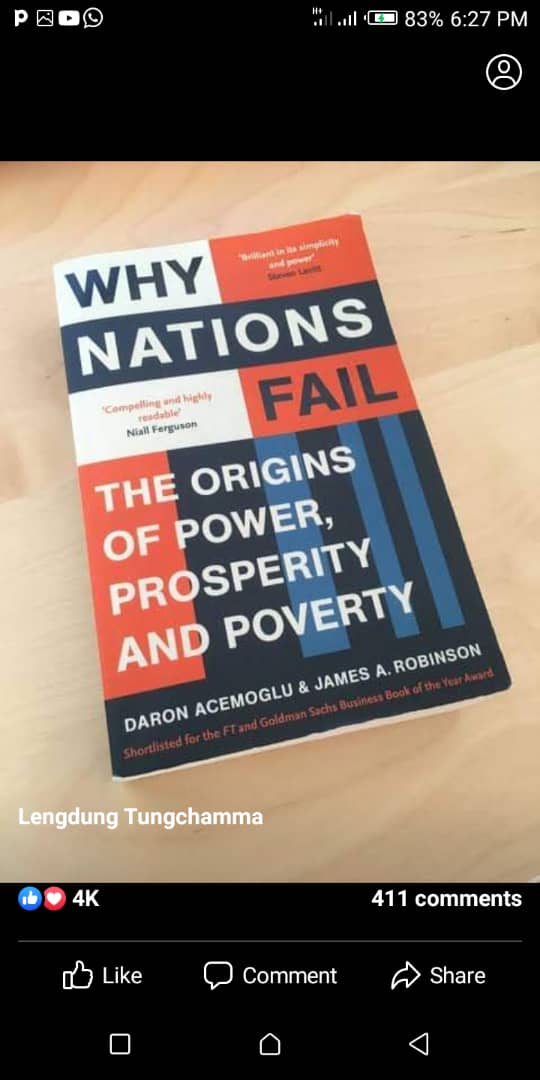
  • Feature: Why Nations Fail

    Feature: Why Nations Fail

    By Lengdung Tungchamma

    This is a very interesting question. Who wouldn’t want to know the answer? For this reason, I bought this book back in 2017 & wanted to know why. Since then it was on my bookshelf until some days ago I picked it up to read. This book is co-authored by Daron Acemoglu, professor of economics at MIT & James Robinson, British Economist.

    So why do nations fail? Why Western Europe, North America & Japan are rich & more prosperous than Sub-Saharan African countries, South American, and South Asian countries? Do nations fail because of their geography? Culture? Ignorance? Or because European people are more intelligent than other people in poor countries? Not at all. Daron Acemoglu doesn’t believe in these theories. If you have read the popular book Guns, Germs & Steel by Jared Diamond that book was premised on geography thesis as the reason for prosperity & poverty of nations. Writers of this book debunked that geography theory as well as mentioned above.

    Daron Acemoglu says If Geography, culture, or climate should have played a role in the poverty & prosperity of nations then there shouldn’t have been any differences between South Korea & North Korea. Both countries are so close, separated by a just border, yet so different. South Korea is rich, prosperous, with better living standards, education & health care. In contrast, North Korea is the opposite of it suffering in poverty & dictatorship.

    So if not geography, culture & ignorance then what is it that leads countries to prosperity or poverty? Or why nations fail then.

    Here comes the core of the book: Inclusive economic & political institutions & Extractive economic & political institutions. Rich, democratic, economically sound & stable countries have inclusive institutions while poor, unstable, absolute, or dictatorial have extractive institutions in place.

    Inclusive institutions involve pluralism, broader political participation & economic opportunities in society for everybody, it allows innovation, entrepreneurship, property rights, rule of law, competition & accountability of leaders. Examples are Western democracies.

    On the other hand, extractive institutions maintain the power of the narrow elite at the expense of society. Absolutist & repressive regimes thrive under this model. The narrow elite maintains economic monopolies to enrich themselves, ordinary people have no private property rights, political participation & economic opportunities. Controlling elite doesn’t like change because their power would be threatened by creative destruction so they resist inclusive institutions to take root & lead to democracy. Examples are European absolute monarchies of the time & Ottoman monarchies, sub-Saharan countries, and south Asian countries of today. European monarchies didn’t become prosperous until they gave up on extractive economic & political institutions in the 18th & 19th centuries & gradually marched towards inclusive institutions & democracy.

    Countries with extractive institutions don’t encourage innovation & change because the narrow elite prefers the status quo it would always resist change. Ottoman empire banned printing press, Austro- Hungarian empire & Russian monarchy resisted railways & industrial Revolution in the fear of lest their power goes away if innovation & industrial Revolution is to be adopted. Because innovation & change overhaul the whole society & brings creative destruction. That’s why they remained behind those who adopted the Industrial Revolution & innovation.

    Writers have researched for 15 years writing this book. Starting from the neolithic revolution about 10 thousand years ago to the 21st century. They found that inclusive economic & political institutions were the key that led to the prosperity of nations not the geography, culture, or ignorance instead institutions that made the difference. As North & South Korea example illustrates. While extractive economic & political institutions led to the absolutism, poverty & collapse of the countries. As of Today’s Sierra Leone a western African country illustrates.

    This book is premised on the institutional history of the world from a political economy’s perspective.

    I found this book very compelling. This is a heavy read in terms of pages but easy & entertaining to read. It is very coherent with compelling arguments. It doesn’t leave any part of the world or history untouched generally. Writers discuss the Roman empire, Maya city-states, Ottoman Empire, African Empires, European Empires & down to the nation-states to prove their point. Highly recommended.

  • Feature: 100 Archimedes Screws needs to be installed by May 2024 in the 774 Local Government in Nigeria

    Feature: 100 Archimedes Screws needs to be installed by May 2024 in the 774 Local Government in Nigeria

    By Ayo Akinfe

    How do we get Tinubu, Atiku and Obi to sign an MoU committing them to compel everyone of our 774 local government areas to install at least 100 Archimedes Screws within one year of them assuming office.

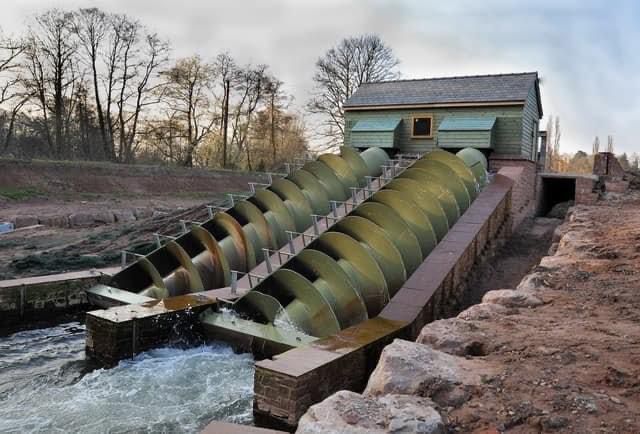
    [1] This is the screw pump, known as the Archimedes Screw. It is the oldest displacement pump in the world and records of its use dates back to Ancient Egypt before the 3rd century BC. Back then, Egyptians used it to lift water from the Nile

    [2] Later introduced from Egypt to Greece, some researchers have postulated that the Archimedes Screw was the device used to irrigate the Hanging Gardens of Babylon, one of the Seven Wonders of the Ancient World

    [3] Archimedes was so fascinated by this screw that he had it fitted to the Roman Emperor’s warship. This was to allow it to bail out water whenever it got hit during battle to avert sinking

    [4] Once water is fed into the top of an Archimedes Screw, it will force the screw to rotate. The rotating shaft can then be used to drive an electric generator. If you had 100 in most local government areas in Nigeria, they would be self-sufficient when it comes to power generation

    [5] At Windsor Castle in the UK, the queen apparently has one fitted, which generates all the power used on the massive estate. Basically, Windsor Castle has nothing to do with the National Grid

    [6] In 2017, the first reverse screw hydropower in the US opened in Meriden, Connecticut. This Meriden project built and operated by New England Hydropower, has a nameplate capacity of 193 kW and a capacity factor of approximately 55% over a 5-year running period

    [7] In the ancient world, the Archimedes Screw was used predominately for the transport of water to irrigation systems and for de-watering mines or other low-lying areas. It was later used for draining land that was underneath the sea in the Netherlands and other places

    [8] Archimedes Screws are widely used in sewage treatment plants today because they cope well with varying rates of flow and with suspended solids. They are cheap, easy to produce, portable, very mobile and light on weight

    [9] This basic contraption can solve so many of our problems in rural Nigeria. It can generate power, dispose of sewage and also irrigate crops. Why was something like this not part of our traditional set-up? This is where the sub-Saharan African fell behind the Egyptians, Romans, Greeks, Phoenicians, etc. It is simple machines like this that will develop our villages

    [10] If every one of our 774 local government areas had at least 10 Archimedes Screws installed on their rivers and streams, they would probably be able to generate enough electricity to power their communities. It appears that on this power issue, local government may be the one to offer the solution

  • Vulnerable Populations are likely to be Disproportionately Impacted by the NIN-SIM call restrictions- Inclusion for All

    Vulnerable Populations are likely to be Disproportionately Impacted by the NIN-SIM call restrictions- Inclusion for All

    …77% of mobile phone owners in the poorest segment of society did not have a NIN and so are more likely to have been impacted directly by the restrictions on mobile phone use. 

    The Inclusion for all Initiative, a multifaceted advocacy programme that seeks to address the barriers that prevent the financial and economic inclusion of Nigeria’s poorest and most vulnerable communities, today releases new data insights on its open source  data visualisation platform  at https://www.inclusion-for-all.org. The data suggests that Nigeria’s most vulnerable groups are the ones most likely to be affected by the decision to impose restrictions on mobile phone users who have not linked their NIN to their SIM.

    On April 4, 2022 – following more than 15 months of deadline extensions, the Nigerian Communications Commission (NCC) directed that mobile operators should restrict outgoing voice calls for subscribers who had not linked their National Identity Number (NIN) to their SIM registration. Estimates suggest that this impacted up to 30 million people, many of whom do not have a NIN and so were unable to reconnect by linking it.

    Inclusion for all (I4All) and wider research suggests that their exclusion from the national identity ecosystem is driven by a range of barriers including lack of source documents such as birth certificates or a legal means of validating their age and personal data, poor access to enrolment centres, and other delimiting factors.

    An initial deep-dive analysis of the 2020 Enhancing Financial Innovation & Access (EFInA) Access to Finance (A2F) survey showed us that the poorer you are, the less likely you are to have a NIN. However, the data indicates that 62% of financially excluded Nigerians owned, or had access to a mobile phone. The data also tells us that this is exacerbated the poorer you get, with 77% of mobile phone users in the poorest percentile of society not enrolled in the national identity system.

    These preliminary findings demonstrate the urgent need for further research to confirm the impact of the restrictions, the demographic profile of those affected and how to mitigate that impact. This will guide recommendations to curb the disproportionate effect of the directive on these populations and inform an approach that is more inclusive. Furthermore, addressing this will help to ensure the Federal Ministry of Communications and Digital Economy and NIMC achieve their digital inclusion objectives.

    Chinasa Collins-Ogbuo, Head of the Inclusion for all initiative said: “Vulnerable populations are increasingly at risk of further exclusion even in the face of well-intentioned decisions by government, our role at Inclusion for all is to make sure these blindspots are identified and curbed early on. The NIN-SIM ban is one of such decisions; putting the groups we care about at risk of further exclusion from the formal economy, as their mobile phones, which is a tool to facilitate their formal inclusion and also a key enabler for their livelihood, is under threat. We know this is not an outcome that aligns with the government’s objectives”.

    To further validate the likely impact of the NIN-SIM call restriction on the marginalised populations, a multi-stakeholder collaboration is necessary to foster cross-functional data sharing that tells us who the vast majority of the subscribers that have been cut-off are and where they live. This data will guide more specific recommendations and action steps necessary to ensure that no one is left behind in the digital ID enrolment process.

  • Feature: Obesity and Nutrition Paradigm

    Feature: Obesity and Nutrition Paradigm

    by Dr. Toyin O. Jenyo

    In the last few weeks, we have been learning about type II diabetes and obesity. We will be concluding this series today and we will be considering Obesity and Nutrition Paradigm.

    Overweight and obesity are considered to be a result of energy imbalance between calories consumed and calories expended. This can be due to excessive consumption of calories by consuming energy-dense food or inadequate expending of calories due to a sedentary lifestyle (WHO, 2012). Possible genetic predisposition to obesity was also considered, for example, the aboriginal population. 

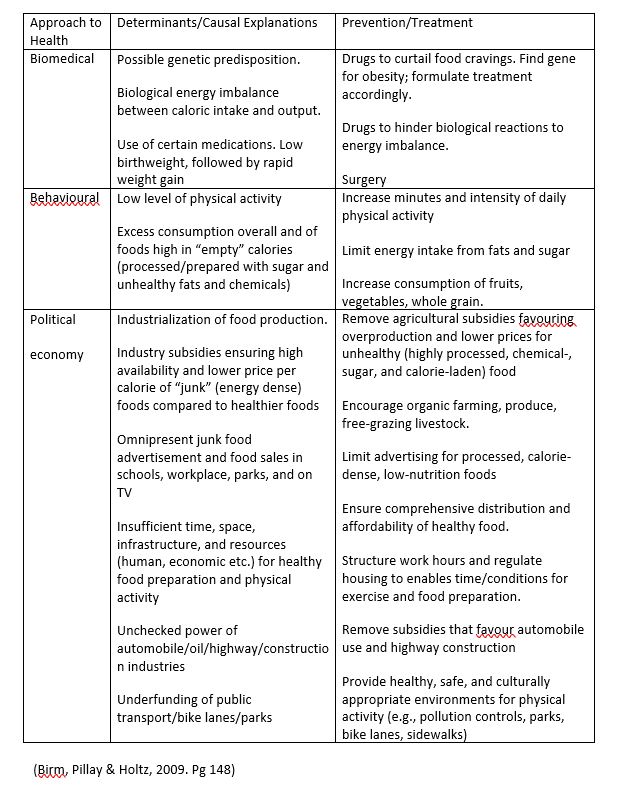
    Approaches to the treatment of obesity can be generally grouped under the three approaches to health, which are (a.) biomedical, (b.) behavioural and (c.) political economy. Biochemical and behavioural approaches tend to be the individual approach that utilizes investment nutrition paradigm principles of intervention. While the political economy approach can be considered as an environmental approach that applies the Human Rights Approach to the Nutrition Paradigm principles of intervention. (Birm, Pillay & Holtz, 2009; Johnson, 2009) The intervention principles of each approach are summarized below-

    Some evidences show that the environmental approach will yield a sustainable desired result. For example, Cheadle et al cited in  Wing et al, 2001, found strong correlations between fat intake and the percent of local grocery store shelf space devoted to low-fat versus regular milk and meat. The superiority of the environmental influence to genetic influence was also proved by the studies that compared Pima Indians, who live in rural Mexico and follow a traditional Pima lifestyle, with Pima Indians living in Arizona and follow a westernized lifestyle (Wing et al., 2001) The challenge here is how to make duty-bearers (or the object of the right) see healthy environment (favourable for a healthy lifestyle) as the right of the claim-holders (or the subject of the right) (Johnson, 2009).

    The Way Forward

    The environmental approach is relatively new in the prevention and treatment of obesity, there will be the need for more research to determine what the key environmental variables are, how best to change them, and the cultural influence on the possible changes. This is necessary because environmental variables are complex in nature.

    The environmental approach is a wide-sector approach that needs input from scientists, public health experts, marketing researchers, and policymakers, therefore, the need to have adequate intervention studies (small focused interventions to examine the effect of specific environmental manipulations on outcomes (i.e., eating behavior, physical activity, and biological endpoints) to present for discussion.

    To achieve sustainable control of obesity among the populace, the environment needs to be made favourable for the community members to make the healthy choice, therefore environmental approach needs to be implemented as a complement to the behavioural approach.

    Conclusion

    With the escalating rate of obesity in our society (its extension to developing countries and its association with poverty) despite behavioural intervention. The environmental approach will be a complement intervention that will empower the community members to make healthy choices on what to eat and physical activity. Thereby reducing the prevalence of obesity and type II diabetes subsequently. 

    Toyin Olawale Jenyo, MBBS(Ilorin) MPH(Liverpool) is a member of Fiji College of General Practice (FCGP). He is a Public Health Physician with vast experience in General Practice in four countries. He has more than 10 years’ experience in treatment and effective application of public health interventions in CDs and NCDs at PHC level. He has also been involved in training and mentorship of medical officers and medical students over the years of practice. He works at Olivet Medical Centre, Nakasi Suva, Fiji Islands

  • Feature: The Next Nigerian President must write to World’s 100 Blue Chip Companies

    Feature: The Next Nigerian President must write to World’s 100 Blue Chip Companies

    by Ayo Akinfe

    Nigeria’s next president must write to the world’s top 100 blue chip companies and investors making it crystal clear – “Awalokan” for investment

    [1] Investment tends to be cyclical as blue chip companies will pick on an economy and then just invest in it heavily. Because money follows money, once the first dozen or so companies invest heavily in a company, everyone joins in as the herd mentality takes over

    [2] If one looks back over the last 30 or so years, economies like Japan, Brazil, Mexico, Malaysia, China, United Arab Emirates, and India have all benefited immensely from this investment surge by blue chip companies. As things stand, the rest of the world is accelerating ahead and leaving Africa behind. It is up to the United Nations to address this anomaly. We need an article passed by the UN Security Council compelling all industrialised nations to invest 5% of their gross domestic product (GDP) in Africa. Failure to do so should be classified as a crime against humanity. Failing to eradicate poverty is a worse crime than using chemical weapons in my opinion

    [3] In the case of China, the surge was simply breathtaking. In cities like Hong Kong and Shanghai, about a dozen skyscrapers were being built daily as the world’s blue chip companies all scrambled to get a piece of the Chinese economic miracle

    [4] Just to give you an example of what was going on, Beijing recently built the Daxing airport which spans 1m square metres, costs £13.5bn and was constructed south of Beijing in just five years. Shaped like a starfish, the new Daxing International Airport has been designed to handle up to 72m passengers a year

    [5] Just so you know that this is indeed something else, a new high-speed railway service has been constructed to serve the airport. It will carry passengers at a speed of 250kmh (155mph) to the centre of Beijing 45 miles away. Then, US aerospace start-up, Hermeus Corporation, said it has obtained finance from seed funders and private investors to develop a plane that will travel at five times the speed of sound, transporting passengers between New York and London in 90 minutes or less. It will no doubt be flying into this Beijing airport

    [6] I want to ask all of you how come Africa as a continent with 55 countries has a gross domestic product (GDP) of $2.19trn, while China has a GDP of $12.24trn. They both have identical populations of about 1.3bn people. Unfortunately, the United Nations (UN) does not see anything immoral about this. The European Union has a GDP of $18.8trn and a population of about 500,000m people. What kind of macabre inequality is this?

    [7] Now with the coronavirus pandemic, a lot of companies have decided to stop planting all their eggs in one basket and are spreading their investments out of China. Among the countries that are benefiting immensely from this are India, Malaysia, South Korea and Vietnam

    [8] What is happening in India, in particular, is scary as industrial parks are opening everywhere on a daily basis. They are even building new industrial cities from scratch just to accommodate these blue chip companies

    [9] Do you know that India is now aiming for annual double-digit GDP growth for the next 10 years. I say, we should stop sitting on the sidelines and watching like mumus. We must tell the rest of the world, Awalokan. We want a piece of the action too. Nigeria accounts for 2.5% of the world’s population. We want 2.5% of all global investment too

    [10] When I look at the thousands of Nigerians who shamelessly troop to Dubai annually to throw flamboyant and expensive parties, I ask myself how come they are not embarrassed about the fact that their nation is not part of this development drive. How come the “See wetin your mate dey do” argument does not apply here? If all the money Nigerians invest in Dubai jamborees was invested in Nigeria, it would have had a significant impact on the economy by now. My people, we should make Awalokan our national slogan from today onwards, just as the South Koreans have theirs which says: “Anything we don’t produce we don’t need.”

  • BIYI BANDELE: Midnight Encounters With The Master

    BIYI BANDELE: Midnight Encounters With The Master

    By Wale Okediran

    July 30 2022. Midnight. I was browsing the internet researching for an essay I was working on when I stumbled on a reference to Biyi Bandele.

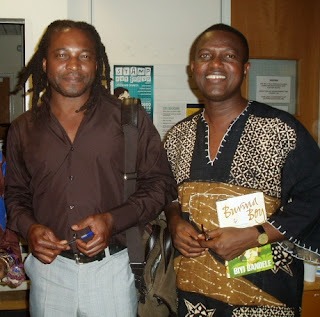
    As I continued reading, a photograph I had taken with the iconic Writer, Dramatist and Filmmaker during the Launch of his book: BURMA BOY in London, UK on 21 June 2007 popped out.

    Fascinated by the discovery, I sent the picture to Biyi Bandele’s facebook as well as to Molara Wood who had invited me to the event when she was based in the UK as a journalist.

    A few days later, Biyi sent me a reply:
    ”Wale Okediran, I remember that reading at Lewisham Library. In the days of my youth! You were there with a friend, I remember”

    August 9 2022. Midnight. While checking my Whatsapp messages, I stumbled on the news of Biyi Bandele’s death. He was said to have died on August 7 2022 in his house in Lagos.

    Apart from being devastated by the terrible news, I was puzzled on how I could have chatted with someone I last met 15 years ago just 8 days to his death.

    Was it a premonition of his forthcoming demise or was it just a farewell message from one writer to another?

    Like many Writers, I read Biyi Bandele before meeting him.

    Born in Kafanchan, Kaduna State, Nigeria, Biyi studied drama in 1987 at the then University of Ife several years after I had also completed my medical education in the same University.

    It was not until 2007, precisely 21 June 2007 at Lewisham Library in London that I finally met the multi talented author during the Launch of his book: BURMA BOY.

    It was our first and only meeting.

    I recollect that I had been invited to the event by the then UK based Journalist, Molara Wood who actually took the picture of Biyi and I.

    As i struggled to piece this short treatise together, I try to remember Biyi as he was in ‘ the days of his youth’ dreadlocked and debonair in his traditional shirt and jeans attire.

    I also recollect his wonderful juxtaposition of literary roles from the print to the stage and on to the screen.

    He may have died young, but he lived a fulfilled life.

    May the good Lord rest him.

    Dr. Okediran is a Medical Doctor and founder of Ebedi Writer Residence. He was former a Member of the House of Representatives, Abuja. He has published five novels, and short stories in several journals in Nigeria and overseas. He is currently the Secretary General of the Pan-African Writers Association (PAWA).

  • Feature: The Negativity of Africa

    Feature: The Negativity of Africa

    by Ayo Akinfe

    One of the biggest problems Africa faces is the negativity of its own people. Those misguided individuals who think Nigeria can never work or who call for its balkanisation are among our worst enemies.

    [1] World War II is one is my favourite historical topics. I just cannot stop marvelling at the ingenuity it brought to the fore. It was during this conflict that the world made the switch from an agrarian economy into an industrial one. As a specie, mankind showed that we can do anything we want if we want to

    [2] Within four years, we were mass-producing battle tanks, fighter planes, submarines, battle ships, bombers, air craft carriers, trucks, etc on an industrial scale. Economies like those of the US and USSR were radically transformed overnight. Planes that would normally take six months to build were rolling off the production line every 10 minutes

    [3] It was also World War II that effectively ended official sexism and misogyny in the workplace. Men had to go to the front, so women became the backbone of the factory. In the Red Army, they went even further as they had female combatants. I cannot believe that some 80 years on we are still debating rape, child brides and the role of women in society

    [4] When it comes to D-Day itself, you have to marvel at how 360,000 men were dropped off in an amphibious landing within 24 hours. Some of the planning that went into this project, including making tanks float on water, producing automated mine sweepers, building bombs that stuck to enemy tanks, laying a crude oil pipeline between Britain and France within 24 hours, building two floating docks, etc, just makes you realise that man can do anything he wants to if he puts his mind to it

    [5] When I see the way the Soviets for instance moved all their factories to the east of the country and built a whole new city called Tankograd to manufacture the famous T-34 tank, I ask myself why are countries like Nigeria struggling to maintain common oil refineries or to run ordinary steel plants

    [6] When I look at how the British built two floating docks and moved them over to France, I ask why the Nigerian Atlantic coastline is not littered with ports. Are we really human? I must confess, the answer to this question can be uncomfortable at times because our behaviour at times does not reflect that of the rest of the human race

    [7] As a continent, Africa is now at a crossroads, so she has to decide on what she wants to do. Thanks to coronavirus, nobody wants primary commodities at the moment and thanks to George Floyd, the rest of the world appears now interested in welcoming the negro into the human race. We have to seize both opportunities with both hands, or the moment will soon be gone

    [8] As a first step, the African Union should call an emergency meeting and pass a resolution banning all its members from exporting primary products in the post-coronavirus era. Every item exported from the African continent from 2023 onwards must have some value added to it. For me, 50% value addition should be the bare minimum

    [9] Africa’s message to the rest of the world should be crystal clear. If you want our petroleum, cocoa, plantain, tin, bauxite, gold, diamonds, rubber, etc, come and open processing plants on our continent. We are no longer prepared to keep being the footmat of the rest of the world

    [10] If all we do is supply the rest of the world with raw materials and then spend the proceeds on owambes, elaborate parties in Dubai, SUVs, private jets, magnificent churches and mosques to boost the egos of millionaire clergymen, foreign health trips, etc, we have no moral right to complain when the rest of humanity regards us as sub-human.