Category: Features

Featured posts

  • Rejecting The Proposed Excise Duty on Telecommunications Services

    By Elvis Eromosele

    Nigeria, Africa’s largest ICT market, accounts for 82 percent of the continent’s telecom subscribers and 29 percent of internet usage. This is according toC. It goes on to say that globally, Nigeria ranks 11th in the absolute number of internet users and 7th in the absolute number of mobile phones.

    The National Bureau of Statistics (NBS), has equally established that the telecommunications sector is the largest segment of the Information and Communications Technology (ICT) sector. Today, Nigeria has one of the largest telecoms markets in Africa, contributing over 17 percent to the countryโ€™s Gross Domestic Product (GDP).ย 

    In just over two decades, the telecommunications sector has seen over $75 billion in investment and a massive 250 million connected lines. This is up from NITELโ€™s 400,000 pre-GSM auction. 

    The impact spreads across every segment of the economy and the lives of Nigerians from all walks of life. It makes other sectors more productive, profitable and proficient. With telecommunications services, Nigerians have improved access to financial services, e-learning is on the rise, and e-Healthcare is a reality. 

    The sector has had to contend with a myriad of challenges from the get-go. Multiple taxations and over-regulations top the list of challenges, with lack of power, vandalism, theft, and Right of Way imbroglio, following close behind. And because the sector depends mainly on imports for its input, the difficulty in accessing foreign exchange remains a big issue.ย 

    The industry continues to thrive to maintain its operations despite these challenges and the directive from the NCC not to increase tariffs even when everything else continues to rise. 

    Now it appears the government is set to throw another spanner in the works with its proposed excise duties on telecommunication services. It is due to begin implementation of the new tax from the next fiscal year.

    The Minister of Finance and Budget, Zainab Shamsuna Ahmed, noted that the proposed tax is a bid to boost the country’s dwindling revenue against piling expenditure by the government, which has resulted in huge deficit spending finance by borrowing In explaining the tax which is under the purview of the Nigeria Customs Service, the government said the NCS would introduce frameworks for recovering duties, taxes, and appropriate fees from transactions conducted over electronic networks.

    Naturally, telecom services users, operators and associations have kicked against the proposed tax. The government, however ,appears to have bought the idea from the Finance Ministry hook, line and sinker with the focus on how excise revenue is expected to grow exponentially because of the introduction of the telecom service charge.ย 

    News reports indicate that there is some dissension; the Minister of Communications and Digital Economy, Isa Pantami, is said to be opposed to the tax. 

    Speaking during the maiden edition of the Nigerian Telecommunications Indigenous Content Expo organised by the Nigeria Office for Developing the indigenous Telecom Sector, Pantami is quoted to have said, โ€œThe Ministry of Communications and Digital Economy is not satisfied with any effort to introduce excise duty on telecommunication services.

    โ€œBeyond making our position known, we will go behind the scenes and go against any policy that will destroy the digital economy sector. We will go to any extent to legitimately and legally defend its interest.โ€

    Nobody appears to be ready to listen to him, however. The government claims it is broke, and with shrinking borrowing channels, it must look elsewhere for funds. 

    While the Budget Office maintains that โ€œRevenue generation remains the major fiscal challenge of the Federal Government,” experts insist that the governmentโ€™s plight is more a failure of expenditure than a generation. 

    Granted the government needs money, but taxing the telecom sector shouldn’t be the only avenue it always seeks to explore. 

    The telecom sector already contributes a lot to the Nigerian economy, and adding more taxes could impact its growth negatively. It will effectively raise tariffs without direct benefits for subscribers or operators.ย 

    Maybe, it is time the government begins to, as Pantami suggests, consider taxing other sectors of the economy that are not contributing to national development

    This new tax increases the tax on telecom services by five percent excise duty and brings the total taxation to 12.5 percent. This is unwelcome, unappreciated and unacceptable. It is tantamount to killing the goose that lays the golden egg.ย 

    We all likely know this tale by Aesop but it bears repeating: “There was once a Countryman who possessed the most wonderful Goose you can imagine, for every day when he visited the nest, the Goose had laid a beautiful, glittering, golden egg.

    The Countryman took the eggs to market and soon began to get rich. But it was not long before he grew impatient with the Goose because she gave him only a single golden egg a day. He was not getting rich fast enough.

    Then one day, after he had finished counting his money, the idea came to him that he could get all the golden eggs at once by killing the Goose and cutting it open. But when the deed was done, not a single golden egg did he find, and his precious Goose was dead.”

    What’s the lesson from the tale? In the quest for more, ensure you do not lose all you already have. 

    This is the lesson that the government now needs to heed. With the sort of ideas coming out from the government it is now indisputable, our government needs fresh blood and even fresher ideas.ย 

    The proposed tax will affect the usage of telecom services, limit broadband adoption and slow down socio-economic activities. Residents in underserved areas will naturally be disproportionately impacted. The tax will do far more harm than good.ย 

    The proposed exercise duty of telecom services is an ill wind that will do no good. 

    Elvis Eromosele, a Corporate Communication professional and public affairs analyst lives in Lagos.

  • Feature: Diabetes and Obesity in Africa

    Feature: Diabetes and Obesity in Africa

    by Dr. Toyin O. Jenyo

    As of 2010, WHO estimated that over 180 million people worldwide have diabetes and predicted that the number will double by 2030 considering the trend of the prevalence of diabetes and factors like unhealthy diet, physical inactivity, harmful use of alcohol and tobacco, and obesity (WHO, 2010). In Africa, the prevalence of diabetes ranges from 1% to 20%. Eighty-five percent of the diabetes cases in Africa are type II diabetes and the prevalence of type II diabetes is 19.3% in Mauritius (WHO,2009). This level of type II diabetes in Africa shows the importance of obesity in this region due to the strong association between type diabetes and obesity. Lifestyle factors that are related to obesity, eating behavior and physical activity are known to play a major role in the prevention and treatment of type II diabetes. (Wing et al, 2001).ย 

    To deal with type II diabetes at the population level, we can consider obesity a good accessible target for intervention programmes aiming to prevent type II diabetes. It is found that for every kilogramme of weight loss, there was a 16% reduction in the risk of having type II diabetes after adjusting for changes in diet and activity. (Hamman et al, 2006).

    Epidemiological studies proved that obesity and a sedentary lifestyle are independent risk factors for diabetes (Bressler et al., 2010). The lowest risk of diabetes occurs in individuals who have a BMI <21, with increasing prevalence seen as obesity levels increase (Colditz et al.,1990). Reducing the prevalence of obesity in our society will not only prevent the occurrence of diabetes but also decreases insulin resistance, reduces physiological defect related to the development of diabetes, and improve glycemic control in diabetic patients reducing the progression of type II diabetes (Maggio & Pi-Sunyer, 1997).

    Other factors that are associated with the incidence of type II diabetes are family history of diabetes (genetic predisposition) age greater than 40 years, diabetes during a previous pregnancy, high blood pressure (greater than or equal to 140/90 mmHg), Impaired glucose tolerance, Low activity level (exercising less than 3 times a week), etc, among all these factors, the largest environmental influence on the prevalence of diabetes in a population is the degree of obesity in that population (Maggio & Pi-Sunyer, 1997; Wing et al., 2001; WHO,2009).

    Having established the influence of obesity on the prevalence of diabetes, the concern is how to cob the escalating rate of obesity in our world, particularly in Africa. Currently, most of the strategies in place for handling the menace of obesity are conducted at the level of individual patients. The intervention is typically as follows: 

    1) Diet

    a) Moderate caloric restriction

    b) Macronutrient alterations

    c) Very Low-Calorie Diets

    2) Behavioral therapy

    3) Exercise

    4) Pharmacological therapy

    5) Bariatric surgery (Maggio & Pi-Sunyer, 1997)

    People are also encouraged to join weight loss programmes. Considering the epidemic level of obesity today, an individualized approach may not be cost-effective and thereby sustainable. Also, this approach is effective in reducing peopleโ€™s weight for a short period. Most people get tired along the way and give up the diet or reduce the time used in exercising. A more global public health approach may be needed to achieve a desirable and sustainable outcome for obesity and type II diabetes eventually. (Maggio & Pi-Sunyer, 1997;ย Wingย et al, 2001).

    In other to achieve this, there will be a need to examine the nutrition paradigm backing the present approach and the possibility of a shift in the nutrition paradigm to accommodate a new approach to solving the problem of obesity and type II diabetes in Africa and globally.

    To be continued, watch this spaceโ€ฆ

    Toyin Olawale Jenyo, MBBS(Ilorin) MPH(Liverpool) is a member of Fiji College of General Practice (FCGP). He is a Public Health Physician with vast experience in General Practice in four countries. He has more than 10 yearsโ€™ experience in treatment and effective application of public health interventions in CDs and NCDs at PHC level. He has also been involved in training and mentorship of medical officers and medical students over the years of practice. He works at Olivet Medical Centre, Nakasi Suva, Fiji Islands

  • Feature: Kedibone Tsiloane drives the Innovative Difference

    Feature: Kedibone Tsiloane drives the Innovative Difference

    Making South Africa sustainable โ€“ one brick at a time

    By Afri-Plastics Challenge Team

    Once again, the stage is set for the celebration of Womenโ€™s Month, marked every 9th of August in remembrance of the more than 20 000 women who marched to the Union Buildings on 9 August 1956 in protest against the extension of Pass Laws to women. This yearโ€™s Womenโ€™s Month will be celebrated under the theme: โ€œGeneration Equality: Realising Womenโ€™s Rights for an Equal Futureโ€. 

    Generation Equality is a global campaign that links South Africa to global efforts to achieve gender equality by 2030. Even before this deadline has been met, a number of women have stood up to be counted, blazing the trail and proving to the world that what is good for the goose is good for the gander.

    One such outstanding woman is 32-year-old, Kedibone Tsiloane, the founder of Ramtsilo Manufacturing and Construction โ€“ a proudly South African, 100% black female-owned sustainable manufacturing and construction company. Ramtsiloโ€™s mission is to do everything possible to provide innovative and sustainable solutions to the global issue of plastic pollution.

    Circular green economy

    The company is currently leading efforts to establish a circular green economy in the plastic recycling and building material industry. They provide waste management and recycling services for plastic waste pollution, which is used in the manufacturing of strong, durable and fire-retardant bricks. Their plastic bricks have created direct and indirect employment for a number of young and old individuals throughout their operations, in both the recycling and the construction industries.

    Tsiloane entered Ramtsilo into Challenge Worksโ€™ first strand of the Afri-Plastics Challenge, themed โ€œAccelerating Growthโ€. Ramtsilo was among the 15 finalists rewarded with a ยฃ100 000 grant for innovative solutions to managing plastic waste after it has been used and discarded (i.e. downstream solutions).

    Growing up in the township

    Tsiloane shares that she was inspired to begin Ramtsilo as a result of growing up in a construction household, where her dad frequently took her on site. Ramtsilo started in 2013 as a construction business; however, they soon realised they were spending too much on building materials, specifically bricks, and made the decision to manually manufacture their own bricks at home. โ€œWe are from the township and upon discussion with one of the waste collectors, we learnt that plastic waste collection in conjunction with the recycling of plastic has created a source of revenue for the unemployed. We began prototyping the use of plastic in brick making in 2016 and in 2017, and once we had a product that we were comfortable with, we took [it] for testing. The results were much better than we expected and we formally went into the market in 2019.โ€

    When asked what motivates her as an innovator and drives her innovations, Tsiloane shared, โ€œWanting to make a lasting difference, creating lasting solutions to everyday problems.โ€

    Being a firm believer in good old persistence, Tsiloane says what separates her from other innovators is that she always sees things through, no matter how difficult they get.

    With sustainability being at the forefront of the Afri-Plastics Challenge, Tsiloane shared the importance of sustainability to her: โ€œIt should be a subject at school โ€ฆ without us thinking in a sustainable manner there will be no โ€˜futureโ€™ for us or the next generation.โ€

    Hopes for change across the construction and manufacturing industry

    Looking to her future, Tsiloane shares that she aspires to create more innovative solutions that change how we live our lives on a daily basis. She goes on further to share her hopes for the manufacturing and construction industry. โ€œI hope the industry will be more receptive to change and innovation. Whilst the traditional ways have worked, we need to get to a point where the industry is open to new ways of doing things.โ€

    She credits her parents for encouraging her to shun gender stereotypes and feel confident enough to venture into any business, given her competency.

    โ€œOne thing my parents made sure we knew growing up is that there isnโ€™t a manโ€™s and a womanโ€™s role. So when we encounter challenges on the basis of gender, we face them head on and remind ourselves that they are not here by chance.โ€ Tsiloane further urges other young women who dream of entering this industry to be bold in pursuit of their dreams.

    As the Rainbow Nation marks Women’s Month, we celebrate achieving women such as Tsiloane, who have demonstrated that with hard work and determination it is possible to achieve generation equality.

  • Bridging Wikipedia Gender Gaps Key in Enhancing Women Empowerment

    Bridging Wikipedia Gender Gaps Key in Enhancing Women Empowerment

    By Wikimedia South Africa Chapter Board Member

    Excitement is palpable as the Republic of South Africa once again rolls out celebrations to mark Womenโ€™s Month. Every year, inย August, the Rainbow Nation marks Women’s Month in commemoration of the more than 20, 000 women who marched to the Union Buildings on 9 August 1956 in protest against the extension of Pass Laws to women. Womenโ€™s Month is a tribute not only to the thousands of women who marched on that day in 1956, but also a tribute to the pioneers of women in this country, who continue to lead efforts to address gender inequality, pay discrimination, and rape and gender-based violence.ย 

    This yearโ€™s event will be celebrated under the theme: โ€œWomenโ€™s Socio-Economic Rights and Empowerment: Building Back Better for Womenโ€™s Improved Resilienceโ€.  The concept of Generation Equality links South Africa to global efforts to achieve gender equality by 2030. Notably, this yearโ€™s event coincides with Wikimania, the annual conference that brings together Wikipedia and Wikimedia project volunteer editors to celebrate free knowledge. Taking place from 11-14 August, the virtual event is anticipated to bring together thousands of attendees to discuss issues at the heart of the free knowledge movement. One of those key issues is the representation of women in both Wikipediaโ€™s content and wider volunteer editor community.

    As Womenโ€™s Month and Wikimania begin this week, there is much to celebrate, but there is also much work still to be done to address gender inequalities.  The Commission for Gender Equality in South Africa highlights that one of the biggest challenges women face in the country is the feminization of poverty[1] that has excluded women from participation in many spheres of society.

    On Wikipedia, women have historically been underrepresented in both knowledge on the site, as well as in its volunteer editor community. Fewer than 20 percent of editors on Wikipedia identify as women, and 18.3 percent of the content in all Wikimedia projects, including biographies on Wikipedia, are about women.

    The issues contributing to this gender gap are likely multi-fold, with reasons cited that women can tend to have less leisure time than men, to an editing culture on Wikipedia that is not always conducive to newcomers, including women. Further, Wikipedia relies on third-party sources to verify information in articles. Women have often been left out of historical narratives and traditional sources of knowledge – making it difficult to write about women on Wikipedia when limited source material exists about them.

    But thankfully, progress is being made. The English Wikipedia article about the 9 August 1956 Womenโ€™s March notes 14 women who were known to be key participants in the protest. Each of them now has their own Wikipedia article detailing their work and lives, including Sophia Williams-De Bruyn, known to be the last living leader of the Womenโ€™s March. The current article about Sophia Williams-De Bruyn was improved thanks to volunteers in Women in Red, a group of volunteers working to address systemic bias and create and improve biographies of women on Wikipedia. Many other initiatives and groups now exist within the wider Wikimedia movement to address these gender gaps, including Wiki Loves Women, an initiative designed to address gender inequalities across the African continent on Wikimedia projects.

    The topic of the gender gap will be a spotlight at this yearโ€™s Wikimania, including a best practices session on how more women can be written into Wikipediaโ€™s history, and a session that highlights the challenges Arabic women face when contributing to Wikipedia, whilst also celebrating their successes to date. Everyone is welcome to join or participate in these sessions which are free to attend.

     This year, South Africa Womenโ€™s Day theme speaks to the need for a reformed society, a society where women and men alike enjoy equal opportunities to participate and engage in day to day socio-economic activities, including in their participation and contribution on platforms such as Wikipedia.

    As South Africa celebrates Womenโ€™s Month and volunteers gather at this yearโ€™s Wikimania conference, there is a need to attract more women readers and contributors by narrowing the Internet skills gap among men and women and bringing in more diverse voices from around the world. For those interested in getting involved in addressing this challenge on Wikipedia, Wikimania is an opportune place to meet volunteers and learn how to get started on the site.


    [1] Challenges facing South Africa in relation to Gender Equality

  • Feature: No Nigerian Presidential Candidate as a Tropical Rainforest Policy

    Feature: No Nigerian Presidential Candidate as a Tropical Rainforest Policy

    by Ayo Akinfe

    When I look at the way the British Tory leadership election is being dominated by economic issues, it is easy to see what is wrong with Nigerian politics. Do any of the Nigerian presidential candidates for instance have a tropical rainforest policy?

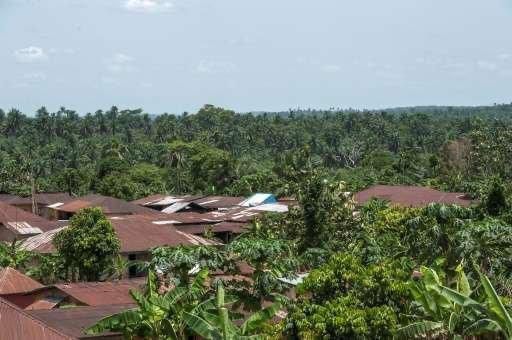
    [1] I was just checking through some data on tropical rainforests and discovered there is not one such registered forest in Nigeria despite it accounting for 7.7% of our landmass. This inspite of the fact that the rainforest forms the majority of the environment in certain states like Ogun, Ondo, Ekiti, Akwa Ibom, Imo, Abia, Cross River, Edo Oyo, Ebonyi and Ekiti

    [2] For anyone who thinks this is not important, do you know that the rainforests are arguably the most vital ecosystems on our planet. Home to over half the worldโ€™s plant and animal species, the largest rainforests absorb vast amounts of carbon dioxide from the atmosphere, helping maintain the balance of the air we breathe, while simultaneously playing a critical role in curbing global warming

    [3] Tropical rainforests once covered 14% of the earthโ€™s land surface but today, this figure is only 6%. Despite this, about 80% of the worldโ€™s documented species can be found in tropical rainforests. Of all tropical rainforests, 57% are found in Latin America with a third in Brazil. Other major tropical rainforests are located in southeast Asia and the Pacific islands (25%) and West Africa (18%)

    [4] Nigeria has about 10,000 square hectares of tropical rain forest. We are losing about 3% of this a year. Lagos State for instance was once all tropical rainforest but alas today, there is barely one tree left standing in the state

    [5] Do you also know that cocoa can only grow in the tropical rainforest as it needs its canopy to thrive? In Australia for instance they tried growing cocoa but it simply did not work

    [6] Checking through the lists, I found several protected rain forests like the Amazon, Congolese, New Guinean, Valdivian, Borneo, Sumatra, etc forests but none in Nigeria. We simply have not ring-fenced our forests or introduced any measures to protect them

    [7] Yam, coffee, cocoa, bananas, mangoes, papaya, macadamia, avocado, and sugarcane all originally came from the tropical rainforest and are still mostly grown on plantations in regions that were formerly primary forest. A responsible people would maintain their forests alongside farming settlements to produce these crops in specially designated areas

    [8] Known as the lungs of the earth, it is the tropical rainforest that allows us to produce oxygen on our planet. A simulation was once performed in which all rainforest in Africa were removed. This simulation showed an increase in atmospheric temperature by 2.5 to 5 degrees Celsius. Just imagine the impact that would have on earth

    [9] Carbon dioxide increases each year as a result of burning fossil fuels and deforestation but the amount it goes up from one year to the next depends on whether tropical forests are absorbing carbon dioxide or releasing it. Basically, the less forest we have, the less oxygen there is on our planet

    [10] Why canโ€™t Nigeria leapfrog the rest of the world here and do something dramatic. Ringfence maybe the rain forest areas of Ondo, Ekiti and Edo states and give it a name like maybe the Oranmiyan Rain Forest and set up a special laboratory there that can produce oxygen. Also, ban logging in this designated zone and then set a cocoa production target of say 5m tonnes. Just imagine the premiums we could charge on producing natural oxygen directly from the tropical rain forest

  • Asiwaju Bola Tinubu and the Geo-Demographic Dimensions of the 2023 Presidential Elections

    Asiwaju Bola Tinubu and the Geo-Demographic Dimensions of the 2023 Presidential Elections

    by Dr. Yemi Adewoyin

    While traveling to Saki, Oyo State, in 1984, my dad’s VW Beetle was stopped at an army checkpoint. The soldier who peeped into the car saw one of my younger brothers and said ‘this one na Buhari tomorrow’. His comment was borne out of my brother’s complexion and chin shape. The comment was a compliment because Buhari was the Head of State at the time, and had come to rescue Nigeria from corrupt politicians and a largely undisciplined population. It was therefore with joy and exciting anticipation that I, like many others, welcomed his candidature for the 2015 presidential elections. It was at a time corruption was glorified and insecurity was pandemic. Both had eroded President Goodluck Jonathan’s goodwill that made him defeat Buhari in 2011.

    A vote for Buhari in 2015 was, therefore; for the Buhari personality, for the party APC, or simply to vote out Jonathan. Asiwaju Bola Ahmed Tinubu (BAT)’s involvement in selling the first two is legendary. Now that Buhari’s cult following (mine inclusive) and toleration have whittled down to their last strands, owing to his failures in two of his three key performance indices – dealing with corruption and insecurity, both of which lie at the heart of Nigeria’s current economic and social crises, extricating himself from literally foisting Buhari on Nigeria is a burden BAT needs to deal with in his quest to be Aso Rock’s next landlord. To get the numbers required, he has smartly and strategically opted for a Muslim-Muslim ticket. The noise against his choice is louder, in decibels, than that under which the walls of Jericho collapsed. Sans sentiments, as will be shown presently, the odds of that choice winning the presidential elections are way higher than any other alternative.

    Since Nigeria’s return to civil rule in 1999, the largely Christian South-East (SE) and South-South (SS) regions have consistently and massively voted the PDP. In fact, the percentage was as high as 92% for the PDP in the 2015 presidential elections. The South-West (SW) is mixed in religion and party support. In 2011, they supported Jonathan (PDP) with 62%; Nuhu Ribadu (ACN) with 30%; and Buhari (CPC) with 7% of their votes. Shekarau’s ANPP got about 1% of their votes. In 2015 and 2019, the APC won marginally (57% & 53%} against the PDP in the region. The equally religion-mixed North-Central (NC) was a PDP base until 2015 when APC won there marginally (58%). APC victory (56%) was repeated in the region in 2019. APP (later ANPP) dominated in the slightly Muslim majority North-East (NE) region. In 2011, they transferred their support to CPC after Buhari left the ANPP for CPC. Since 2011, their support for Buhari (and his parties) has oscillated between 63 and 78 percent. The PDP”s best outing there was 32% for Jonathan in 2011. Alhaji Abubakar Atiku (PDP) scored 28% in the region, which incidentally is his region of origin, in 2019. The core-Muslim North-West (NW) region, is similar to the NE in their voting pattern, save for when one of their own, Late President Umar Musa Yar’Adua, contested as a PDP candidate in 2007. Yar’Adua himself publicly acknowledged that he was rigged-in. In the region in 2015 and 2019, APC had 84% and 72% respectively.

    Further, all evidence points to the fact that the 2023 elections would be fought on two grounds; individual clout and party loyalty. BAT is banking on his clout and records of achievement for support in the SW and would logically pick a running mate who can deliver the numbers recorded for his party in the North. The NC is marginally APC and a Christian from there or the NE may not bring the numbers required for his electoral victory. He took the fight to Atiku by picking a Muslim Kashim Shetima, with his clout and numbers, from Atiku’s home region of NE. If the trends of party loyalty, exemplified by the voting pattern in the NE and NW are anything to go by, one won’t be exaggerating in saying that more than half of BAT’s job enroute Aso Is done.

    Am I writing Alhaji Atiku Abubakar, Mr Peter Obi or Alhaji Rabiu Kwankwaso off? That would be perilous and akin to grossly underestimating one’s opponents. The prevailing circumstances around their candidacy, especially Atiku and Obi, however appear a blessing to the BAT camp. Traditionally, Atiku would have been assured of the massive SE and SS support base of the PDP. Unfortunately, Governor Wike’s body language in Rivers State, currently ranked 4th of 36 states in voting power with her 3.7m voters (24.3% of registered voters in the 12 SS states), suggests that the PDP (Atiku) won’t get the usual 68%-92% in the SS. In the SE, the emergence of Peter Obi of the Labour Party (LP) implies that the region’s 11.5m votes would not be Atiku’s only. If the youth’s of the SE are able to ‘convince’ the elders in the region, who love Atiku and the PDP to be Obidient, the PDP may not score more than 30% of the votes in the SE. Aside the Wike factor in Rivers, Obidients will also decimate PDP’s bulk votes in other SS states. Atiku will therefore need to work extra hard for votes in the SW (BAT’s turf) and the NC.

    Are those fragmentations and the rising profile of Mr Obi sufficient to earn him a pass to the presidency? Realistically at the moment, the answer is no. His largest support base, outside the SE and SS is the youth population. According to INEC’s data, this cohort (18-35) accounts for 53.5% of registered voters for the 2023 elections. Working with an hypothetical equal proportion of youths in the regions, this percentage translates to 7.5m, 6.8m, 12m and 9.8m youth votes in the NC, NE, NW and SW regions respectively. For as long as Obi is promoted as a Christian candidate, he may as well forget the 12m youth votes in the Muslim NW and half of the cohort’s votes in the other religion-mixed NC and NE. He may get slightly more than half in the SW where one of the largest churches supporting him is domiciled, and where BAT’s struggles – with NADECO to reinstate democracy and the freedom the youths now enjoy – are not part of the civic education they learnt in school.

    Based on this projections in real terms, Obi would have won 14.2m, 3.7m, 3.2m, 5.8m (26.9m) youth votes in the SE/SS, NC, NE and SW respectively. Winning only 26.9m (50.2%) of the votes among a cohort that is supposedly Mr Obi’s strongest base won’t be enough. The percentage may be much lower if youth voter apathy and the actual distribution (as against an hypothetical equal proportion) of Nigerian youths are considered. In the latter sense, women in the North have an average total fertility rate (TFR) of seven children while TFR is five in the SE/SS and four in the SW. By implication, there would be more youth voters in the North. We will, however, see pockets of new legislators whose election will derive from being on the ballot as an LP candidate, especially in the migrant-dominated Ojo, Amuwo-Odofin, and Ajeromi-Ifelodun constituencies of Lagos.

    Scientifically from the foregoing, only providence and Asiwaju Bola Ahmed Tinubu himself can stop his own inauguration as the next president of Nigeria. It won’t be an easy ride leading Nigeria with her current socioeconomic challenges and serious ethnic and religious divisions. He should hit the ground running and not procrastinate (the appointment of ministers for instance) like Buhari did. With his antecedents in Lagos and his detailed and rigorous preparation for this office, one can only be hopeful of a quick turnaround. Hopefully, he won’t disappoint. By the way, I am hoping the SE/SS will vote ranking APC lawmakers to ensure the Church has Christians as the numbers 3 & 4 in the political hierarchy to complement the Muslim-Muslim ticket. I am also hoping we will get a legislature that will support BAT’s drive for regional empowerment (and the attendant healthy rivalry). If it’s not too much to ask, Mr Obi should build strong bridges across the age, religious and regional divides if he hopes to succeed Tinubu at some point.

    Dr Yemi Adewoyin can be reached via yemiadewoyin@yahoo.com

  • Feature: As Strong Female Athletes are Emerging, where are the Strong Female Presidential aspirants?

    Feature: As Strong Female Athletes are Emerging, where are the Strong Female Presidential aspirants?

    by Ayo Akinfe

    These Commonwealth Games have got me wondering why Nigeria does not have a female presidential candidate next year

    [1] Are you aware of the fact that all 12 of the gold medals Nigeria won at the Birmingham Commonwealth Games came from our ladies

    [2] In 2014 and 2010, Nigeria won 11 Commonwealth gold medals. This time we topped it with one more but in 2022, the difference is that all the medals were female

    [3] To add icing to the cake, the likes of Goodness Nwachukwu, Rafiatu Lawal, Tobi Amusan and Ese Brume set new Commonwealth records in Birmingham

    [4] I hope this ends misogyny once and for all in Nigeria. Never again should our ladies ever play second fiddle to men

    [5] Given how well women are doing, it is a travesty that Nigeria has not even produced one female governor yet

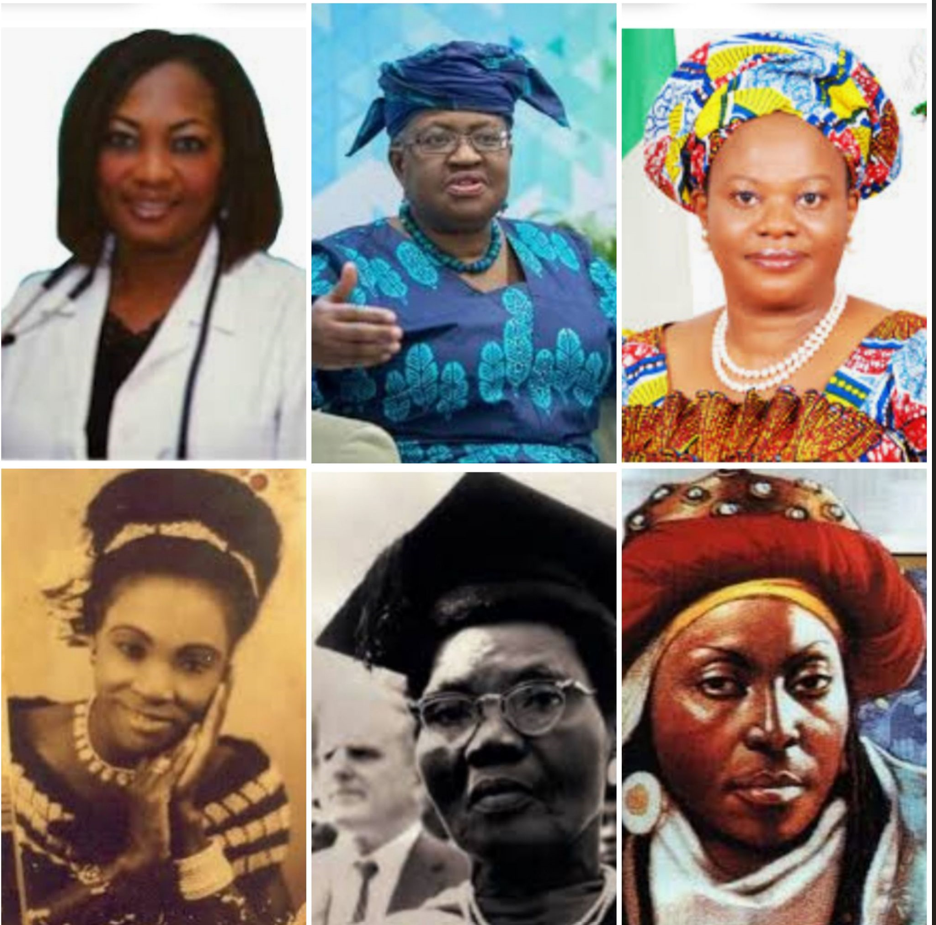
    [6] Is anyone really going to tell me that Tinubu, Atiku and Obi are really going to make better presidents than Ngozi Okonjo-Iweala, Amina Mohammed or Oby Ezekwesili?

    [7] I challenge Bola Tinubu to tell us why he did not consider Pauline Kedem Tallenย as a running mate

    [8] I challenge Atiku Abubakar to tell us why he did not consider Oby Ezekwesili as a running mate

    [9] I challenge Peter Obi to tell us why he did not consider Amina Mohammed as a running mate

    [10] Some archaic people from the Dark Ages will try and argue that our culture prohibits female leaders. I say such people are liars, distortionists, revisionists and fraudulent. Queen Amina of Zazzau nailed that myth, as does every Iyalode that ever lived. We are not Arabs and should not be sheepishly importing their negative culture lock, stock and barrel.

  • Feature: CBA Foundation Empower Underprivileged Widows Through Their Social Enterprise Initiative

    Feature: CBA Foundation Empower Underprivileged Widows Through Their Social Enterprise Initiative

    If indications from two separate but related events that were held few months ago are anything to go by, then one of Nigeriaโ€™s most vulnerable groups may be on the verge of experiencing better times. The events, hosted in two separate states/regions and split by a 20-day interval, held at a time when self-splurging by many young Nigerians was at octane levels, and saw young men and women behind an NGO that caters to the welfare of underprivileged widows and their vulnerable children, passionately putting the widowsโ€™ needs above their wants.

    The NGO, CBA Foundation, its dedicated and passionate staff, some supporters and donors came out in their numbers on two dedicated days to give widows in selected communities in Lagos and Anambra a treat. The Lagos outreach benefitted, in a unique way, widows in six communities in Ibeju-Lekki, namely: Badore, Iberekodo, Museyo, Magbon Alade, Okunola Ilado and Magbon Iga.

    CBA Foundation seized the opportunity of the outreach to launch a new initiative it tagged Social Enterprise Initiative. The Initiative, which is aimed at ensuring the long-term sustainability of all efforts to protect and promote the welfare of widows as well as their children, is to cater to the financial, mental and physical health needs of beneficiaries. The Initiative is designed to provide comprehensive support, including health interventions, skill acquisition, business set-up, food and drinks, clothes and shoes.It also includes general support for all affected widows.

    The Founder/CEO of CBA Foundation, Mrs. Chinwe Bode-Akinwande explained the reason for the Foundationโ€™s shift to the new Initiative: โ€œWe have been doing outreaches and it has been non-stop, but the essence of this Social Enterprise Initiative is for the widows to have something that will sustain them even for a longer period, something that will give them hope, knowing that they have a sustainable source of livelihood and activities that remind them that they need to keep going.โ€

    Continuing, she reveals when the idea for the new initiative began: โ€œWhen the lockdown came during the peak of covid 19, we realised that there was a need again to have something sustainable for these women. With the Social Enterprise Initiative, we identify the skills they need to possess, and what they are passionate about, we also empower them with the necessary training and then set them up with all they need for the business. At the end of the day, they wonโ€™t have to wait daily for the CBA Foundation to give them food or clothing.โ€

    Mrs. Bode-Akinwande noted that the Initiative had been informed by a rigorous analysis of the data in their database, gathered over the years on widows whom they have reached out to and the support they have been receiving from both individual and corporate donors. She said that they had dimensioned all the critical issues from widows with critical needs, where the Foundation needed to begin its interventions, to widows who needed to be set up in business and to several widowsโ€™ children who needed to be reinstated back in school.

    She also remarked that plans were underway at the Foundation to take the skills acquisition training further, beginning with adire-making (tie and dye). She announced that the Foundation would have a line of products that would be its adire pattern, displaying its unique signature. When sold, the net proceeds would be ploughed back into the Foundation as a constant stream of income.

    The idea, the Foundationโ€™s CEO stressed, would inspire the widows who show a keen interest in adire-making as they would be involved and exposed to its value chain which is essential to optimising their execution after their training. So, the adire-making training followed with tutorials on the step-by-step processes involved in it, materials needed and how to identify them, necessary safety precautions, various tie and dye techniques, packaging and distribution and how to make a living from adire-making.

    For widows with impaired vision at the event, they were able to have free consultations with an ophthalmologist, get free eye tests and free reading glasses, courtesy of a partnership between FirstBank and Vision Spring. What followed when beneficiaries had the free reading glasses fitted and could see clearly were scenes similar to ones where people had experienced supernatural miracles. The ecstatic joy was palpable.

    Take 59-year-old, Hassanat Oyewunmi, for example. Tears of joy rolled freely from her eyes as she remarked that her farsightedness challenge had been addressed. She confessed excitedly that she felt โ€œbetter, much better now with the glasses, and I can even see everyone clearly. It is good to know that we are not forgotten.โ€

    Olabode Sadiat, 62, could not contain her joy as she wore her glasses and pointed in the distance, while indicating that she could see everything in her line of sight. She had suffered from a blurry vision that made reading her Bible difficult. โ€œNothing is more painful than not being able to read your Bible,โ€ she had noted following the medical intervention.

    The widows also received food, drinks, clothing and other materials that were distributed during the outreach. They were also given a final charge by Mrs Bode-Akinwande in which she reminded them that they were not alone and could always count on the support of the CBA Foundation.

    In all, 165 widows across the six communities of Ibeju-Lekki benefitted when the Lagos outreach was held. The Anambra outreach, on the other hand, benefitted 75 widows from four communities in the Nnewi area of the state.

    Food items and financial empowerment constituted the bulk of the support CBA Foundation gave the Anambra widows to celebrate the festive season. The Anambra initiative has enjoyed tremendous support from a donor who has been consistent over the past four years. The Founder of the Foundation expressed gratitude to the donor while remarking that the outreach is a source of enablement for the underprivileged widows and their children[KOT1] .

    She continues: โ€œWe give hope to the hopeless. We are driven to support underprivileged widows to have a positive outlook on life despite the problems they experience by losing their loved one, mostly the breadwinner of the family.โ€

    Both Lagos and Anambra outreaches were in some sense CBA Foundationโ€™s way of giving underprivileged widows a โ€œDecember to Rememberโ€ treat annually. Of course, that treat would at best be modest compared to how people who were not in any known vulnerable categories took care of themselves and themselves alone. Even with the best of intentions, CBA Foundation could only work with donations received from donors and supporters at a time of the year when most (young) people were dedicating more resources to the self-splurging that December has come to represent.

    While it may not be in oneโ€™s place to dictate to others how they should spend the money they have worked so hard to make, one cannot help but try to point them to ways they could better dispense their hard-earned cash that would be in their enlightened self-interest. Or what sense is there in spending on oneself so lavishly and ostentatiously as though spending was going to go out of fashion at any moment only to provoke the have-nots to make one the target of their misdirected anger in a society that is largely dysfunctional?

    A similar question should be addressed to the government and public officials: What sense is there in expending huge public resources on projects that have no direct bearing on the welfare of vulnerable groups when it only widens the gap between the haves (including public officials) and have-nots and exacerbates the conditions that heighten security concerns among the haves? At what point will the government, public officials and the privileged class start acting in their enlightened self-interest by committing genuine efforts to narrow the gap between those who have and those who can only wish?

    It is high time public officials and the privileged began building strong coalitions and partnerships with groups and organisations that have been working to protect and support as well as advocate for the vulnerable for years now. They must begin to key into and support the organisationsโ€™ laudable initiatives that show great potential in helping to narrow the frightening gap.

    CBA Foundationโ€™s Social Enterprise Initiative represents one of such laudable initiatives. It is a well-thought-out initiative capable of transforming the existing arrangement for care and support of vulnerable groups such as underprivileged widows and their children and taking their welfare to the next level. The Government, individuals as well as corporate organisations must join hands with the Foundation if the Initiative is to have any chance of success.

    Through its avowed commitment to โ€œtouching lives, giving hope…โ€ not in mere words and empty promises but genuine and visible action on the ground (see ample examples captured on its website: www.cbafoundation.org), CBA Foundation has already demonstrated its readiness to do more with additional support. It has shown that it is living true to its #CareIsAction DNA and can thus be trusted with more support. The Social Enterprise Initiative, therefore, will be delighted to have interested partners (individuals and corporate bodies) to send an email to: cbafoundationng@gmail.com to partner with the Foundation in the drive to take the welfare of underprivileged widows to the next level where its long-term sustainability is guaranteed.


     [KOT1]Maโ€™am, shouldnโ€™t we mention the name of the donor?

  • Feature: Type II Diabetes and Obesity II

    Feature: Type II Diabetes and Obesity II

    By Dr. Toyin O. Jenyo

    Last week, we began a series on Type II Diabetes and Obesity and we have defined terms, such as Body Mass Index (BMI), Overweight, Obesity, and what it can result into. Overweight and obesity are because of energy imbalance between calories consumed and calories spent. This can be due to excessive consumption of calories by consuming energy-dense food or inadequate expending of calories because of a sedentary lifestyle. This week, we will continue the discussion by examining the Nutrition Paradigm in recent times.

    Nutrition Paradigm Today

    Urban Johnson (2009) describes this era (2005- present) as an era of nutrition paradigm crisis whereby there was no mainstream applied nutrition paradigm and mainstream paradigms in the previous era were criticized for their inadequacies to solve nutritional health problems, particularly those the major players in International public health like The World Bank are interested in. Inability to solve nutritional health problems, new scientific discoveries, and/or a changing โ€˜ethical climateโ€™, influenced by changing political and ideological positions, led to a paradigm shift from one era to another. Although the transition period is not clear cut, the approximate period of each era of the nutrition paradigm is highlighted below:

    1. The period before 1950 

    2. The Protein Deficiency Paradigm (1950-1974)

    3. The Multisectoral Nutrition Planning Paradigm (1974-1980)

    4. The National Nutrition Policy Paradigm (1980 โ€“ 1990)   

    5. The Community-Based Nutrition Paradigm (1985-1995)

    6. The Micronutrient Malnutrition Paradigm (1995-2005) 

    7. A period of Paradigm Crisis (2005-present) (Johnson, 2009)

    The two main nutrition paradigms emerging today are (1) The Investment in Nutrition Paradigm, and (2) The Human Rights Approach to Nutrition Paradigm, which can be differentiated using the two conditions to be satisfied in development i.e. the achievement of a desirable outcome, and the establishment of an adequate process to achieve and sustain that outcome. Ideally, every developmental process or intervention should be able to achieve the desired result through a sustainable process. (Johnson, 2009)

    Investment in Nutrition Paradigm emphasized the desirable outcome with little or no attention paid to the sustainability of the intervention that brought about the outcome. It is more of a donorโ€“beneficiary relationship that avoids the sensitive social and political causes and consequences of malnutrition (undernutrition (sub-nutrition) and overnutrition (MNT, 2010))(Johnson, 2009) by reflecting well on the currently dominating free-market economy and ideology. Major players in the global sector favoured this paradigm because it favours the project approach to health provision because the project approach deals with short course projects that can be easily assessed and appreciated globally through figures that can be easily gathered unlike the long-term project being advocated for through a Sector-wide approach that will take a longer time (Birm, Pillay & Holtz, 2009).

    On the other hand, the Human Rights Approach to Nutrition Paradigm emphasized the sustainable process of implementing nutrition intervention that will yield long-term desirable outcomes. It is all about claiming rights to health/nutrition between claim-holders (or the subject of the right) and duty-bearers (or the object of the right). It addresses the inequalities issues in the society that challenge the dominating economic, political, and social causes and consequences of malnutrition. The sector-wide approach to health provision is the favorite of this paradigm, so it is not popular among the major health player globally. (Johnson, 2009).

    To be continued, watch this space

    Toyin Olawale Jenyo, MBBS(Ilorin) MPH(Liverpool) is a member of Fiji College of General Practice (FCGP). He is a Public Health Physician with vast experience in General Practice in four countries. He has more than 10 yearsโ€™ experience in treatment and effective application of public health interventions in CDs and NCDs at PHC level. He has also been involved in training and mentorship of medical officers and medical students over the years of practice. He works at Olivet Medical Centre, Nakasi Suva, Fiji Islands

  • Feature: Food for the Hungry Celebrates World Breastfeeding Week

    Feature: Food for the Hungry Celebrates World Breastfeeding Week

    As the rate of childhood malnutrition rise to staggering levels due to the COVID-19 pandemic and an emerging global food security crisis, there is an effective way to give children a nourishing start to their lives and greater protection from disease and illness. Indeed one of the most significant and beautiful gifts a new mother can give to her child is breastfeeding.

    On this global celebration of World Breastfeeding Week, I want to add my voice to the conversation on the importance of breastfeeding and speak from my heart as a mother and advocate regarding the lifesaving difference of this most personal act.

    This yearโ€™s theme, Step Up for Breastfeeding: Educate and Support, reflects the two primary priorities of FHโ€™s breastfeeding programs, goals which are inextricably linked. Having grown up in Zimbabwe and worked throughout my career to build thriving communities, I know mothers want the best information to give their children a healthy start. And as any mother with a newborn can attest, they need support. What often serves as a barrier to these goals is a lack of information regarding the many benefits of breastfeeding.

    At Food for the Hungry, we employ an innovative model in communities around the world that educates, equips, and mobilizes groups of 10 to 15 mothers to implement breastfeeding best practices in their own lives, and then share their knowledge and support neighbors, family, and friends to do likewise. We call these care groups, and by leveraging social networks within communities, we work to provide resources, build capacity, and create enabling environments for optimal, evidence-based breastfeeding. This includes early initiation of breastfeeding, exclusive breastfeeding for the first six months of life, and continued breastfeeding alongside nutritious complementary foods for up to two years and beyond. Through this care group model, information and knowledge is shared among mothers. I canโ€™t imagine a better way for a new mum to learn than from someone she knows and trusts – another mum in her own community.

    The evidence is clear that breast milk provides optimal nutrition for babies. It contains a perfect blend of essential nutrients, vitamins, and minerals, as well as critical antibodies that strengthen a babyโ€™s immune system and protect against deadly diseases like diarrhea and respiratory infections. It supports optimal physical and cognitive development. And breast milk provides truly personalized nutrition, changing composition through an amazing, dynamic biofeedback process that ensures each babyโ€™s specific needs are met.

    Nursing mothers benefit, too, with breastfeeding shown to significantly reduce the risk of breast and ovarian cancers. Scaling up optimal breastfeeding practices could have an enormous impact, saving the lives of an additional 823,000 children and 20,000 women each year. Still, while progress has been made over the last decade, currently less than half of babies globally are exclusively breastfed for the first six months of life.

    But by partnering with women in communities around the world to share knowledge, address common breastfeeding challenges, and create environments that enable women to meet their breastfeeding goals, we can increase the number of babies who are breastfed. Working in local communities across the globe allows us to walk alongside the most vulnerable as sisters and friends, sharing our experiences and encouraging sustainable solutions.

    We know that breastfeeding is critical in addressing the double burden of malnutrition by increasing food security and reducing inequality. The accessibility and affordability of breastfeeding make it a powerful tool in the fight against injustice and poverty. We also know that breastfeeding, a most personal decision, cannot and does not happen in a vacuum. Support systems must create an enabling environment for optimal breastfeeding, and that is why this yearโ€™s World Breastfeeding Week focuses on strengthening systems to scale up breastfeeding and builds the capacity and adaptability required for resilient individuals, families, and communities.

    May this World Breastfeeding Week be a call to action on behalf of the most vulnerable babies and mothers around the globe. Let us commit to working passionately, creatively, and urgently to strengthen breastfeeding capacity and support mothers and babies everywhere.

    Rudo Kayombo is Chief Operations Officer at Food for the Hungry and currently lives in the Democratic Republic of the Congo. She joined the organization in 2020, bringing more than 20 years of experience working in international development. She and her husband are the proud parents of six children. Food for the Hungry is a Christian humanitarian organization providing life-changing development programs, disaster relief, and advocacy since 1971. Inspired by our belief that every person has intrinsic value and inestimable worth, we seek to end all forms of poverty and combat injustice by going to the hard places and humbly walking with the worldโ€™s most vulnerable people. Through context-specific agriculture, health and nutrition, clean water, education, and disaster risk reduction programs, Food for the Hungry builds resilience and transforms lives. In 2021, we provided emergency and humanitarian relief to 3.1 million people and impacted over 10 million lives through our development programs. With over 99% of staff serving in their country of origin, Food for the Hungry develops sustainable, locally-led solutions to fight poverty and injustice.

  • Feature: Nigeria should be a Global Sports Leader

    Feature: Nigeria should be a Global Sports Leader

    by Ayo Akinfe

    As I watch the Commonwealth Games, I ask myself why Nigeria is not the world number one in the following 10 sports

    [1] Motorcycle racing- In Nigeria, we have turned the motorcycle into something else. Terrorists, kidnappers, armed robbers, etc now use them to terrorize the population. Motorcycles are even used for cross-border rice smuggling and the Okada motorcycle taxi is now the main form of transportation in many parts of Nigeria

    [2] Walking- Nobody can walk like the Nigerian villager. Some women and children have to walk 2km to the stream and back every morning just to fetch water at dawn

    [3] Table tennis- There is a table on every street corner in Nigeria

    [4] Cycling- This one gets to me big time. Every Nigerian villager owns a bicycle and cycles to their farm on a daily basis

    [5] Swimming- There are about 20m Ijaws in Nigeria. We also have 853km of Atlantic coastline

    [6] Triathlon- This is running, swimming and cycling. We do all three

    [7] Long distance running- Physically, the Hausa, Fulani and Kanuri and almost identical to the Luo, Kikuyu, Tigray and Oromo. How come they are excelling at marathons, steeple chase, 10,000 metres, 5,000 metres, etc and we are not?

    [8] Wrestling- Do you all remember that wrestling brought Okonkwo to the fore in Umuofia? In many of our local communities, wrestling is part of the culture

    [9] Judo – Given its similarity to wrestling, we should easily excel in this sport. In Things Fall Apart, Amalinze the Cat was actually more of a judoka because you could not throw him

    [10] Archery – Every maiguard (a local way of referring to a security personnel employed to guard a house in Nigeria, it is a common occurrence in urban centres) is a bow and arrow expert. Why has this not translated to sporting success?

    Our new sports minister will have his work cut out. With a population of 200m, you simply have to be at the top of the sporting ladder!

  • Feature: A standing Ovation For Yeye Oodua, HRH, Erelu Dr. Abiola Dosunmu

    Feature: A standing Ovation For Yeye Oodua, HRH, Erelu Dr. Abiola Dosunmu

    by Oluwatosin Ojebisi

    Many years ago, juju maestro, Chief Sunday Adeniyi Adegeye,  popularly known as King Sunny Ade thrilled Nigerians with a particular track that is more relevant today than it was when aired – Bibiire Kose Fowora. The song was to honour Erelu Abiola Dosunmu, the Erelu Kuti IV of Lagos. The track, “Biibire Kose Fowora” loosely translates as “A noble birth is not something to be bought”. 

    There is no doubt that Erelu Kuti IV of Lagos, Her Royal Highness, Dr. Abiola Dosunmu, a highly distinguished woman, has used the privilege of her birth to impact her community, the Yoruba race and the world at large.ย 

    It is thus not surprising that the revered monarch, the Ooni of Ife, Oba Adeyeye Ogunwusi, Ojaja II recently crowned her Yeye Oodua of the source; Queen Mother of the House of Oduduwa. This is a testament to her contributions to promoting commerce, art, science, sport, culture, education, research, charity, poverty alleviation and other societal causes too numerous to mention.

    In an elaborate ceremony that took place on Friday, July 22, 2022, at the palace of the Ooni in Ile Ife, Osun State in the presence of dignitaries from all walks of life, Erelu Dosunmu was formally decorated with her new title. This was followed by traditional prayers and a cultural festival at the Erelu Abiola Foundation on Lagos Island.ย Subsequently, a thanksgiving mass was held at Our Lady of Perpetual Help Church, Victoria Island, Lagos followed by the grand reception at Harbour Point, Victoria Island, Lagos.

    The events were attended by top figures in Yorubaland including Former President, Olusegun Obasanjo, Otunba Gbenga Daniel former governor of Ogun State, HRM Oba Alayeluwa Saheed Ademola Elegushi amongst others.

    In his remarks, Ooni noted that Erelu is a woman who has done a lot to propagate the Yoruba culture and unify the tribe. It should be noted that by her title, Erelu Dosunmu, is the mother of kings (Oba of Lagos), both past and present. Born a princess, she went on to become the queen mother and queen regent of Lagos. Beyond being a mere title, her position is recognised by the government in the same first-class category of monarchs according to the laws of Lagos State.

    According to the history books, the first Erelu Kuti started the dynasty the men are currently enjoying. She was a queen but gave her crown to her son, and the direct descendants have been reigning for 400 years. A goal-getter from an early age, Erelu Dosunmu is also an advocate for gender parity, women’s development, women empowerment, and leadership. 

    Considering her endowments, many would have expected her to be involved in partisan politics, but she stated that her title bars her from doing that. She said, โ€œI am the Erelu Kuti of Lagos and the title is recognized by the chieftaincy laws of Lagos State. It bars me from active politics. At the time I took up the title, there werenโ€™t many Nigerians, outside the traditional rulers, who were involved in traditional institutions.

    โ€œI saw it as an important platform to make a difference, especially because I had lived a greater part of my life abroad and I had come to appreciate my identity, in terms of my culture and tradition.

    When I became the Erelu, I worked hand-in-hand with the king and we were visible, making interventions in government affairs. If the king could not be somewhere, I would represent him. It was a beautiful collaboration between the government and traditional institutions.โ€

    Speaking on the significance of the Erelu title, she said, โ€œBeing Erelu is not just about being beautiful, for the last 20 years of the late King of Lagos, Oba Adeyinka Oyekan II, I was one of his closest confidantes. It is a three-in-one titleโ€• Erelu Kuti, Erelu of Lagos, and Erelu Oba. The Ereluโ€™s duties include advising the king on social matters, advising him on people deserving of titles, making sure things run well at the palace, and all those are in the gazette of the chieftaincy laws of the state.โ€

    It should be recalled that Erelu Kuti was a member of the first Earth Summit held in Rio de Janeiro, Brazil, from June 3 to 14, 1992. She was also a part of the negotiations for foreign debt cancellation for Nigeria during President Olusegun Obasanjoโ€™s administration and Chairman of the Lagos State Tree Planting and Beautification Committee. Other worthy  of note affiliations include the Institute of International affairs as well as representing Nigeria at environmental summits.

    It is also to her credit that she revolutionised the traditional Aso Oke sector to become the multi-million dollar industry it is today. Many years ago, she established a shop on Bond Street, London, United Kingdom to promote aso-oke. The renowned fashion designer, Adebayo Jones, worked with her as an intern then. So good was she in showcasing aso-oke that even people from the Middle East were excited about the traditional fabrics.

    A woman of many parts, she also has a title from the Royal Kingdom of Belgium. Speaking on how the title came about, she once said, โ€œWhen Lagos State was the capital of the country, the diplomatic community was usually welcomed by the palace of the Oba of Lagos. It was my portfolio to receive ambassadors, entertain them, show them around, and provide whatever they needed in terms of enlightenment. Those activities got me involved with the diplomatic community.โ€

    Over the years, Erelu Dosunmu has interacted with presidents and high-ranking officials from different countries. For those who haven’t followed her life religiously, little is said about her humanitarian strides. One of the many high points of ERAF was the rehabilitation of street children and school dropouts. An avowed philanthropist, she has often spoken about her passion for helping the underprivileged. It was to further this objective that she established the Erelu Abiola Foundation, which has contributed positively to the lives of many members of society.

    When Erelu Dosunmu smiles, the world smiles along with her, not because everything is perfect but because in her, they see a woman who has over the years rebirthed herself into what she is today.

    Oluwatosin Ojebisi, contributed this piece from Lagos

  • Feature: How to sell with SquadPOS

    Feature: How to sell with SquadPOS

    As the world moves toward more mobile POS and contactless payment options, we saw the need to create an affordable and reliable payment solution that all kinds of businesses can take advantage of โ€” whether micro, small or large. Therefore, SquadPOS was created โ€” to make receiving payments quicker, easier, and more reliable, so that you can get paid on the go!

    Letโ€™s look at how it works and its benefits to businesses like yours.

    What is SquadPOS?

    SquadPOS is a new technology that allows business owners to turn their NFC-enabled android phones into POS terminals. This means that with SquadPOS, you can now accept cashless payments with your mobile devices for your business, with no additional hardware such as physical POS devices required. Essentially, businesses can now avoid the hassles of managing cash payments, long checkout queues, and incurred costs on POS hardware. Simplified payments for everyone!

    As an application, SquadPOS is currently supported on Pixel, Nokia, Huawei, and Samsung devices, and is compatible with NFC-enabled Visa and Mastercard cards. Download on Google Play Storeย hereย to get started.

    What can your business do with SquadPOS?

    ยท You can manage payments, transaction histories, and e-receipts on the app.

    ยท Receive payments in-store or anywhere.

    ยท Never lose track of a transaction with our robust transaction history feature.

    ยท Export your transactions for easy auditing, reconciliation, and reporting.

    ยท Share e-receipts with customers for every transaction at no cost.

    What are the benefits of using SquadPOS over POS machines?

    ยท No additional hardware or maintenance costs are required! With SquadPOS, your NFC-enabled mobile device is all you need.

    ยท Use SquadPOS on more than one device: You can create multiple terminals on different devices and in different locations.

    ยท See all your transactions in real-time: SquadPOS automatically synchronizes the payments from the various devices into one comprehensive dashboard, so you can track, reconcile, and manage your revenue at a go!

    ยท Never miss a sale: Now, you can accept card payments from your customers even if you donโ€™t have a hardware POS terminal from a bank.

    Who can use SquadPOS?

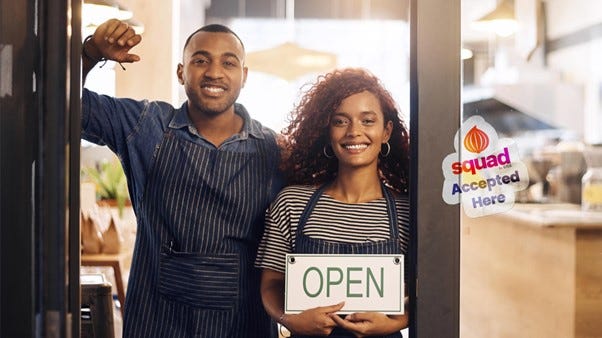
    SquadPOS is perfectly suited for any merchant who can receive payments with a card โ€” be it a restaurant, boutique, hair salon, delivery service, cab driver, anyone! Itโ€™s easy and convenient to receive payments on the go with your SquadPOS in your pocket.

    Ready to start accepting payments with SquadPOS? Here are the steps you need to take:

    ยท Get started:

    ยท Download SquadPOS from Google Play Store on your NFC-enabled device.

    ยท Launch the app! New and existing Squad users can click the sign-up button.

    ยท Provide your registered email and the system will authenticate you.

    ยท Complete the steps shown and your terminal will be created within 48hours.

    ยท Start accepting payments:

    ยท Launch the app and click on the login button.

    ยท Provide your registered email address and authenticate.

    ยท Create your password, then continue.

    ยท Select the menu and the Purchase icon.

    ยท Enter the transaction amount.

    ยท Tap your customerโ€™s NFC-enabled card behind your device.

    ยท Payment successful! Itโ€™s that easy.

    ยท Share the receipt with the customer via email or SMS

    With SquadPOS, you can receive card payments with just one tap, allowing you to sell to more customers faster than ever. Itโ€™s that easy! Now, you can evolve and speed up your customersโ€™ in-store payment experiences with SquadPOS to make them satisfied with your service and keep them coming back.

    Download SquadPOS on Google Play Store and get started today. For additional information, visit www.squadco.com, or contact our support team at help@squadco.com.

  • Feature- Introducing Squad: The Complete Payments Solution for your Business

    Feature- Introducing Squad: The Complete Payments Solution for your Business

    Payments: They are the core of every business. And so, in an era where digital has won over brick and mortar, it became imperative to create requisite payment solutions that can offer businesses of today speed, reliability, and convenience, so that they never miss a sale.

    Meet Squad: an all-in-one payments tool to help your business grow.

    Meet Squad: an all-in-one payments tool to help your business grow.

    Driven by our in-depth knowledge of digital payments in Africa and the collective years of expertise of our Parent Company, GTCO, in the payments landscape, we are proud to launch Squad, a framework of payment solutions to enable merchants to make and receive payments from anywhere in the world. At Squad, our vision and mission are rooted in empowering African merchants through payments โ€” to create an Africa where every payment is digital.

    What is Squad?

    Squad is a complete payments solution for businesses in Africa, made to support business owners with the tools required to thrive in the digital economy. The goal is to ensure that businesses never miss a sale and grow and expand beyond their current reach.

    Squad was created to transform payment processing, accounting and reconciliation, financial management and e-commerce. Think of it as an integrated suite of payment technologies that merge different facets of your business into one centralized function!

    Why Squad?

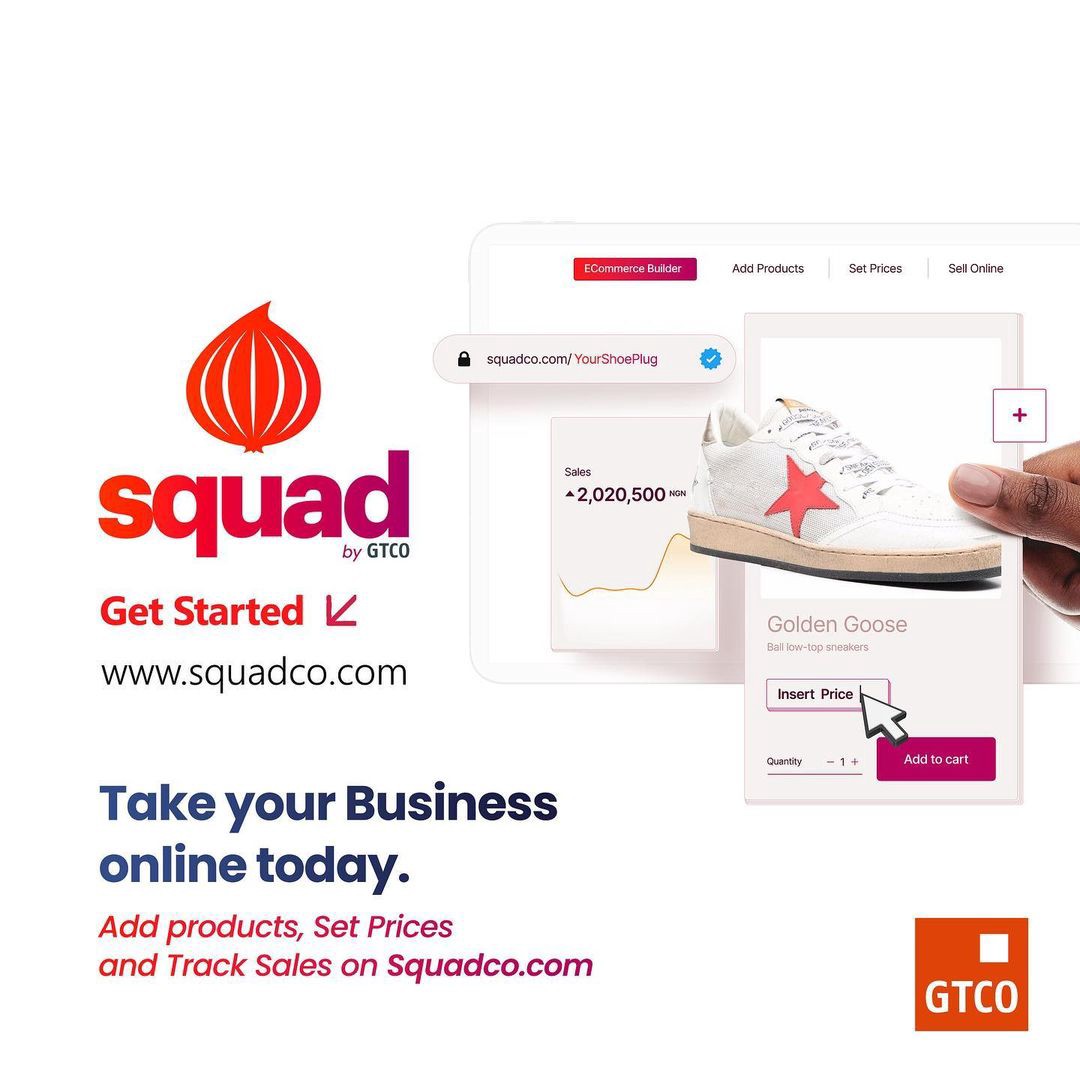
    ยทย Complete payments solution:ย With Squad, you get all the tools you need to receive, track, and manage payments for your business. From the convenience of just one dashboard, you can accumulate and reconcile all your transactions, receive instant settlements, and set up an e-commerce storefront where your products and services are visible to your customers.

    Squad also offers an innovative soft POS feature called SquadPOS, which allows you to turn your mobile phone into a personal point-of-sale terminal to evolve and speed up your customersโ€™ payment experiences in-store. With this tool, you can reduce hardware costs and customer wait times with the perfect contactless payment solution through any Android device that suits your needs.

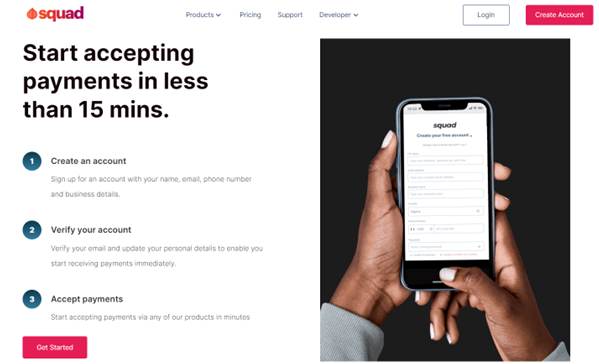
    ยท Super easy to use: With our seamless interface, you can set up quickly and start accepting payments in 15 minutes. Squadโ€™s APIs are uncomplicated to integrate into your website and are currently optimizable with WordPress, Shopify, Wix and Drupal.

    Start accepting payments on Squad

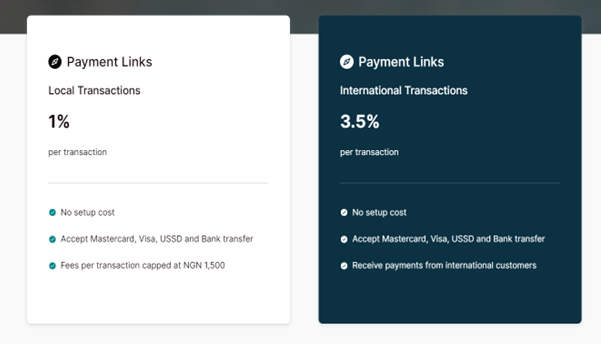
    ยท Affordable, yet best-in-class: We keep fees at the minimum and are honest about our pricing. Set-up costs are free, with the fees per transaction capped at N1,500 irrespective of the value. Local transactions via payment links attract a 1% charge only, and international transactions, 3.5% โ€” some of the lowest rates in the market today. By reducing our prices, we trust that businesses can allocate more of their finances towards other facets of their operations.

    Squadโ€™s pricing

    ยท Keeps your funds secure: We are deeply committed to safeguarding the funds of our customers from malicious actors, and we achieve this through the activation layers of security measures such as KYC verification, real-time monitoring, and advanced data privacy tools.

    ยท Offers your customers a choice: With payments today, it is safe to say that one size does not fit all. Customers now have more ways to pay than ever before. With an all-in-one payment solution like Squad, your business is well-positioned to offer customers the right payment mix that suits their various needs and preferences. In so doing, you elevate your customersโ€™ payment experience and prevent them from moving to a competitor that offers flexibility.

    ยทย Never miss a sale ever again:ย Thatโ€™s right! From our e-commerce storefront feature to accessible payment links, virtual accounts, USSD, and SquadPOS โ€” every product under our suite were created to ensure that you meet your customersโ€™ payment needs at every channel โ€” online, in-store, anytime and anywhere.

    Get to know about our different products:

    ยท Payment links

    ยท SquadPOS

    ยท USSD

    ยท E-commerce

    ยท Virtual Accounts

    ยท VAS

    Ready to get started with Squad?

    Say less! Visit our website at https://squadco.com/ to create a free account. Fill in your details and get started immediately. You do not need to be a registered business to sign up or receive payments.

    Interested in finding out more about these products? Contact us via email โ€” at help@squadco.com and stay glued to @OfficialSquadCo on all platforms for more information.