Category: Features

Featured posts

  • Feature- FirstBank: A triumphant Return to the Nigerian Banking Frontline

    Feature- FirstBank: A triumphant Return to the Nigerian Banking Frontline

    The story of Corporate Nigeria in 2022, cannot be complete without a chapter on the incredible performance of First Bank of Nigeria Limited, which saw the hitherto encumbered bank now returning to the top of the ladder of the Nigerian banking industry, amid a harvest of international laurels, writes Festus Akanbi

    By December this year, Nigerian quoted companies will begin to upload their full year 2022 results in compliance with the dictates of the principle of disclosures to regulators, investors and customers as enshrined in the act of Corporate Governance.

    While the waiting game for the release of the more detailed full-year results continues, analysts said that bookmakers can only assess the current level of profitability, efficiency and recovery of these companies based on their half-year reports which began to hit the various media platforms from July this year.

    For FirstBank, a subsidiary of the behemoth FBN Holdings Plc, the 2022 operation year has been characterised by a superlative performance which analysts believed signposts the confirmation of the bankโ€™s return to the frontline of the Nigerian banking industry following its 2021 equally stellar performance.

    From its half-year 2022 reports, which show a remarkable turnaround, and the ability of the management of the bank not only to resolve old corporate governance issues but to also return the bank to the path of profitability, it has been proven beyond any reasonable doubt that FirstBank has freed itself from old encumbrances and it is back to its old trajectory of breaking boundaries and being a pacesetter in the Nigerian banking industry.

    For instance, analysts who believed that FirstBank’s current excellent performance is a reaffirmation of the new era of a return to greater and better times ahead are quick to point to the bankโ€™s half-year 2022 results which proved the solidity of the financial institution and confirmed that it is back in form as a formidable industry leader.

    Reinforcing Quantum Profitability Leap Agenda

    For instance, in its half-year 2022 scorecard, FirstBank recorded a 22.6 per cent year-on-year growth in gross earnings to N338.5 billion while net interest income was up 49.3 per cent year-on-year to N152.9 billion respectively.โ€

    The bankโ€™s Managing Director/Chief Executive, Adesola Adeduntan who gave this figure disclosed that โ€œAmidst a challenging operating and dynamic regulatory environment in the half year 2022, the commercial banking group remained focused on executing key initiatives to position the group for improved profitability in the full year 2022. Our half-year results further reinforced our drive towards our โ€˜Quantum Profitability Leapโ€™ agenda.โ€

    Adeduntan said, โ€œOn the back of the impressive growth recorded in our top line, our profit before tax recorded a strong growth of 40.0 per cent year on year to N60.0 billion, whilst profit after tax also grew by 42.3 per cent year on year to N53.3 billion as the bank continues to reap the dividends of the successful restructuring of our balance sheet and revamping of our risk management architecture.โ€

    โ€œWe continue to record progress in driving down our non-performing loan ratio which now stands at 5.4 per cent at the end of H1 and we are on target to bring it within the regulatory limit of 5 percent by end of full-year 2022.โ€

    Awards and Recognitions: FirstBankโ€™s Leading the Pack

    In terms of recognition, there is no doubt that the ongoing transformation in FirstBank is globally recognised when one considers the harvests of awards and recognitions that are already pouring in for the bank.

    Analysts said the awards and recognitions, which include those from the Fitch Ratings and The Banker awards and Euromoney rankings are testimonials of FirstBank’s consistent performance.

    Fitch Rerating

    Analysts maintained that the current Fitch rerating of FirstBank aligns with ratings of other global agencies (such as S&P: B- with a stable outlook; Moodys: B2 with stable outlook) โ€“ a confirmation of what industry peers already acknowledge โ€“ back to leading the pack.

    On September 16, 2022, Fitch Ratings announced the upgrade of FBN Holdings Plc’s (FBNH) and First Bank of Nigeria Ltd’s (FBN) Long-Term Issuer Default Ratings (IDRs) to ‘B’ from ‘B-‘, and according to the rating agency, the Outlooks are Stable. Fitch has also upgraded their Viability Ratings (VR) to ‘b’ from ‘b-‘.


    It explained that the upgrade of the Long-Term IDRs follows that of the VRs, reflecting that corporate governance irregularities publicly raised by the Central Bank of Nigeria (CBN) in April 2021, including two longstanding related-party exposures, have largely been addressed and therefore risks to capitalisation have receded, helped by strong internal capital generation since the irregularities were raised.

    Governance Issues Laid to Rest

    Following its monitoring of the Bankโ€™s corporate Banking endeavours within the last year, the rating agency gave FirstBank a clean bill of health saying the bankโ€™s governance irregularities have been addressed and according to the management of the bank, โ€œthe two related-party exposures highlighted by the CBN, which included equity and credit exposures to two companies of whom FBNH’s previous chairman was also chairman, have largely been disposed of and repaid. Fitch understands from management that FBNH and FBN have not been subject to penalties about irregularities raised by the CBN in April 2021 and no further irregularities have been raised.โ€


    It also attests to the solidity of the bank, affirming that FBN is the third-largest bank in Nigeria, representing 11% of domestic banking-system assets at the end of 2021.

    Another reason for the high rating is the fact that the bankโ€™s improved asset quality since FirstBankโ€™s impaired loans (Stage 3 loans under IFRS 9) ratio has declined significantly.

    FirstBank also boasts of a Stable Funding Profile. For instance, FBN’s customer deposit base (76% of total funding at end-1H22) comprises a high share of retail deposits (64% at end-2021) and current and savings accounts (81% at end-1H22), supporting funding stability and a low-cost of funding. Depositor concentration is fairly low. Liquidity coverage is comfortable in local and foreign currencies.

    Bankers Magazine: FirstBank Best Performing in Nigeria

    It is also not a coincidence that FirstBank was rated first among its peers in Nigeria by Bankers Magazine, a publication of the Financial Times.

    The Top 100 African Bank Rankings 2022 recently released by The Bankershows FirstBank leading the Nigerian table in four areas, the highest achieved by any Nigerian bank; only FirstBank leads in four areas. The rankings, based on the end of year 31 December 2021 audited financials of all banks in the Top 100, reveal FirstBankโ€™s ranking as number one in Nigeria in terms of Overall Performance, Profitability, Efficiency and Return on Risk.

    The magazine, which explained that its Top 100 African Banks ranking for 2022 demonstrates a broad return to stability by African banks after a torrid year for the continentโ€™s largest lenders placed FirstBank among other banks in Nigeria because it happened to be the only bank that led in four areas.

    First Bank of Nigeria Limited leads its peers in fifth place overall, displacing Guaranty Trust Bank, now in seventh place. Access Bank ranks in the eighth position, with Zenith Bank in 10th place.

    Euromoney Rankings: FirstBank, Market Leader

    In addition, in 2022, Euromoney Market Leaders, an independent global assessment of the leading financial service providers conducted by Euromoney Institutional Investor Plc crowned FirstBank as a market leader. The bank was rated as a tier one bank in the areas of corporate and social responsibility (CSR).

    Not only that, but FirstBank also emerged as a market leader among the tier-one banks in the area of Environmental, Social and Governance (ESG).

    In the area of corporate banking and digital solution, FirstBank was highly regarded while it was crowned as a notable player in SME Banking for the period under review.

    FirstBank was named “Best Bank Brand in Nigeria” for six years in a row โ€“ 2011 to 2016 โ€“ by The Banker magazine of the Financial Times Group; it was awarded “Most Innovative Bank in Africa” in the EMEA Finance African Banking Awards 2014; it has clinched the โ€œBest Bank in Nigeriaโ€ award by Global Finance Magazine 15 times and the โ€œBest Private Bank in Nigeriaโ€ by World Finance Magazine seven times. Some other recent awards received by the Bank are โ€œBest Banking Brand Nigeria, 2019โ€ by Global Brands Magazine; โ€œBest Mobile Banking App โ€“ Nigeria, 2019โ€ by Global Business Outlook and โ€œBest Financial Inclusion Program โ€“ Nigeria, 2019 by International Investor.

    In the words of FirstBankโ€™s CEO, Dr Adesola Adeduntan, โ€˜what all these current ratings and recognitions demonstrate is that FirstBank is strongly back on course!  Knowing this is only the beginning of a new era of return to the trailblazing position and that better times lie ahead we encourage our customers and other stakeholders to keep believing and keep standing by us.โ€™

    Banking on Robust Customer Service Network

    Through the last 128 years of its operations, FirstBank has played a leading role in utilising its robust customer service network and digital banking architecture to support its customers โ€“ cutting across diverse cultures, tribes and races beyond the shores of Nigeria โ€“ in meeting their individual and business needs.

    First Bank of Nigeria Limited operates as a parent company, with the subsidiaries FBNBank in the Democratic Republic of Congo, Ghana, The Gambia, Guinea, Sierra Leone and Senegal; FBN Bank UK Limited in the United Kingdom with a branch in Paris; First Bank Representative Office in Beijing to capture trade-related business between geographies. FirstBank also operates First Pension Custodian Nigeria Limited, Nigeria’s foremost pension custodian. The teeming customers of the First Bank Group are serviced from a network of over 700 business locations across Africa.

    Culled from ThisDay Newaspaper

  • Feature: The Diaspora Policy from 2023 Presidential Aspirants

    Feature: The Diaspora Policy from 2023 Presidential Aspirants

    By Ayo Akinfe

    Nigerian politicians are forever travelling abroad but alas, we have not heard a single word on a diaspora policy from the 2023 presidential aspirants

    [1] Once a year, 500 diasporans will be invited to Abuja to rub minds with the government

    [2] The presidents of the major diaspora organisations in four or five key countries will be granted observers status at Nigerian Governors’ Forum meetings

    [3] The Nigeria Diaspora Commission will be upgraded into an agency with a mandate to attract foreign direct investment

    [4] By 2027 diasporans will be allowed to vote in presidential elections

    [5] A rehabilitation agency will be created within the Nigeria Diaspora Commission to enable diasporans who return home settle back into society

    [6] More diaspora financial investment instruments will be created to make maximum use of the $25bn they send home annually

    [7] Technical exchange departments will be established in six universities and technical schools across the country to enable young Nigerians benefit from the expertise of the diaspora

    [8] Every year, the trade and industry minister will hold a diaspora conference in the UK and US where he will rub minds with the millions of Nigerians there

    [9] Diasporans who can bring foreign investors to Nigeria will be granted direct access to the trade and industry minister

    [10] The trade ministry will have an annual target of attracting at least $1bn in diaspora manufacturing investment every year

  • Feature: The Legality or Otherwise of the Recent Registration of Congress of Nigerian University Academics (CONUA) as a Trade Union

    By PROF. Emmanuel A. KENEN

    ย 
    ย ย ย ย ย ย ย ย ย ย ย  On the 4th day of October, 2022, the Minister of Labour and Employment, in a desperate move to break the cohesion of academic staff in Nigerian universities under the umbrella of ASUU, purportedly, through the Registrar of Trade Unions, registered two new academic trade unions amongst which is Congress of Nigerian University Academics (CONUA).ย  The pertinent question is: can such registration stand in view of the provisions of the law and the pronouncements of the courts on the issue? The answer is emphatic and capital NO.
    ย 
    ย ย ย ย ย ย ย ย ย ย ย  Before continuing with the discussion, it is necessary to provide the relevant statutory and constitutional provisions on the issue.
    (1)ย ย ย ย ย ย ย ย ย ย ย ย  Section 3(2) of the Trade Unions Act Cap T14 Laws of the Federation of Nigeria, 2004 as updated to 31st December, 2010 provides:
    ย ย  No combination of workers or employers shall be registered as a trade union save with the approval of the Minister on his being satisfied that it is expedient to register the union either by regrouping existing trade unions, registering a new trade union or otherwise howsoever, but no trade union shall be registered to represent workers or employers in a place where there already exists a trade union. (emphasis supplied)
    ย 
    (2)ย ย ย ย ย ย ย ย ย ย ย ย  Section 5(4) of the same Trade Unions Act provides:
    ย  The Registrar shall not register the trade union if it appears to him that any existing trade union is sufficiently representative of the interests of the class of persons whose interest the union is intended to represent. ย (emphasis supplied)
    ย 
    (3)ย ย ย ย ย ย ย ย ย ย ย ย  Section 40 of the Constitution of the Federal Republic of Nigeria, 1999 as amended provides:
    Every person shall be entitled to assemble freely and associate with other persons, and in particular he may form or belong to any political party, trade union or any other association for the protection of his interests:
    Provided that the provisions of this section shall not derogate from the powers conferred by this Constitution on the Independent National Electoral Commission with respect to political parties to which that commission does not accord recognition. (emphasis supplied)
    ย 
    (4)ย ย ย ย ย ย ย ย ย ย ย ย  Section 45(1) of the same 1999 Constitution provides:
    Nothing in sections 37, 38, 39, 40 and 41 of this Constitution shall invalidate any law that is reasonably justifiable in a democratic society โ€“
    (a)ย ย ย ย ย ย ย  in the interest of defence, public safety, public order, public morality or public health; or
    (b)ย ย ย ย ย ย ย  for the purpose of protecting the rights and freedom of other persons. (emphasis supplied)
    ย 
    ย ย ย ย ย ย ย ย ย ย ย  As can be seen from the above, statutorily, no trade union shall be registered to represent workers or employers in a place where there already exists a trade union.ย  The above provision of the Trade Unions Act is without deference to the Constitutional provision which guarantees the right to form or belong to any trade union.ย  The issues that arise for consideration from all the statutory and constitutional provisions cited above are: (a) whether section 3(2) of the Trade unions Act is inconsistent with section 40 of the Constitution and to the extent of the inconsistency, null and void.ย  (b) whether the power granted to the Registrar of Trade Unions by section 5(4) of the Trade Unions Act is discretionary.
    ย 
    ย ย ย ย ย ย ย ย ย ย ย  The Supreme Court had long settled the first issue in Osawe & Ors v Registrar of Trade Unions [1985] 4 NWLR (Pt.4) 755.ย  Section 3(2) of the Trade Unions Act of 1978 was challenged on the ground that it was an infringement on section 37 of the 1979 Constitution (now section 40 of the 1999 Constitution) which guaranteed freedom of association.ย  The Supreme Court held inter alia that the right of association guaranteed by section 37 of the 1979 Constitution like other rights in Chapter IV of the Constitution was not absolute right and could be derogated from in accordance with section 41 of the same Constitution (now section 45 of the 1999 Constitution).ย  That the Trade Unions Act 1978 was a law passed in the interest of public order.ย  It was necessary to ensure order in the chaotic proliferation of trade unions which was the practice before the promulgation of the law.ย  Section 3(2) of the Trade Unions Act was therefore declared by the Supreme Court NOT unconstitutional.ย  In fact the Supreme Court held that by section 3(2) of the Trade Unions Act, it was mandatory for the Registrar of Trade Unions to refuse registration of a trade union once there is in existence a trade union that caters for the same interest as the one applying for registration.
    ย 
    ย ย ย ย ย ย ย ย ย ย ย  The above Supreme Court decision was again followed by the Supreme Court in Registered Trustees of National Association of Community Health Practitioners (RT, NACHPN) & Ors v Medical and Health Workers Union of Nigeria (MHWUN) & Ors [2008] LPELR-3196 (SC); [2008] 2 NWLR (Pt.1072) 575.ย  Aloma Mariam Makhtar, JSC (as he then was) delivering the lead judgment quoted Osaweโ€™s case with approval in holding that section 3(2) of the Trade Unions Act makes it mandatory for the Registrar of Trade Unions, on receiving an application to register any trade union, to ensure that there is no any other registered trade union in existence which caters for the same interest as the one applying for registration.ย  That if there is, it becomes incumbent on the Registrar, as the custodian of such information, to decline to proceed to put into effect the machinery for registration of the new trade union.ย  As to whether section 3(2) is unconstitutional, the Supreme Courtโ€™s decision on this issue in Osaweโ€™s case was reaffirmed by Aloma Mariam Mukhtar, JSC (as he then was).
    ย 
    ย ย ย ย ย ย ย ย ย ย ย  The second issue was addressed by the National Industrial Court in Non-Academic Staff Union of Education & Associated Institutions (NASU) v The Honourable Minister of Labour and Employment & Ors [Unreported] Suit No NICN/ABJ/373/2021 the judgment of which was delivered on 30th March, 2022 p.24 para 101.ย  The 3rd Defendant (The Non-Teaching Staff Union of Polytechnics) relying inter alia on section 5(4) of the Trade Unions Act had argued that 1st and 2nd defendantsโ€™ (Minister of Labour & Employment and the Registrar of Trade Unions respectively) powers under the Trade Unions Act are discretionary.ย  The Court per Kanyip, President, National Industrial Court of Nigeria (PNICN), disagreeing with the submission of counsel to the 3rd defendant held:
    ย ย ย ย ย ย ย ย ย ย  A look at sections 3(2) and 5(4) of the Trade Unions Act will reveal the fallacy of the 3rd defendantโ€™s argument.ย  Section 3(2) is very specific and categorical in stating that โ€ฆ no trade union shall be registered to represent workers or employers in a place where there already exists a trade union.โ€ย  So when section 5(4) talked of โ€œโ€ฆ if it appears to him that any existing trade union is sufficiently representative of the interests of the class of persons whose interest the union is intended to represent,โ€ this cannot be qualification on section 3(2) of the Trade Unions Act.ย  The issues of appearance to the Registrar of Trade Unions and sufficiency as used in the sub-section do not entail any discretion on the part of the duty imposed on the Registrar of Trade Unions as the 3rd defendant seems to think.ย  Section 3(2) is mandatory enough for the Registrar of Trade Unions to act.ย  The duty to act under section 5(4) is dependent on the criterion placed by section 3(2).ย  Once there exists a trade union, the Registrar of Trade Unions shall not register a new one seeking registration โ€“ section 3(2).
    ย 
    ย ย ย ย ย ย ย ย ย ย ย  The facts of the case together with the declarations and orders by the court are very interesting and are hereby reproduced.ย  The 3rd defendant (The Non-Teaching Staff of Polytechnics) had applied for registration as a trade union to the 2nd defendant (The Registrar of Trade Unions).ย  The 2nd defendant, vide a letter dated 18th day of January, 2013 refused to register the 3rd defendant.ย  In 2021 (eight years later), the 3rd defendant appealed to the 1st defendant (The Minister of Labour and Employment) against the decision of the 2nd defendant refusing to register the 3rd defendant as a trade union.ย  The 1st defendant considered the appeal favourably and in a letter on its behalf by the Director of Trade Union Services and Industrial Relations in the Federal Ministry of Labour and Employment dated 24th day of August, 2021 addressed to the General Secretary of the 3rd defendant, the 3rd defendant was informed that the 1st defendantโ€™s approval had been forwarded to the 2nd defendant for the issuance of the Certificate of Registration to the 3rd defendant.ย  Pursuant to the said directive, the 2nd defendant on the 7th day of December, 2021 issued a Certificate of Registration to the 3rd defendant.ย  The claimant, believing that the issuance of the said Certificate of Registration to the 3rd defendant was wrongful, filed a suit on the 22nd day of December, 2021 vide an originating summons praying amongst others, an order withdrawing the approval and registration of the 3rd defendant as a trade union since the claimantโ€™s jurisdictional scope covers all members of the 3rd defendant and the claimant is already in existence. The National Industrial Court found that the suit was not properly commenced since it was neither a member nor an officer of the claimant that deposed to the affidavit that activated the suit as required by section 5(5)(b) of the Trade Unions Act.ย  The Court accordingly held that the suit was incompetent and accordingly struck it out.ย  However, assuming the court would be held to be wrong in striking out the suit, it proceeded to decide the case on its merits.ย  Having found the case to be meritorious, it made the following interesting declarations and orders:
    (a)ย ย ย ย ย ย ย ย ย ย ย ย ย  It is declared that the 1st and 2nd defendants having acted wrongly by approving and registering the 3rd defendant as a new trade union in the name of the Non-Teaching Staff Union of Polytechnics contrary to section 3(2) and 5(4) of the Trade Unions Act renders such approval and registration void and a nullity.
    (b)ย ย ย ย ย ย ย ย ย ย ย ย  It is declared that the claimant, being a creation of statute with its jurisdictional scope specified under item 27 of Part B of the Third Schedule to the Trade Unions Act, the 1st and 2nd defendants cannot by administrative fiat factionalize same by giving approval to the registration and/or issuing of Certificate of Registration to the 3rd defendant as a new trade union to take over the area the claimant already exists and statutorily covers.
    (c)ย ย ย ย ย ย ย ย ย ย ย ย ย  The approval and registration of the new trade union known as the Non-Teaching Staff Union of Polytechnics since the claimantโ€™s jurisdictional scope covers all non-academic workers employed in publicly and privately owned educational, research and associated institutions including Polytechnics and it is already in existence where the purported new union desires to operate is hereby withdrawn.
    (d)ย ย ย ย ย ย ย ย ย ย ย ย  Accordingly, the 1st and 2nd defendants are hereby ordered to withdraw the Certificate of Registration with No. 0134 and dated the 7th day of December, 2021 issued to the 3rd defendant and cancel same forthwith.
    (e)ย ย ย ย ย ย ย ย ย ย ย ย ย  The 1st and 2nd defendants are hereby restrained from recognizing and dealing with the Non-Teaching Staff Union of Polytechnics as a trade union since the claimantโ€™s jurisdictional scope covers all non-academic workers employed in publicly and privately owned educational, research and associated institutions including Polytechnics in Nigeria and it is already in existence where the purported new union desires to operate.
    (f)ย ย ย ย ย ย ย ย ย ย ย ย ย  The 3rd defendant is hereby restrained from parading itself as a trade union capable of unionizing non-academic workers/employees of Polytechnics who are already eligible and bonafide members of the claimant.
    ย 
    ย ย ย ย ย ย ย ย ย ย ย  As can be seen from the foreging pronouncements of the Courts in giving effect to section 3(2) of the Trade Unions Act, no trade union shall be registered to represent workers in a place where there already exists a trade union.ย  It therefore means that since Academic Staff Union of Universities (ASUU) is already in existence and represents all academic staff in Public Universities in Nigeria who are within its jurisdictional scope, the registration of Congress of Nigerian University Academics (CONUA) by the Registrar of Trade Unions supposedly on the directives of the Minister of Labour & Employment is illegal, null and void.ย  Even though the President of ASUU is quoted to have said that the registration of CONUA is โ€˜inconsequentialโ€™, he should not stop at that statement.ย  He should ensure that ASUU files an action at the National Industrial Court for an order for the certificate of registration issued to CONUA to be withdrawn and cancelled forthwith as well as for an order restraining CONUA from parading itself as a trade union capable of unionizing academic staff in Nigerian Universities who are already within the jurisdictional scope of ASUU.ย  The desperate move by the Minister of Labour and Employment to polarize and break the ranks of ASUU members cannot therefore stand having regards to the position of the law.

    Professor Emmanuel Ayangarumun Kenen is of the Department of Commercial Law, Benue State University, Makurdi, Benue State, Nigeria

  • Feature: The Incorporation Policy needed in Nigeria

    Feature: The Incorporation Policy needed in Nigeria

    by Ayo Akinfe

    I look forward to Tinubu marking his return from this successful health trip with a policy pronouncement that his administration will get the following corporations up and running within a year

    [1] NNPC
    My stance on this has always been clear. Privatize the NNPC with the government holding say a 25% stake in it. Then expand its operations to cover manufacturing, automobile assembly, food processing, petrochemicals, power generation, railway equipment manufacture, etc. Within a year, the NNPC should be floated on the New York and London stock exchanges with a market capitalisation of at least $200bn

    [2] Man of God PLC
    Nigeriaโ€™s clergymen are some of her wealthiest citizens. I want to see the likes of Enoch Adeboye, David Oyedepo, Chris Okotie, Chris Oyakilome, Biodun Fatoyinbo, Suleman Johnson, etc merge all their commercial operations and form a company that can play the same role the Catholic Church played in 18th century Europe. The Catholic Church was the biggest operator in the Trans-Atlantic Slave Trade. Man of God PLC should also be a huge player in sectors that include rail franchises, airline operators, manufacturing, automobile assembly, food processing, petrochemicals, power generation, railway equipment manufacture, solar energy production, etc

    [3] Dangote Industries
    Alhaji Dangote is the closest thing we have to an industrial entrepreneur in Nigeria today. He is investing in oil refineries, sugar, cement, rice, tomato paste production and other types of food processing. Dangoteโ€™s three key sectors are power, food and housing materials. I want to see a massive expansion in its operations

    [5] Atilogwu Enterprises
    By any standards you want to use, Ndigbo are Africaโ€™s most enterprueneral people. It is time all these small operators merged into one conglomerate. Just imagine if you had one giant corporation manufacturing all of Nigeriaโ€™s pharmaceuticals, clothes & shoes and automobile spare parts. Atilogwu Enterprises should have three massive manufacturing plants in Nnewi, Aba and Orlu employing at least 5,000 people each producing car parts, clothing and drugs respectively

    [5] Nigerian Airlines
    Despite the failures of Nigerian Airways, Arik Air and MedView Airlines, I remain optimistic that we can crack the aviation nut. Air Peace gives me hope that there are still people out there like Allen Onyeama who know how to do things properly and are not just motivated by short-term greed. We should merge all our domestic airlines into one and get it to function in a manner similar to Ethiopian Airlines or Egypt Air

    [6] Otedola and Adenuga Corporation
    Femi Otedola and Mike Adenuga are two moguls with massive presence in the telecommunications and energy industries. Of late, they have begun investing in the power sector. I want to see them merge their operations and take the power sector in particular to unprecedented heights. Do you know that theoretically, two lone nuclear reactors running on small pellets could power the entire planet, safely and cleanly? It is called nuclear fusion. I would like to see these two invest billions of dollars in such ventures

    [7] Alakija Womens Enterprises
    Africaโ€™s wealthiest woman, Folorunso Alakija serves as testimony to the phrase that anything a man can do, a woman can do too (or better). Being a feminist, I am delighted that at least one is our leading entrepreneurs is a woman. Mrs Alakija is also into energy so I would like her to also be part of the power revolution. For me, she should also be the worldโ€™s largest manufacturer of womenโ€™s products like sanitary towels and be the largest supplier to companies like Mary Kay

    [8] Innoson Manufacturing Company
    Nigerians take pride in the fact that we have a local company that assembles cars but hey, it is not yet uhuru. Innosonโ€™s products are manufactured in China and the company’s cars cannot be exported to Europe as they will fail EU emissions tests. We need to turn Nnewi, Aba, Ohafia, Enugu, Benin and Auchi into huge manufacturing sites, kind of like Detroit and produce cars for distribution all over Africa

    [9] Arewa Enterprises
    During the First Republic, Ahmadu Bello dreamt of a Northern Nigeria that was economically self-reliant. He opened facilities like the Mokwa Cattle Ranch, the Jebba Sugar Mill, Arewa Textiles, etc, with a view to catching up with southern Nigeria. Given that northern Nigeria accounts for 72% of her land mass and is the main producer of agricultural produce, this dream is still realisable. Northern Nigeria is also home to most of our rivers that can easily used for power generation. Arewa Enterprises should set itself a target of zero unemployment across northern Nigeria

    [10] Odua Group of Companies
    As far as I am concerned, Nigeria has only ever produced one visionary leader and that is Obafemi Awolowo. The group he founded today is still in existence and runs some of his legacies like Cocoa House. It is time to start building on his foundation. I would like to see the Odua Group of Companies take the power revolution to new heights as Awolowo would have done with something dramatically futuristic. Why are we still relying on fossil fuels? For decades, scientists have viewed nuclear fusion as the Holy Grail for clean, abundant and sustainable power. Based on the same principle that powers the stars, including our own sun, a couple of nuclear reactors running on small pellets could power our planet without the risk of a catastrophic meltdown and zero greenhouse gas emissions. I want to see Nigeria lead the world with this kind of technology

  • Feature: Diagnostics Capacity Building in Africa

    Feature: Diagnostics Capacity Building in Africa

    by Jonathan Keytel

    Author and Educator, Stephen R Covey said, โ€œIf you donโ€™t have confidence in the diagnosis, you wonโ€™t have confidence in the prescription.โ€

    The foundation of the healthcare value chain is quality diagnostics. We all have an anecdote โ€“ good or bad โ€“ where diagnostics have taken centre stage. Mine is in recent memory, when my parents moved to a new home. They had lived in a large family house for many years and decided it was time to downsize.

    Following the move, we noticed that my father suddenly became quite forgetful. Of course, this was worrying. Something had changed, but we hoped it was just a result of the upheaval and his advancing age.

    Memory loss can result from many things โ€“ some of them life-threatening. We went to the doctor, not knowing what to expect. But when tests were run, it turned out the diagnosis was a simple, treatable thyroid problem causing his forgetfulness.

    A rudimentary blood test run through a quality diagnostics system operated by qualified pathologists gave an entire family hope and peace of mind. And it vastly improved my fatherโ€™s quality of life. He is being treated with medication and is back to his old self, with sound mental faculties. This is one small, personal study in the value of quality diagnostics.

    Everybody has a story. In Africa, many stories donโ€™t have the happy endings they should. In context, Africa currently has an average of approximately one pathologist per one-million people.1

    There is not enough access to quality diagnostics on the continent. And this has made it essential for healthcare providers to think beyond our everyday initiatives and drive capacity building on a large scale. A significant obstacle to effective capacity building in Africa is the general lack of resources. Another salient factor is the insufficient institutional capacity to deliver healthcare to patients.

    Building diagnostics capacity is no small task. Under the microscope, we often observe that clinical processes are further advanced than laboratory processes because the pathologists donโ€™t have the resources or training to implement them effectively. Here, an essential part of the healthcare cycle is underperforming and not serving the patient as it should.

    The virtuous cycle โ€“ a case study in progress

    In July 2022, the Kilimanjaro Christian Medical Centre (KCMC), Philipps-University Marburg and Roche Diagnostics launched a strategic partnership.

    The central objective of the partnership is to strengthen diagnostics infrastructure and capacity in north-eastern Tanzania by creating a state-of-the-art Centre of Excellence. The Centre is designed to drive sustainable capacity building and develop the skill sets necessary to meet local needs. This Centre of Excellence is co-funded by the Deutsche Investitions-und Entwicklungsgesellschaft (DEG), a development finance provider from the German Federal Ministry for Economic Cooperation and Development, and Roche Diagnostics.

    The COVID pandemic highlighted that we need to invest more energy and effort in diagnostics to create a virtuous, uninterrupted cycle that delivers better outcomes to clinicians and patients.

    In the context of this case study, this plays out at three levels. At one end is an academic partner from Europe that brings state-of-the-art systems. At the other end is a leading and respected Tanzanian institution that encompasses the African context.

    Somewhere in the middle, Roche Diagnostics brings expertise and essential diagnostic tools as a private partner. This creates a virtuous cycle in that the sum of these parts creates better outcomes โ€“ firstly (and most importantly) for patients, secondly for hardworking clinicians and finally, for the strategic partners involved in the symbiotic sequence.

    In practical terms, the Centre will merge three laboratories already run at the facility โ€“ the clinical laboratory, the teaching laboratory and the research laboratory.

    This consolidates three testing streams, building a virtuous cycle of expertise. By consolidating these volumes, we are building expertise in the laboratory for laboratory personnel. The increased volume of work from the three streams improves the turnaround time and the overall quality of the results. The lab systems also evolve, creating a knock-on effect.

    The dominoes begin to fall

    Testing is more cost-effective when it is done in batches. The downside to batching is that the lab might have to wait several days before they have enough samples to run the test, which increases lead time. So, the doctor and patient wait longer for their results.

    Furthermore, if the clinician is confident in the quality of results they are receiving from the lab, they feel more engaged in the process and are more likely to send bigger batches of tests. This drives faster output for the patient and the clinician. That is a feedback loop into the volume that the laboratory needs to keep costs down and improve turnaround time.

    In time, this process allows us to build a menu of appropriate tests, allowing the clinician to tackle more disease areas. These interlocking virtuous cycles ensure that the lab is operationally, financially and socially sustainable. The lab becomes a sustainable service provider in the clinical setting, shaping diagnostic capacity organically. We can also expand the labโ€™s reach with digital technology and telemedicine, allowing it to operate across borders and tap into diagnostic expertise from around the globe.

    Building this cycle is not a quick fix. It is a long-term strategy. In context, as an industry, we may need to take stock of how weโ€™re investing and refine our modes and targets to create more virtuous cycles within crucial disease areas. Addressing the African disease burden requires innovative approaches.

    As businesses with the power to invest, short-term profit should give way to long-term strategy. We are not investing in a commodity. We are investing in a virtuous cycle that equilaterally serves the investors, the laboratory, the clinicians and, most importantly, the patient. By doing now what the patient needs next, more families could get the happy endings they deserve in their healthcare journeys than ever before.

    Jonathan Keytel is the Head of Healthcare Transformation at Roche Diagnostics

  • Special Report- Limited Investible Options: An Impediment to a Potentially Bullish Industry

    Special Report- Limited Investible Options: An Impediment to a Potentially Bullish Industry

    Originally a government-funded social scheme, pensions have since evolved into a global industry driven by the private sector, with several variations of the original pension plan. The 6%[1] annual average growth rate recorded in global pension assets in the past two decades to $56.6 trillion in 2021, estimated at 76%[2] of GDP[3] in the 22 major pension markets (P22[4]), is not just reflective of the Industryโ€™s robustness but also highlights its importance to capital markets across the world.

    A burgeoning Nigerian pension industry

    The Nigerian pension industry has transited from one with predominantly public sector participants running a defined benefit scheme to a mandatory defined contribution system for all government and private sector employees. In the last decade, the 628% surge in the size of pension fund assets to โ‚ฆ14.27 trillion[5] as at 30 June 2022 is indicative of the Industryโ€™s growth and evolution. Agusto & Co. attributes this largely to the legislative support provided by the Pension Reform Act (PRA) 2004 and the amendment in 2014 which effectively redefined retirement planning in Nigeria and led to a significant boost in the number of enrolees and the size of managed assets in the Industry.

    Robust regulation by the National Pension Commission (PenCom) continues to underpin the Industryโ€™s expansion. In April 2022, PenCom announced that all the Pension fund administrators (PFAs) in Nigeria had complied with its increased minimum capital requirement (โ‚ฆ5 billion from โ‚ฆ1 billion). Several mergers and acquisitions (M&As), including those involving FCMB Pensions and AIICO Pensions; Access Holdings and First Guarantee Pensions; as well as four notable M&As[6] were the result. 

    Industry Hitches: an impediment to future growth

    Unpaid pension obligations by some employers, enrolees’ apathy toward the transfer of PFAs, and the ability of Industry operators to protect the value of pension funds in the face of deteriorating macroeconomic conditions, particularly a weakening exchange rate and soaring inflation, are at the heart of the industry’s current problems.

    The rising rates of emigration and unemployment in the last five years have slowed down the growth rate in pension contributions. If individuals who fall within these groups, who are eligible to access a 25% lump sum of their pension assets, exercise the withdrawal option, it could cause the growth of assets under management (AuM) to stagnate. The 3%[7] decline in the Industryโ€™s annual contribution remitted to the RSAs in 2021 underlines this growing threat. Furthermore, PenCom has approved the use of 25% of the amount of a pension contributor’s Retirement Savings Account (RSA) to pay for an equity contribution for a mortgage. While this may support the mortgage banks and the real estate industry, it will lead to a decline in pension AuM in the medium term.

    The dearth of Investible Assets: Hope for the Future?

    To protect pension assets, the current regulatory framework imposes stringent restrictions on investible outlets; with the majority of assets held in risk-free sovereign debt securities. While the increasingly hawkish stance of the monetary policy committee (MPC) of the Central bank of Nigeria (CBN) is leading to a rise in interest rates, yields on fixed sovereign debt securities (365-day T/bills: 9.75% in September 2022[8]) remain low relative to the headline inflation rate which surged to a 17-year high of 20.52% in August 2022. The outcome is negative real returns on investment, which, when compounded, will lead to a contraction in the real value of AuM over time and implies that pension fund contributors could be worse off in retirement. This puts the question of diversifying investments into foreign-denominated securities, to improve returns and preserve value, under a renewed spotlight. This option is constrained by some factors, notably the prohibition on PFAs from acquiring foreign currencies directly through official channels. In addition, despite the PRA 2014 permitting investments in foreign assets, PFAs still require the President’s approval, which could be a lengthy and tedious process.

    A Beacon of Hope

    The operations, activities and prosperity of the pension industry are crucially hinged on the direction of PenComโ€™s regulation, which Agusto & Co. expects to remain robust given the Industryโ€™s strategic importance to the Nigerian economy, and the need to more closely align the Nigerian pension scheme with international standards in the near term. Agusto & Co. also estimates that growth in pension assets will slow from a five-year average of 19% to c10% in 2022 due to a combination of a muted interest rate environment and a slowdown in the rate of contributions which has been impacted by mass emigration and high unemployment. We, therefore, expect pension assets to reach โ‚ฆ14.8 trillion by the end of 2022.


    [1] Agusto & Co. Estimate, Mordor Intelligence, Monevator

    [2] Willis Towers Watson: 2022 Global Pension Assets Study

    [3] https://www.thinkingaheadinstitute.org/research-papers/global-pension-assets-study-2022/

    [4] The P22 refers to the 22 largest pension markers which include Australia, Brazil, Canada, Chile, China, Finland, France, Germany, Hong Kong, India, Ireland, Italy, Japan, Malaysia, Mexico, the Netherlands, South Africa, South Korea, Spain, Switzerland, United Kingdom and the United States of America.

    [5]Pencom

    [6] Tangerine and APT Pensions. GTCO and Investment One. Norrenberger Financial Group and IEI Anchor Pensions. MBO Capital Management Limited and Radix Pensions

    [7] PenCom

    [8] The Central Bank of Nigeria (CBN)

  • Feature: National Honours for the Academia in the Face of ASUU Strike

    Feature: National Honours for the Academia in the Face of ASUU Strike

    By Olutayo IRANTIOLA

    โ€œAn injustice to one is an injustice to allโ€

    The struggle for the soul of the Nigerian University system between the Federal Government and the Academic Staff Union of Universities (ASUU) continues into the eighth month. It has come with a series of fireworks ranging from taking ASUU to the Industrial Court; to the threat of proscribing ASUU. Unfortunately, some members of the union have lost their lives while some students have also been lost to the imbroglio.

    In the last seven and a half years that President Muhammadu Buhari had been leading this country, he has concentrated more on โ€œbuilding the nationโ€ rather than doling out national honours. However, the President conferred a posthumous award of GCFR on Chief M.K.O. Abiola, presumed winner of the annulled historic June 12, 1993, presidential election. Other honours are the Federal Governmentโ€™s National Productivity Order of Merit Awards and the Nigerian National Merit Award. I do not know of other honours that Nigerians have received lately from the administration of President Muhammadu Buhari.

    Going through the list, I noticed the name of the late Dr. Stella Adadevoh, received a posthumous National Productivity Order of Merit (NPOM) award for her performance in the fight against the spread of the Ebola virus in the country earlier in the year. She would still be conferred with another posthumous award of the Officer of the Order of the Niger. We should borrow a leaf from the words of the Priest at the funeral of Queen Elizabeth II, โ€œNow let us remove all symbols of power from the coffin, so that our sister, Elizabeth can be committed to the grave as a simple Christian.โ€

    I was awestruck when I saw the list of those that will be given the national honours; it seems quite patronizing. Largely for the political class, few public sector players, sportspersons, and the academia. I presumed this is a slap on the Academic Staff Union of Universities (ASUU). Amid the non-payment of salaries, some of them are being honoured by the nation that is starving them.

    The rate at which people have exited the country since the beginning of this melodrama has spiked, lecturers leaving the country in droves; students abandoning their academic pursuits in Nigeria and moving to other countries that have stable academic calendars; while others are switching from Federal and State Universities to private universities. In an opinion piece published by News Wings NG, the article posits it is very possible that what led to the โ€œdemiseโ€ of public primary and secondary schools is going to happen to Federal and State Universities with the reoccurrence of the strike.

    In 2011, Professor Chinua Achebe, a Nigerian literary giant, rejected the national honour of Commander of the Federal Republic, CFR which he firstly declined in 2004. Another person nominated for honours at that time, Mr. Femi Gbajabiamila, the Minority leader of the House of Representatives, wrote to President Goodluck Jonathan to indicate his rejection of the award of Order of the Federation (OFR) to be conferred on him. The lawmaker had queried the criteria used in nominating recipients for the 2011 National Honours. Gbajabiamila argued in the letter to the President that national awards should only be conferred on those who have made concrete contributions to the development of the country, unlike now, when it is being indiscriminately doled out as presidential favours.

    However, in the current list, Mr. Femi Gbajabiamila, the current speaker of the House of Representatives, will be the first recipient of the Commander of the Order of the Federal Republic (CFR). Does it mean that this list is merited rather than being a presidential favour?

    Many of those from the diaspora, on the list, are being rewarded by the system that pushed them out. It might seem gratifying that their good works are being recognized by their fatherland, but they need to reflect on the circumstances that led to their forced exile from a land that cannot support their dreams to become great ones.

    With the paltry amount earned by the academia, they would need to fly into Abuja and, as expected, with a spouse. From whose pockets would these funds come? Even if it is paid by the Federal Government of Nigeria, will it compensate for the eight months of unpaid salaries? Remember, it is a โ€œno work, no payโ€ strike.

    I have grown up hearing the aphorism, โ€œan injustice to one, is an injustice to all.โ€ I am sure that an award for one is not an award for all. If we keep losing this war in bit through โ€œpresidential favoursโ€ in the form of national honours. Then, the lives of innocent Nigerians, the students, have been wasted for no just cause.

    The world is watching if academia will take the lead in revamping the educational sector; the electoral process, as they are the major umpire in overseeing the process and, if will, they stand out to defend the students. This war will be won or lost to the political class if the academia keeps dancing to the tune of honours that would have little or no impact on lives.

    Olutayo Irantiola is a Lagos-based Public Affairs Specialist.

  • Feature: Raising Revenue to fund Public Services in Nigeria

    Feature: Raising Revenue to fund Public Services in Nigeria

    by Ayo Akinfe

    If Nigeria is a country that really wants to better itself, the 2023 elections would be about tax plans and using tax as a platform to raise revenue to fund public services

    [1] Like many of you, I lament Nigeriaโ€™s plight. Trying to cater for 200 million people with a paltry budget of $30bn is tantamount to embarking on a mission impossible. Even if you are the greatest magician on earth, you simply will not be able to pull it off

    [2] Up to 70% of the Nigerian budget goes on recurrent costs, meaning that the very maximum we have to spend on capital projects is about $9bn a year. When you bear in mind the fact that the Johannesburg to Durban high-speed rail link alone costs $20bn, you can see that we are not even on the first rung of the ladder. Nigeria has an annual infrastructural deficit of $100bn and we are spending $9bn on capital projects!

    [3] Trying to look after 200m Nigerians with a meagre budget of $30bn is actually a greater feat than the miracle Jesus pulled off when he fed 5,000 people with just five loaves of bread and two pieces of fish at Tabgha on the Sea of Galilee shores. Since 1960, we have constantly asked our president to perform miracles of biblical proportions and when they fail, we attack them. Are we being realistic with our expectations?

    [4] For starters, our National Assembly needs to pass a bill stipulating that under no circumstances whatsoever should Nigeriaโ€™s annual budget be less than $100bn. Even if we are nuked ala Hiroshima and Nagasaki, we must find $100bn every year whatever it takes. Failure to do this should trigger automatic impeachment proceedings against the president

    [5] Just look at the budgets of nations in the same socio-economic bracket as us: South Africa – $103bn, Algeria – $70bn, Egypt – $55bn, Brazil – $780bn, Mexico – $315bn, Saudi Arabia – $295bn, Indonesia – $155bn, Vietnam -$79bn, Malaysia – $60bn and Pakistan – $60bn. I am sure all these countries just laugh when they see how paltry Nigeriaโ€™s budget is. They must ask themselves if we have any brains in our heads at all

    [6] Nigerian has the largest gross domestic product (GDP) in Africa but the government is not benefiting from that at all as over 90% of state revenue comes from the export of crude petroleum products. We have one of the lowest tax-to-GDP ratios in the world of 6%. Kudos to Kemi Adeosun for discovering this and trying to address the matter. Do you know that the average African tax-to-GDP ratio is 26%? Who knows, maybe if Kemi Adeosun was still our finance minister, she might have bridged the gulf by now

    [7] Take it or leave but the only way forward is for the government to dramatically increase its tax intake. If we had full employment with income tax, corporation tax, value added tax, etc all flooding into the treasury that would be ideal but to create those jobs, we need to first of all invest

    [8] Aliko Dangote once said he does not know of any economy that was developed by foreign investment. According to Dangote, it is always local investors that spearhead the growth of an economy. Now ask yourself who are the ones with capital to invest in Nigeria? I put it to you that about 80% of the domestic capital in Nigeria is in the hands of the evangelical churches and the general overseers. We simply need that money invested in infrastructure, job creation and wealth creation. A failure to do this will just lead to all of us perishing like fools

    [9] Private investment also needs to be backed with an array of unpopular but highly needed taxes. Chief among these will be an Owambe or entertainment tax. We party so much, this would generate billions a year. Other taxes I would introduce would be inheritance tax, religious worship tax, luxury goods tax, special private jet tax, polygamy tax, chieftaincy title tax, annual durbar tax, foreign schools tax, overseas party tax, SUV tax and international health travel tax. I do not care if every Nigerian hates me for these but were I president, I would force them through because they are necessary to sort out our public finances. Sometimes, the end justifies the means

    [10] No matter how you look at it, our president needs to summon two sets of wealthy Nigerians to Aso Rock and give them annual investment targets. One lot should the wealthy business people like Dangote, Otedola, Adenuga, Alakija, etc, while the other should be the general overseers like Oyedepo, Adeboye, Okotie, Suleiman, etc. I believe that between the two groups, they can raise $80bn of the $100bn required. Aggressive taxation can generate the rest

  • Feature: Travelogue- The Train to Paddington

    Feature: Travelogue- The Train to Paddington

    By Wale Okediran

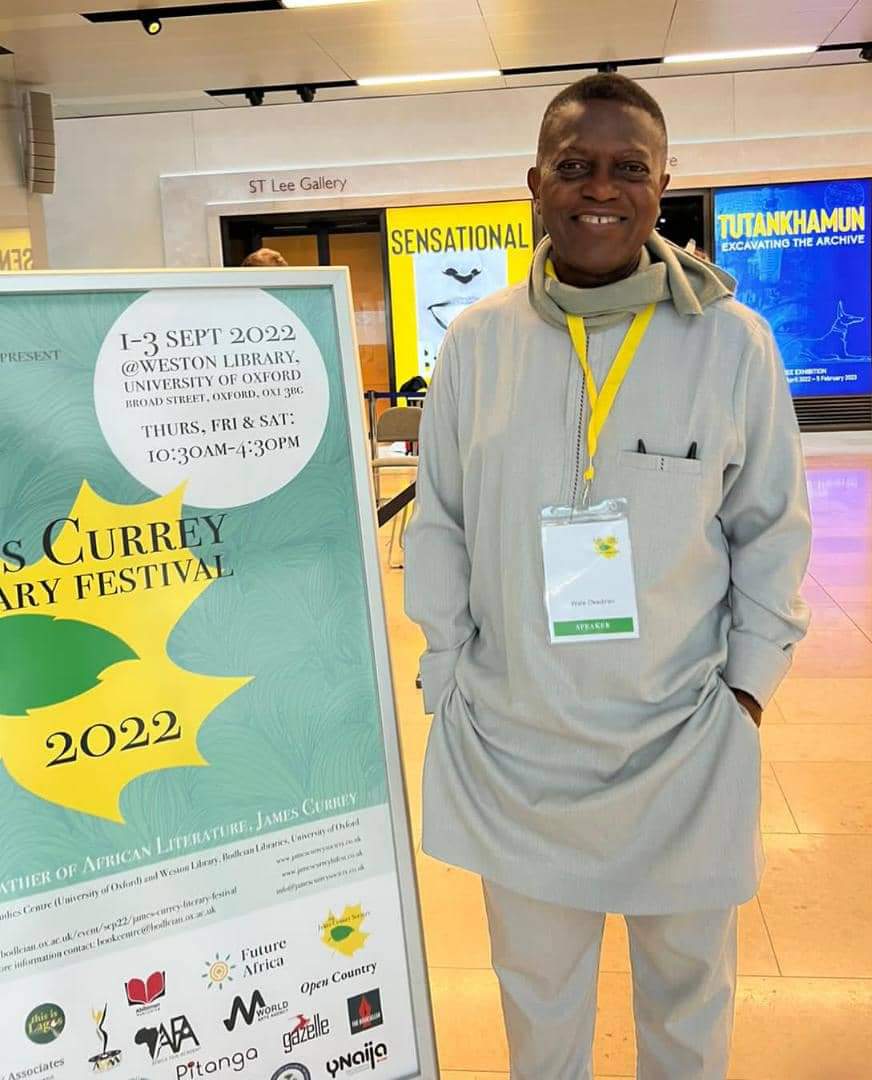
    Breakfast at the Hall of Wadham College, Oxford University, UK was a routine meeting place for many of the delegates to the maiden edition of the James Currey Literary Festival. Organized by the young and energetic Nigerian Writer and Academic, Onyeka Nwelue, the festival was to honor the contributions of Prof James Currey, co-founder of the famous African Writers Series.

    Tucked away in a corner of the claustrophobic bowel of the College which was established in 1610, the Hall was busy that early morning as writers from all corners of the world tucked into the typical English breakfast of eggs, bacon, sausage, toast and tea.

    As we ate and chattered in a warm camaraderie that is typical of writers events, some of the famous alumni of the University College starred down at us from the paintings hung on the walls of the cavernous ancient hall. Amongst Wadhamโ€™s most famous alumni are Sir Christopher Wren, one of the most highly acclaimed English architects in history who was also an anatomist, astronomer, geometer, and mathematician as well as the broadcaster, novelist and actress, Rosamund Pike.

    Established in 1096, Oxford University is the oldest University in the English-speaking world and second oldest in the world after the University of Bologna, Italy which was established in 1088 and reputed to be the oldest University in continuous operation in the world. Oxford is also said to run the worldโ€™s largest university press, the largest academic library system in the country, as well as the oldest university museum.

    To reach the University which is located in Oxford city, 90 km northwest of London which was my working base on the trip, I had to take the train from Paddington Train Station. As I heaved my luggage which consisted mainly of books into the crowded train at Dagenham East station for the one-hour trip to Paddington, I was both alarmed and at the same time excited at what I saw.

    After a two-year hiatus brought about by the COVID 19 pandemic, it was a delight to resume my international traveling routine. As a regular visitor to London, I used to be impressed with the sight of train commuters keeping themselves busy reading newspapers, magazines and novels.

    However, rather than bury their heads in printable material, most of the commuters on the train to Paddington that early September morning were glued to their phones, I Pads, tablets and Apps of different brands and colors.

    And as they twitted, flipped switches and browsed away, the expressions on their busy faces ranged from anger, laughter to deep concentration. Judging from the fact that commuters of all ages were involved in the electronic exercise, it was obvious that the digital age has finally caught up with the young and old.

    As I surveyed the breadth and length of the train with its โ€˜digital readersโ€™, my book laden luggage briefly felt out of place. It did not matter that I was going for a Book Festival where I would meet some famous members of the Book Industry ranging from Writers, Publishers, Printers and Book sellers. It did not also matter that I was going to Oxford to witness the release of the UK edition of my new book with the endless possibilities of exposure to the international literary market, Literary prizes and other ancillaries for my literary career.

    All that mattered to me at that time was the fear of a gradual demise of the book no thanks to technology.

    Another interesting observation on the train was the enormity of Londonโ€™s mixed racial population. Although, historically, London has always been composed of a mish-mash of races drawn from every corner of the globe, according to recent statistics, the city has now become one of the most ethnically diverse cities in the world. Over 300 languages are now spoken in Greater London.

    At the 2011 census, Greater London had a population of 8,173,941. Of this number 44.9% were White British. 37% of the population were born outside the UK, including 24.5% born outside of Europe.

    Apart from the well- known teeming population of Asians, Africans, Caribbean and other white immigrants, intermarriages among these races have gone on to produce a new generation of British citizens with โ€˜colors of the rainbowโ€™

    Even though the fast evolving new metropolis had been predicted many years ago by demographers The Sunday Times 2018 report that “Britain has the highest rate of interracial relationships in the world” took many sociologists by surprise.

    It was therefore not surprising that above the clattering and screeching and rumbling of the Paddington bound train, a medley of different languages ranging from English, Indian, Spanish, German to some African languages such as Yoruba, Hausa, Twi, Igbo among others floated in the rarefied interior of the carriages as commuters spoke into the ubiquitous cellular phones.

    About two hours later on arrival at the Oxford University venue of the Book festival, it was obvious that my observation on the Train that early morning about the new reading inclination of many people was very well known to the literati that attended the literary event. As the lively program progressed, writers after writers harped very strongly on the need to embrace digital publishing in order to keep up with the new Literary order.

    It was the US based Nigerian literary activist and book critic, Ikhide Roland Ikheola who put it very succinctly. While delivering the James Currey Lecture on the second day of the three-day event, Ikhide called on African writers to embrace digital publishing in order to be in tandem with global developments.

    As he put it; โ€˜โ€™On balance, the West has been supportive of African literature, but the Internet and social media house authentic African narrative, unlike the sanitized gruel from many traditional Western publishing houses. We must revive the African narrative organically.โ€

    Later in the evening, I decided to take a walk round the University, which has consistently played a big role in the education of many African scholars, politicians and writers.

    These include former Ghanaian Presidents, Edward Akufo-Ado and John Kufour, the former Nigerian soldier and politician, Emeka Ojukwu and Bram Fisher, the lawyer who defended Nelson Mandela during his political trials as well as the famous Nigerian writer, Diran Adebayo among others. It is equally important to note that Lady Kofoworola Ademola from Nigeria was the first black woman to graduate from Oxford.

    My sightseeing commenced at Waldahm College where I had stayed with some of the writers in the clean and modest dormitory.

    As I admired the ancient buildings around the front quadrangle including the chapel and the Hall I was impressed by the medieval and symmetrically built buildings. I later learnt that the buildings which were built around 1609 are Jacobean in style. They were designed by the famed architects, William Arnold and Sir Christopher Wren.

    As I roamed through the cobbled and claustrophobic side streets of the ancient institution, with its array of medieval but well preserved buildings, I reflected on the importance of the preservation of archival material be they of structural, literary or visual arts background. Since it was impossible for me to visit all the 38 Colleges that make up the University, I was contented with the few Colleges I could visit.

    Away from bustling London, the iconic buildings of Trinity College, Queens College, and Waldheim College among other colleges stood in majestic grandeur in the September twilight as a fitting testimony to more than 1000 years of Oxfordโ€™s diverse history and heritage.

    I returned to London via the same Paddington train station to the blazing headline news of the election of the new British Prime Minister, Elizabeth Truss.

    Perhaps, what attracted more public attention was the fact that the new Prime Minister had selected a cabinet where for the first time in the countryโ€™s history, a white man did not hold any of the country’s four most important ministerial positions.

    While Kwasi Kwarteng โ€“ whose parents came from Ghana in the 1960s โ€“ is Britain’s first Black finance minister, James Cleverly whose mother hails from Sierra Leone but whose father is white, is the first Black foreign minister. Suella Braverman, whose parents came to Britain from Kenya and Mauritius six decades ago, is the second ethnic minority home secretary while Kemi Badenoch of Nigerian parenthood but married to a white British is the Minister of International Trade.

    Despite the fact that the upper ranks of business, the judiciary, the civil service and army are all still predominately white, this new development elicited different reactions from different quarters.

    My British friend, Alistair who is now a retired CEO of a Nigerian based multinational organization was not happy with the development. Alistair who had invited me to lunch at the Old Bank of England on Fleet street, one rainy afternoon was piqued that the four most powerful positions in the cabinet of the new British Prime Minister, had gone to people of color.

    Alistair also complained that many nefarious behaviors ranging from knife stabbing incidents to election malpractices which were hitherto unknown to British culture have now become commonplace. โ€˜โ€™I am not a racistโ€™โ€™ Alistair contended, โ€˜โ€™however, I believe that the owners of a country should be in control of their country and not foreignersโ€™โ€™ he added.

    On the other hand, many members of the Asian and African communities are happy with the rising profile of their kith and kin in the UK. Malik, the elderly Pakistani cab driver who took me out on one occasion when the rain from the unpredictable English weather had prevented me from taking the bus was ecstatic with joy.

    Flashing me the photograph of his first son, he said; โ€˜โ€™he had a first class degree in Economics from the University of Kent and is currently in Oxford University for his masters. Maybe, one day, he may become the British Prime Ministerโ€™โ€™ he chuckled.

    Since football is an integral part of English tradition, one sunny day, in lieu of watching a football match, I decided to visit the home of one of my favorite football clubs, Tottenham Hotspurs. The Tottenham Hotspur Stadium is located in the northern suburbs of London. Built in place of the its former White Hart Lane Stadium (1899-2017), it has been the home of Tottenham Hotspur Football Club since April 2019.

    As I went round the magnificent edifice which is said to have cost the whopping sum of 1 billion Pounds to build, I was informed that apart from football matches, the facility is also used for Concerts, Conferences and Events.

    After several days of eating โ€˜Oyinboโ€™ food, I hungered seriously for some African/Nigerian food. I therefore went in search of a Nigerian restaurant.

    Fortunately, I found one in Barking, East London. I was surprised at the array of Nigerian food on the menu, especially the different types of soups. I was just cleaning up my plate of โ€˜Amalaโ€™ and โ€˜Eweduโ€™ laced with an array of assorted beef when the Television set tucked into a corner of the restaurant announced the passing away of 96- year -old Queen Elizabeth.

    Coming just a few days after the emergence of a new Prime Minister, the death of the Queen and the subsequent crowning of a new King was definitely a momentous time in the history of the UK.

    Even though she lived to a very old age, the UK and many parts of the Commonwealth went into mourning at the news of her death. While the front page of the London Daily Express read; OUR BELOVED QUEEN IS DEAD, the Daily Mail in its โ€˜historic special editionโ€™ ran a tear-jerking headline; OUR HEARTS ARE BROKEN.

    Although a double rainbow was said to had appeared over Buckingham Palace moments after the announcement of the Queenโ€™s demise, I missed what the Daily Mail had described as โ€˜a glorious splash of color in the grey afternoon skyโ€™ due to my gastronomic assignment in the Nigerian restaurant.
    And so it was that I took off to Buckingham Palace the following morning to join other mourners to pay my respect to the late Queen Elizabeth 11.

    Even though the announcement of the passing of the British great grandmother was less than 24 hours old, I met hundreds of mourners who had defied the heavy early morning rain to pay their respects to the woman whom many had described as UKโ€™s โ€˜guiding light in the darkest of nightsโ€™.

    Many brought bouquets, which they laid at the black iron gates of the iconic building where a notice announcing the death of the only monarch most Britons have ever known was attached.

    Back to my base later in the day, my daughter asked me to help look after my two grandchildren while she quickly kept an appointment somewhere in town. Itโ€™s no secret that grandparents love to dote on their grandchildren, so when presented with my first opportunity to babysit, I was happy to oblige. Little did I know what I was up to. Hardly had their mother left the house than the hitherto quiet and mild looking toddlers took off in different directions in the house.

    While the 4- year old boy ran up a double bunk bed from where he wanted to jump in a โ€™super manโ€™ style, his 3-year old sister ran into another bedroom, brought out the drawers from her motherโ€™s dressing table and scattered all the contents on the floor.

    Grandpa was left with running from one room to the other trying to maintain order and safety while the toddlers shrieked about the house with delight. Within minutes, I was exhausted.

    As I wearily sat down to catch my breath, my 4- year old grandson came over and gave me a big hug. โ€˜โ€™I love you, Grandpa. You are my best friendโ€™โ€™ he said his young face radiant with a wide smile, as bright as the London afternoon sun that floated through the lacy curtains into the house.

  • Feature: The Health Policy for Nigerians over 50 years old

    Feature: The Health Policy for Nigerians over 50 years old

    Nigeriaโ€™s health policy should include a wellness and fitness plan for the over 50s

    Ayo Akinfe

    [1] All Nigerians over the age of 50 have have access to zero interest bicycle loans

    [2] State governments must subside gym membership for everyone over 50

    [3] Workplaces that offer gym membership to their staff will get a tax rebate

    [4] To discourage medical tourism, six top notch hospitals will be built across the country. One in each geo-political zone

    [5] As part of their annual reviews, all civil servants will undergo a compulsory health check

    [6] All over 70s will get free drugs and pharmaceuticals in Nigeria

    [7] Inec must conduct compulsory health screening for all political candidates in Nigeria

    [8] It will be illegal for elected officials to obtain medical treatment abroad

    [9] Every year, the federal government will organise an over 50 sports gathering. All 36 states must participate

    [10] Banks must offer gym equipment loans to anyone wanting to buy a treadmill, cycling machine, rowing machine, weights, etc at no more than 5% interest rates

  • Feature: Write On, Civil Servant: An Insiderโ€™s Secret Key To Great Bureaucratic Careers

    Feature: Write On, Civil Servant: An Insiderโ€™s Secret Key To Great Bureaucratic Careers

    By Emmanuel Obe

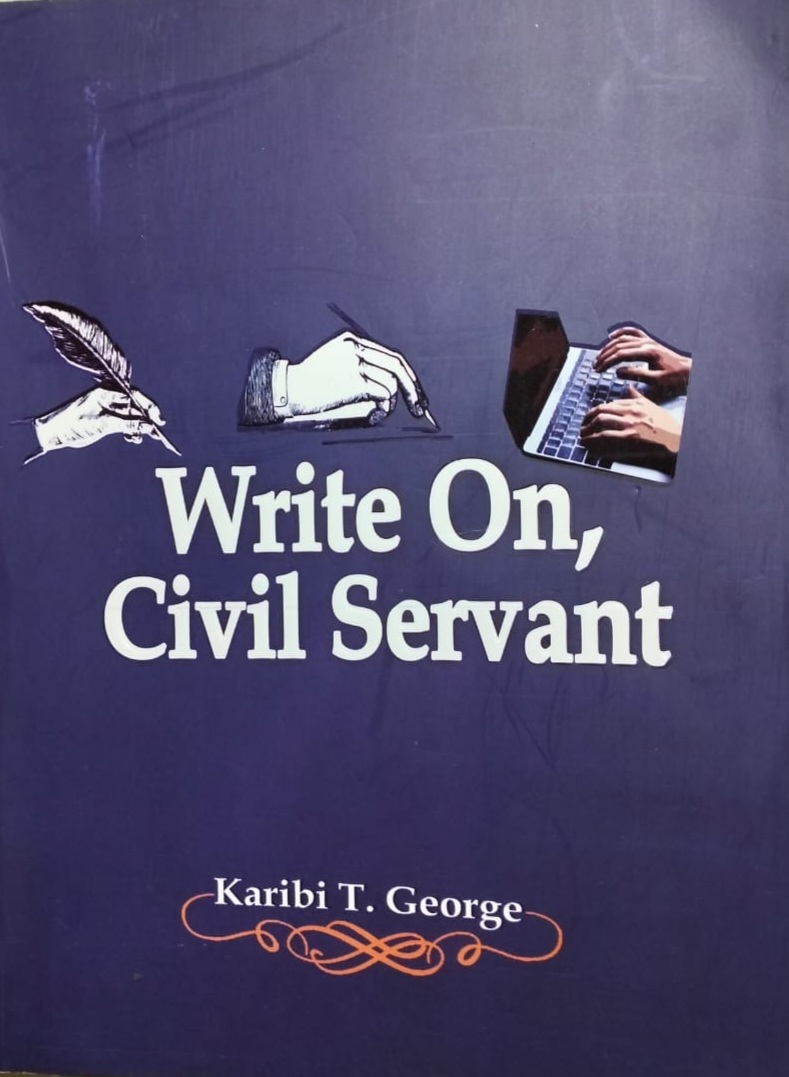
    Karibi T. George, in his latest book, challenges civil servants and workers in bureaucratic settings to advance their careers and organizations through a mastery of the basic forms of writing

    Anonymity is probably the most enduring character of the civil servant. With anonymity, the civil servant can easily evade the consequences of policies or decisions of government and institutions, even when they might have been the brain behind such policies or decisions. However anonymity creates the needed atmosphere for civil servants to freely and boldly contribute to policy and decision making, knowing that their persons are protected from their roles. In other words, anonymity gives the civil servant security and strength.

    But like it is often said, every strength embeds its own weakness. Anonymity has activated a weakness for the civil servant in such a way that it has tampered with the modern civil servantโ€™s creative powers. Since they are not likely to take credit or blame for their actions, a lot of civil servants choose to hide, or better still, bury, their creative talents and skills by staying anonymous thus killing their creative talents and leaving their skills fallow.

    Ironically, among civil servants are to be found the most qualified crop of professionals, technocrats and technicians globally. This is because the recruitment procedure for civil servants is very meticulous and sensitive. No civil servant is recruited without the requisite educational qualifications and attestation from reputable members of the society. Legislators, political officers and even judges do not go through the kind of scrutiny civil servants endure before they are engaged. Yet it is the political appointees that take credit for the fine and hard work put together by civil servants. Even after recruitment, the civil servant undergoes regular inductions, training, assignments and that keep him current and in tune with his duties and general service to the society.

    Of all the institutions established by the colonial authorities, the civil service is the most enduring and stable. It is the engine room of government. It is always there in good and in bad times. It is like the barracks. โ€˜Soldier Go, Soldier Come; Barracks Remainsโ€™ according to Fela Anikulapo-Kuti, the Afro-beat King. Military governments, democratic governments, politicians of hues and political parties may come and go but the civil service remains. Records kept by civil servants are usually treated with sanctity and almost accorded the same value as a statute. And no matter how much the politicians loathe the civil service, they cannot do without it. The sanctity of the civil service has also rubbed off on civil servants. They are reputed for their taut, unembellished and Spartan lifestyles.

    In Write On, Civil Servant, Karibi T. George is challenging the civil servant to wake up and creatively utilise his talents, skills, exposure and experience to make his job better and better himself. Being a civil servant should not be an excuse to be flat and bland. Like the biblical parable of the talents, talents not used get lost to people that use theirs.

    Write On, Civil Servant is what one might call the professional handbook for civil servants of the executive cadre. It is divided into three parts. The first part deals with an overview of the civil service, its nature and methods of communication and the general orientation of the civil service. Part Two delves into the art of writing (which the author refers to as Expository Writing) in the civil service and the forms that writing in the civil service takes. Part Three steps into the general arena and discusses the art of creative writing; writing styles; general English grammar; common mistakes in English; elements of writing; and the psycho-social challenges in writing in the civil service. It is here that those that โ€˜missedโ€™ their English in school can recover it, grasp the rules of grammar, and rediscover their writing skills.

    Write On, Civil Servant is presented in simple free flowing English. The reader does not need to have a dictionary by his side to get along with the author. Special words or expressions known mainly to civil servants are carefully explained, and where necessary, with examples.

    The book is at once a civil servantโ€™s handbook, guide, compendium, book of statutes, textbook on grammar, public communication, styles and motivation. It could not have been better authored by any other person than Karibi T. George, whose training, experience, pedigree and motivation aligns with public communication. Heโ€™s a grammarian, having done his undergraduate and postgraduate studies in English; a lawyer, journalist, book editor, politician, teacher, public affairs commentator; a competitive sportsman, a church elder; the child of a teacher/priest/ civil servant; a civil society activist and a civil servant. He has spent virtually all his active years writing, speaking, holding meetings and motivating younger people.

    Part One is subdivided into three chapters. The first chapter is the introduction where the author explains his motivation for writing the book. He romanticizes writing in the civil services in the colonial days when civil servants were the โ€œeyes and earsโ€ of government. โ€œThey deployed elevated language to present facts and opinions. Their prose was poetic: their letters and official memoranda were filled with descriptive imagery, allusions and metaphors. Their superiors and policymakers enjoyed reading persuasive documents from them as their opinions were reasoned and recommendations accepted for speedy implementation. They wrote in a style that combined beauty and functionality.โ€ The author therefore says Write On, Civil Servant is intended to motivate the civil servant to return to his place as a source of โ€œoccupational writingโ€.

    The second chapter, explores the nature of communication, its processes and its functionality.

    Chapter Three looks at the various types of written communication in the civil service such as Letters; Records; Notices; Resolutions; Circulars; Memoranda; and Minutes. Each of these methods of written communications has its own format, which the author takes time to explain.

    Chapter Four is general commentary on the state of the civil service today and discusses issues that have contributed to the general decline in the quality of written communication in the civil service.

    Part 2 takes up the types of written communication individually. The author identifies two forms of Civil Service Writing: Minuting and Expository Writing.

    He takes time to explain how minutes should be written and how best it can be written. โ€œMinuting should be made to close out actions,โ€ he says. The chapter on minuting X-rays the language of minuting, which outsiders consider the jargons of the civil service. Such language and when to use them include KIV (keep in view), FYI (for your information), TNA (take necessary action), FFA (for further action), WEF (with effect from), Advise, Process and many others.

    The author identifies types of expository writing and explains when to use them and backs them up with generous examples such that the reader can easily identify them from the given examples and how to structure them. He lists 16 types of expository writing to include letter, memorandum, circular, notice, minutes, report and executive summary. Others are speech, press release and statement, media articles, communiquรฉ, citation, tribute, corporate profile and e-mail. This part provides the templates which civil servants and administrative staff or other organizations, whose ordinary duty is to draft and write official communication can adopt to make their jobs easier and more effective.

    Exploring Expository Writing, Write On, Civil Servant says the civil servant does not have to remain aloof and anonymous when they can enhance their career, contribute to knowledge and generally improve the work environment by writing and publishing. It says the civil servant might not make comments on official policies when they are not authorized to do so, but they can write opinion and feature articles that can elaborate on such policies either using their names or pseudonyms.

    It is the opinion of the author that a good understanding of how to present written communication can aid growth in service as he says, โ€œadvancement on the corporate ladder may be dependent on the workerโ€™s ability to communicate in writing.โ€ He advocates that civil servants should practice writing and write regularly.

    In the Third and final Part, the author examines the issues in writing and how to overcome them. This part addresses both civil servants and non-civil servants alike. It is where those who intend to jack up their writing, and even make writing a preoccupation need to focus on.

    He starts Issues in Writing with styles and form, which he says should be simple, informative and obedient to the rules of grammar. Part 3 takes times to identify some basics in English grammar. The author names, explains and provides instances when and those basics can be can be used to good effect in writing. These basic includes Parts of Speech; Phrases, Clauses and Sentences; Uses and Abuses of Prepositional Phrases; Idioms, Cliches and Nigerian English; and Some Common Mistakes in English.

    The author does not leave the reader hanging as to where to find writing resources. He first advises every writer to keep whatever they have to write simple and short; prefer the active voice to the passive voice, keep handy a dictionary and a thesaurus, and โ€˜not forget to keep reading other writersโ€™. He also advises the writer to have the ability to think, for thatโ€™s the key to creative writing; then they should develop a problem solving seeking mind because writing becomes relevant when it unravels mysteries.

    In the final chapter, the author admonishes civil servants and to get digital because the world now communicates digitally and is leaving analogue writers behind.

    In summary, Write On, Civil Servant is a clarion call on civil servants to wake up their creative spirits, write and reclaim their special place in society. After all, some of Nigeriaโ€™s greatest writers penned their way to fame while working for government. Chinua Achebe was working for the Nigeria Broadcasting Service when he wrote Things Fall Apart, Wole Soyinka was with the University of Ibadan when he started writing, Elechi Amadi was in the army and later on with the Ministry of Education, when he wrote his classic novels, and Chukwuemeka Ike even wrote the top seller, Expo โ€™77, when he was the Registrar of WAEC. Teachers and lecturers in government schools have been for long time authors of books and opinion writers; why not the modern civil servant?

    K.T. George, a Fellow of the Nigerian Institute of Public Relations, is a lawyer and civil servant

  • Feature: Nigeria needs largescale Manufacturing & Heavy Industry

    Feature: Nigeria needs largescale Manufacturing & Heavy Industry

    By Ayo Akinfe

    Pondering over Nigeria’s fate as she clicks 62, no matter how you cut it, the country’s future has got to be Germanic with largescale manufacturing and heavy industry as our centre of gravity

    [1] We can mull over this until kingdom come but the fact remains that there is no way a nation of 200m people can survive unless it starts manufacturing its own goods. Even if we had zero corruption and all our leaders were saints, we would still be in a crisis

    [2] There is no way the rest of the world can manufacture enough consumer goods, pharmaceuticals, automobiles, heavy machinery, armaments, etc for 200m people. Never had happened, never will happen. We manufacture what we require or we perish! It is as simple as that

    [3] Any Year One economics students can explain that the value of the primary products we export will always be less than the cost of the finished goods we import. We will thus always have balance of trade and balance of payment deficits

    [4] Do you know that manufacturing only accounts for 7% of Nigeria’s gross domestic product (GDP). This for me is at the root of all our problems. Boost that figure to 70% and we will live in a paradise

    [5] Do you know the global average with regards to manufacturing as a percentage of GDP is 30%. When we only have about one quarter of that, you can see why we are in trouble

    [6] In China, manufacturing as a percentage of GDP is a whopping 40% and in developing economies similar to Nigeria such as Indonesia, Mexico, Iran and Brazil, it is 47%, 34.2%, 40.6% and 27.4% respectively

    [7] Nigeria currently has a GDP of $550bn. If we can double the contribution of manufacturing as a percentage of GDP, I think we can easily boost that figure to $1trn

    [8] No matter how many dollars you throw at the naira, any respite is temporary as ultimately, the strength of your economy is what really determines the value of your currency. We import so much that any vagaries in the global currency market automatically has an inflationary impact on Nigeria

    [9] We have a lot to leverage on as we can use agriculture as a basis to manufacture agri-based products. We also have enough solid minerals to began manufacturing finished industrial goods like pipe rods, machine tools, ball bearings, etc. We also have enough oil and gas to become a major player in the global petro-chemicals industry

    [10] We simply need to get Nigeria manufacturing to move on to the next rung of the ladder. We need the margins from manufacturing to offset the volume of imports, to increase our export earnings from the current $50bn to around $100bn and to end the dependency on oil. In all the other sectors, the margins are simply not high enough to have a dramatic effect on the economy.

  • Feature: Celebrating Nigeria’s 1st Independence Post-Queen Elizabeth II

    Feature: Celebrating Nigeria’s 1st Independence Post-Queen Elizabeth II

    By Ayo Akinfe

    Nigeriaโ€™s first Independence Day celebration post-Elizabeth II should be a declaration for economic independence that looks something like this

    [1] Nigeria will have an annual budget ratio of $1bn to every 1m citizens. In 2023 for instance, with a population of 200m, our national budget shall not be less than $200bn

    [2] Every one of Nigeriaโ€™s 36 states shall generate at least twice the amount of its running costs. Any state that fails to do this over two successive quarters shall be dissolved and incorporated into one of its neighbours

    [3] It will from henceforth be illegal to export primary products or raw materials from Nigeria. Value of some sort must be added to any agricultural product or mineral resource before it is sold outside Nigeria

    [4] Any multinational that makes in excess of $1m from Nigeria annually will be compelled by law to open a local facility in the country

    [5] International suppliers of industrial goods to the government must train all local staff up to the same standards as workers in their home countries

    [6] At no point in time must the local workforce of any multinational operating within the country be less than 90% of the total staff strength

    [7] Nigeriaโ€™s gross domestic product (GDP) must at every time be at least 1000 times the size of the population. For instance, with the current population of 200m, the countryโ€™s GDP must be $2trn at the very minimum

    [8] Nigeria will be twinned with several similar developing nations like Brazil, Mexico, Malaysia, Indonesia, Vietnam, The Philippines and Turkey for infrastructural purposes. At no point in time will infrastructure like kilometres of rail track, number of hospital beds, ratio of university graduates, kilometres of tarred road, number of airports, amount of electricity supplied, number of social houses built, etc be allowed to drop below 10% of the average of these other nations

    [9] At no point in time will unemployment be allowed to grow beyond 5% of the adult working population. Whenever this happens, special government schemes will be launched to provide emergency jobs

    [10] At least 95% of all healthcare requirements must be provided locally. To facilitate this, internationally renown hospitals will be brought to Nigeria to open units and train local medical staff

    Like the US Declaration of Independence, this will be signed by 53 individuals, arguably at the National Theatre, Iganmu, simply because it is Nigeriaโ€™s most iconic building. Signing it there will be making a statement that we are ready to stand toe-to-toe with the rest of the world that has the Statue of Liberty, The Sydney Opera House, Big Ben, Eiffel Tower, the Kremlin, Brandenburg Gate, the Taj Mahal, the Great Wall of China, etc.

  • Feature: The Health Policy for Nigeria’s next President

    Feature: The Health Policy for Nigeria’s next President

    by Ayo Akinfe

    Given their ages and the fact that Tinubu and Atiku are likely to spend the next eight years receiving medical attention in Europe and Dubai respectively, surely they should be able to agree on this health policy

    [1] 12 specialist hospitals shall be established in Nigeria with two in each geo-political zone. These shall include – Dermatology, optometrics, renal failure, cardiology, neurology, ear/throat/nose, cancer, Hiv/Aids, orthopedia, rheumatics, tropical diseases and sickle cell anaemia.

    [2] Pharmaceutical companies will be given 10 year tax holidays if they establish manufacturing facilities in Nigeria

    [3] Each of Nigeria’s 774 local governments must have at least two general hospitals

    [4] Healthcare will be free at the point of delivery to all Nigerians

    [5] Every state government must have at least one mobile clinic which visits remote and inaccessible areas

    [6] A national target of 20 minutes waiting time shall be established for all ambulance services

    [7] Nigeria shall spend 10% of its GDP on healthcare

    [8] State governments that build specialist hospitals in new areas will be given special grants

    [9] A national target of producing 20,000 doctors a year shall be aimed for

    [10] Medical equipment manufacturers will be given a five-year tax holiday if they establish plants in Nigeria

  • Feature- Air Nigeria and Ethiopian Airlines deal: My position

    Feature- Air Nigeria and Ethiopian Airlines deal: My position

    by Gabriel Olowo

    I once said in my reaction to the speculation that ET comes as a partner of good choice for Air Nigeria and now that it is officially confirmed, my position remain the same. Since the issue of Air Nigeria โ€ TO BE OR NOT TO BE โ€ has been laid to rest, given govt insistence to do so,my endorsement is based on the need for the success of any new start-up Airline in Nigeria.

    Failures still abound in the market and some airlines still remain very weak hence the challenge for the discerning and concerned citizen remain in coming up with useful advice.

    It is especially advantageous for Air Nigeria to partner with ET (as a competitor on the NG basa,) for simple purposes of Code Share Agreement (CSA) and Blocked Seat Agreements (BSA) OUTSIDE the Airlineโ€™s intended Direct Services. The merits of Cooperation and Collaboration will more than outweigh that of Competition ( in the manner of speaking) provided the management is on top of its game.

    Nigeria Airways in the past operated to many countries (not Directly) but by Commercial Agreements. That is not all, Interlining and Global Alliances ( which is a necessity in todayโ€™s aviation) comes with ease given this partnership rather than the airline struggling on its own for relevance and partnership for route expansion & penetration purposes.

    Robust Maintenance Facility of ET and its varied Fleet will come very helpful to the young Airline. Manpower training and Personnel exchanges would be another benefit. ET as an African partner is inward-looking and its very very good for the implementation of Single African Air Transport Market (SAATM) under the African Continent Free Trade Agreements (AfCFTA).

    Without any intention of being the Brand Manager for this project, it is my call to salute any good decision be it by Individual Operator or government. The only caveat which has been printed repeatedly is that the 5% Govt ownership (our common wealth ) may not be necessary, afterall, since government is midwifing a totally privately owned airline. It’s a general contention that โ€œGovernment has no business in Businessโ€ due to incessant political interferences. It is also expected that the carrier is not treated as a โ€œmore flag carrierโ€ than all others already flying the flag such as Air Peace and one time Arik.

    I want to discountenance the National Carrier nomenclature as No one single Airline can quickly and easily reciprocate all NG BASAS. 2-3 strong carriers are desirable. The playing field must be levelled for ALL FLAG CARRIERS in the interest of Nigeria Aviation. This is the voice of a solution provider rather than a mere critic. I will encourage the Airline Operators, Aircraft Operators, and all interested stakeholders and associations endeavour to buy the 46% remaining shares available to the public.

    Dr. Gabriel Olowo started his aviation career as a Management Trainee with Lufthansa German Airlines in 1973. He worked consistently in the aviation industry since then, serving at various capacities such as Assistant Manager with Lufthansa German Airlines, Deputy General Manager with Varig Brazilian Airline.

    Executive Director with Bellview Airlines Limited ( A leading private airline in Nigeria) and Country Director of Sabre Network Inc West Africa….. a US leading Technology company for Airlines.

    Gabrielโ€™s deep and wide aviation industry experience has made him an acknowledged expert in airlines and aviation business management. He has provided varied consultancy services in these areas and is an author of many aviation industry-related publications. Heโ€™s currently theย President, Aviation Safety Round Table Initiative.