Category: Features

Featured posts

  • Feature: The Sport Policy needed in Nigeria

    Feature: The Sport Policy needed in Nigeria

    By Ayo Akinfe

    I see no reason why the contenders for Nigeria’s presidency should not have a sports policy that includes winning the World Cup during their tenure and hosting the mundial in our lifetime

    [1] Nigeria is the world’s largest black nation and that brings along with it a lot of responsibilities. It is totally unacceptable that small nations like Qatar can host the World Cup and this global giant cannot

    [2] Also very disturbingly, how can small nations like Uruguay brag about having won the World Cup before and Nigeria cannot. As a people, these are the kind of lofty targets, goals and quotas we have to set ourselves as a nation

    [3] Do you know that Nigeria is in the unique position of being the last team Diego Maradona played against before he retired. His last football match was against the Super Eagles in the 1994 World Cup. Maradona always had a close affinity with Nigeria, partly because we have met Argentina five times at the World Cup. Apart from the 1998 World Cup, we always ended up in the same group with Argentina at the Mundial and we should cash in on that

    [4] I still have vivid images of Maradona, the Argentina manager hugging Nwankwo Kanu on the touchline just before their group game against us at the 2002 World Cup. From everything I saw, he actually had a lot of respect for Nigeria. Unfortunately, Nigeria also sent Maradona to hospital in 2018 as he collapsed in the stadium after Victor Moses’ penalty which squared the game. The thought of Nigeria dumping Argentina out of the tournament appeared to be a bit too much for him to take. Luckily, he made a great recovery

    [5] To cash in on this affinity, one of our governors should open a Diego Maradona Football Academy in his state in conjunction with the Argentine Football Federation. This academy should train pupils from Junior Secondary School One to Senior Secondary School Three level. They are certain to uncover a few world class gems of the quality of Maradona and Messi

    [6] Argentina’s leading clubs like Boca Juniors, Independente, Newell Old Boys and River Plate should all be asked to part-fund the project. In return, they will have first choice when it comes to picking any of the talent that comes through

    [7] Highly respected Argentine coaches like Marcelo Bielsa, Mauricio Pochetinno, Diego Simeone, José Pékerman, Eduardo Berizzo and Jorge Sampaoli should all visit at least once a year to offer coaching courses at the academy. If we do that, we will begin to uncover talent as they do in say Argentina, Brazil, Spain, Italy, England, etc

    [8] Kind of like the Nigerian Defence Academy in Kaduna which trains officers for the armies of most African nations, our Diego Maradona Football Academy should also train coaches from all over Africa for a fee. This alone should help sustain it

    [9] Every year, this academy should host a Nigeria vs Argentina match, with the likes of Lionel Messi on show

    [10] This academy should also recruit a network of coaches tasked with visiting every one of our 774 local government areas in search of talent. There are bound to be hundreds of Kanus and Okochas rotting away in some inaccessible dusty village in Zamfara, sone fishing island in Bayelsa or some farming hamlet in Ondo. This army of coaches should fish them out. I remember how the mechanic Muda Lawal was discovered by accident by Mandilas Lions in Lagos.

  • Feature: MVNOs are coming!

    Feature: MVNOs are coming!

    By Elvis Eromosele

    Barring any unforeseen, the Nigerian Communication Commission (NCC) will grant licenses to companies to operate as Mobile Virtual Network Operators (MVNOs) before the end of this year. The telecom regulator insists that this is part of strategic effort to ensure the provision of qualitative and efficient telecommunications services throughout the country.

    Professor Umar Garba Danbatta, Executive Vice-Chairman and Chief Executive Officer (EVC/CEO), NCC, revealed this at the Business Remarks Telecom Sector Sustainability Forum (TSSF) in Lagos this week with the theme “Creating Awareness and Ensuring Sustainability of Mobile Virtual Network Operators (MVNOs) in Nigeria’s 5G Ecosystem”.

    The session brought to mind an article that I wrote and posted on Facebook in 2014. I think it is still relevant today, now that the MVNOs are truly coming:

    MVNOs are coming!

    Variety, they say, is the spice of life. Imagine 10 service providers each knocking on your door and offering varying bundles (basic minutes, SMS and data), top-of-the-range content and innovative services all at rock-bottom prices. Ha, the life!

    This might look like a dream right now but if official sources are to be believed it may happen sooner rather than later. Some swear this is where we are heading with the imminent licensing of mobile virtual network operators (MVNOs) in the wings. Customers can thus confidently look forward to a season of more predictable monthly bills and on-average lower costs.

    Thus, after a dozen years of what has been described as a telecommunications revolution, we may well be heading into another revolution. This time: A Telecommunications SERVICES revolution.

    But suppose one was to ask: what are MVNOs? These are communications services providers that do not own the wireless network infrastructure over which they provide services to customers.

    Or put another way, MVNO operators are companies that will lease capacity from the mobile network, charge their consumers to use the services they provide and pay the operator to use their network and then keep the difference.

    Sounds simple enough, but how would it work? Experts say an MVNO (prospective MVNO, if you like) enters into a business agreement with a mobile network operator to obtain bulk access to network services at wholesale rates, and then sets retail prices independently.

    MVNO can be either convenient or no-frills. That is they may simply target existing and loyal customer base or offer a value proposition based on low-cost and basic services (e.g. basically minutes and SMS bundle, online sales and absence of handset subsidies).

    Another valid question at this point is why MVNO? Any keen observer would by now be aware that the mobile telecom market in Nigeria is fast approaching maturity, with penetration rates inching closer to the 100 percent mark. The challenge at this point is usually how to 1. Improve competition 2. Ensure full capacity utilization and 3. Ensure customers have options – viable options.

    Of course, the Nigeria Communications Commission (NCC) would not only have to license these operators but equally create what is known as enabling environment for them to thrive including but not limited to reduced license/operating fees amongst others.

    Naturally, the NCC would realize money through taxes to be received from MVNO operators. This is a win-win scenario for the NCC, the mobile operators and the subscribers.

    Globally, the emergence of the MVNO model in various markets was usually precipitated by varied local factors. In some markets, the MVNO concept came about as the result of regulatory intervention. Regulators wished to force established mobile network operators to offer wholesale access to their network to ensure robust competition to benefit the consumer. In other markets, mobile network operators responded to market opportunities to offer their excess capacity at wholesale rates to other entities to bring in incremental revenue

    on what would otherwise be unused network capacity. Mobile network operators reason that savings from not providing customer service and marketing would offset any revenue lost by selling network access at wholesale rates.

    These all make sense when one considers that an MVNO incurs no significant capital expenditure on spectrum and infrastructure and does not have the time-consuming task of building out extensive radio infrastructure.

    Expectedly, it would not necessarily be all rosy. Like all good businesses for MVNOs to succeed they need to have a worthy story, a source of differentiation and continually strive to secure a mutually beneficial and attractive wholesale rate. What’s more, they should carefully select their vendors and think of a flexible business model that would enable them to keep pace with the rapidly changing mobile industry. They would also clearly need to have a clear technology roadmap and be prepared to follow current trends, keeping pace with technology developments while anticipating future trends.

    It goes without saying that MVNOs have got to choose the targeted niches carefully.

    This could be based on the segments already cover with an eye on differentiating with tailor-made services.

    The truth is that the MVNO sector has unwittingly become a permanent fixture of the wireless space globally. Due to intense pressure to consolidate and rationalize the network provider side of the industry, MVNOS represent an appropriate way to lower the barriers to entry while enjoying economies of scale. This is probably why regulators around the world now also look at MVNOs as service-based players capable of building competition by offering consumers a choice of offers and lower prices. Indeed Wireless Intelligence reports that there are now about 812 MVNOS across the globe.

    As an aside, those who should know insist Emirates Telecommunications Corporation (Etisalat), the United Arab Emirates mobile cellular operator picked by the country’s Mubadala Development Company to operate its $400 million telecoms license in Nigeria had initially planned to operate as the nation’s first Virtual Mobile Network Operator (VMNO) to speed up on its entry into the market. It however quickly jettisoned the idea due to what experts refer to as a glaring lack of enabling environment.

    Today, sadly, this glaring lack of enabling environment persists. Thus, while the telcos would likely welcome the emergence of MVNOs as a new way to increase network traffic at a lower cost and open up new revenue streams for alliance partners, it may prove especially difficult locally with large-scale network congestion issues currently being faced by existing players.

    Thankfully a lot of investment is going into the ground to boost network capacity by all existing telecommunications services providers. MTN recently completed a network modernization and upgrade project while Globacom just commenced a similar initiative. In fact, all operators are harping on investment to improve capacity.

    MVNOs are really more than “me too” companies, they can indeed truly add value to the nation’s telecommunications industry. They boost capacity utilization and provide customers with much-needed alternatives. Experts insist that MVNOs are the next phase of growth for the telecommunications industry.

    The consensus is that another factor fueling the rise of MVNOs is the emergence of social media. MVNOS benefit from the “shareability” that online social platforms provide. Thus by creating a socially-driven marketing campaign via Facebook, Twitter and YouTube, operators can engage with consumers and encourage them to share the MVNO services. With over 11 million social media activists, Nigeria may well be MVNOs heaven.

    We better get ready then as MVNOs are indeed coming!

    Elvis Eromosele, a Corporate Communication professional and public affairs analyst lives in Lagos.

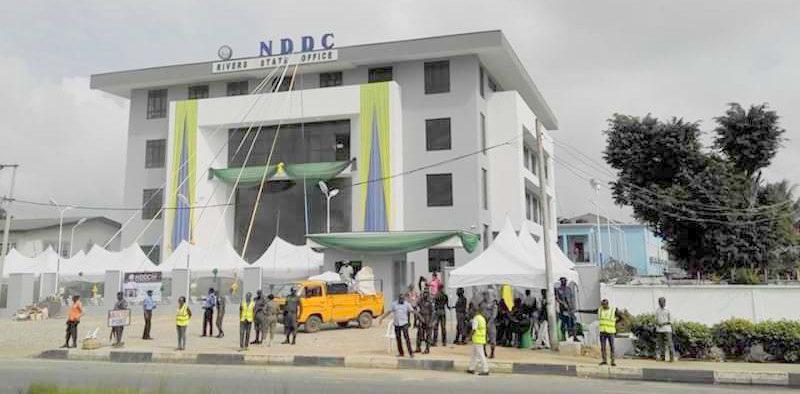
  • Feature- NDDC: No Strategy before New Appointment

    Feature- NDDC: No Strategy before New Appointment

    By Ayo Akinfe

    I am perplexed that President Buhari did not chart out the NDDC strategy first before appointing new board members

    [1] From henceforth, the Nigerian Delta Development Corporation (NDDC) will become a quasi-government body with 50% of its directors coming from the private sector

    [2] The NDDC will have 11 public sector directors, one from each of its 10 member states and one representing the federal government. They will sit on the board along with 11 private sector directors

    [3] These NDDC directors will elect a chairman who will run the corporation as a private concern

    [4] All NDDC contracts must involve a public bidding process done online and live. Every tender and bid must be publicly available for scrutiny

    [5] The office of the minister of Niger Delta Affairs will be scrapped. Instead what we will have is a minister for geo-political zone coordination operating across the whole country

    [6] If any private sector NDDC director has a conflict of interest in any contract, they must declare it. NDDC directors’ companies will not be able to bid for contracts in sectors in which they are operational

    [7] The NDDC will set itself annual targets when it comes to the construction of shipyards, ports, boat factories, etc. For instance, at least one port must be dredged a year

    [8] It will be the responsibility of the NDDC to build a coastal railway and coastal highway linking Calabar with Badagry

    [9] Every year, the NDDC must attract at least one major investor into the Niger Delta. This will include shipyards, boat manufacturers, fishing equipment makers, fish processing firms, etc

    [10] The NDDC will be responsible for cleaning up the Niger Delta and maintaining its environmental integrity

  • PROF LÁYÍ EGÚNJOBÍ: A Quintessential Òkèògùn Patriot

    PROF LÁYÍ EGÚNJOBÍ: A Quintessential Òkèògùn Patriot

    By Pastor Favour Adewoyin

    Popular people and achievers are best called or addressed by their names without titles. So, bàbá will permit me to break all protocols to call him LÁYÍ EGÚNJOBÍ.

    LÁYÍ EGÚNJOBÍ is 82 years old today, but he appears younger and the sharpness of his voice, his reasoning ability, his logical presentation ability and his painstaking thoroughness when discussing issues can qualify him for a sixty years old man.

    An Emeritus Professor of the Premier University, the University of Ibadan from the Faculty of Urban and Regional Planning, LÁYÍ EGÚNJOBÍ is a man of many parts to different people. He is teacher/lecturer to many, a resource person to others, a town planner to so many people, a leader, a father, a mentor and a strong Òkèògùn patriot who has used the best of his time, talent and treasure to serve humanity and is still serving.

    There is no much time to write about this great man from Ìlàjì-Òkè near Òkehò under Kájòlà Local Government Area of Ọ̀yọ́ State; but, to know more about him, I like to recommend three of his books to us:

    1. Living For A Purpose – a biography complied by Káyọ̀dé Samuel and Ayọ̀bọlá Akwarandu.

    The biography was written by 39 individuals who documented their views about the man of the hour,
    LÁYÍ EGÚNJOBÍ, to celebrate his 70 years on planet earth in 2010.

    1. Fulfilling The Purpose – My Story At Eighty by LÁYÍ EGÚNJOBÍ.

    This is an autobiographical work which captures the life of LÁYÍ EGÚNJOBÍ from beginning to when he celebrated his 80 years on earth.

    1. Oke-Ogun in Regional Development by LÁYÍ EGÚNJOBÍ.

    This book captures his passion for Òkèògùn and, as a indigene of Òkèògùn, whose love should be to know about his or her region, it is a must to have this book and the first two books I mentioned above because both of them also contains Òkèògùn’s story and how to move her to greater heights.

    The third book is ‘a compilation of seminar papers, public lectures, contributions in symposia, keynote addresses and other commissioned papers in Oke-Ogun’ that were presented at different fora by our own LÁYÍ EGÚNJOBÍ.

    Let me say that I knew LÁYÍ EGÚNJOBÍ for a long time, but I was not close to him and he didn’t know me. He knew me few months ago, precisely when I presented what happened in the General meeting of ODCF that held in Ìṣẹ́yìn few years ago. But, within that time and now, I have learnt and gained a lot from this great man that has made it look as if we have been together for years.

    Before I drop my pen, I will like to add that, today, LÁYÍ EGÚNJOBÍ has mentored many great men and women who are successful in their different professions and callings in different places on the earth.

    One thing I knew about him had been that there was and is no time that young people were and is not living with him at one time or another.

    Another good thing to celebrate about LÁYÍ EGÚNJOBÍ is his love for God in a more deeper and practical way. He is not someone who speaks about without doing what is written in the Word of God. He is a doer and practitioner of the Word and he has no patience for hypocrisy and pretenses of religion that many people profess, confess and live by.

    Then, I cannot but mention that he is a homely man who loves family. Always acting like Romeo and Juliet with his wife, Chief Mrs. Nike Egúnjọbí, who is also an Òkèògùn woman from Sakí Ògún-Ọ̀rọkin Àgbẹ̀dẹ́ ọ̀ rò bàbà, LÁYÍ EGÚNJOBÍ is always at home to add value to the home-front at all time. His relationship with his wife, his children, his mentees and the extended family members is worthy of emulation by the upcoming generation.

    Finally, I want us to celebrate this great man of the moment because the best way to celebrate an individual is when he or she is still alive.

    To this end, I suggest that those who can afford to buy any or all of his books that I mentioned above should show interest by reaching out to me. I don’t know the price of each of the books now, but I will contact him to let us know the price soon.

    Once again, I pray that LÁYÍ EGÚNJOBÍ lives long in peace, joy, wellness and prosperity for many more years to celebrate hundred years plus to provide leadership for Òkèògùn till we achieve his and the dream of many of them for our community.

    A ó ma ri yín bá láṣẹ Èdùmàrè.

  • Feature: _Awa lokan_ Industrial Development Plan

    Feature: _Awa lokan_ Industrial Development Plan

    By Ayo Akinfe

    Nigeria’s Five Year Awalokan Industrial Development Plan 2023-2028

    [1] Between 2023 and 2028, a nationwide railway network will be constructed linking all 774 local government areas together

    [2] Between 2023 and 2028, Nigeria will move towards allowing each of its 36 federating units to control the resources within their domain. By 2028, they will only have to remit 50% of all monies received to the federal government

    [3] To help the states get through this transition programme, all 36 of them will be given oil blocks in the Niger Delta which were previously handed to individuals

    [4] Over the next five years, we will move towards value addition to every agricultural commodity we produce. By 2028, it will be illegal to export any product from Nigeria without at least 50% value addition

    [5] By 2028, every building in Nigeria must have at least one solar panel installed on its roof tops

    [6] The Christian Association of Nigeria and the Nigerian Supreme Council for Islamic Affairs will be compelled by law to open at least one factory for every five places of worship their members open

    [7] Every single one of our 774 local government areas must open and run a technical vocation college

    [8] Federal, state and local governments will be compelled to include a caveat that any foreign company supplying them with goods in excess of N1bn must by law open a manufacturing facility in Nigeria to produce such goods. As from 2028, companies with no presence in Nigeria will be struck off our list of suppliers

    [9] By 2028, Nigeria will strive to move at least 60m rural agrarian workers off the land and into factories. This will free up land for largescale commercial agriculture. The goal is to make farming fully mechanised by 2028

    [10] Every local government, state and industrial park must have at least one power source by 2028. It could be wind, solar, gas-fired or hydro. States and local governments must also establish mini and micro distribution grids. The idea is to end this unsustainable reliance on the national grid

  • Feature- Nigeria and African Energy Poverty and Gas-To-Power Projects: Build More and Build Better

    Feature- Nigeria and African Energy Poverty and Gas-To-Power Projects: Build More and Build Better

    By NJ Ayuk

    As the executive chairman of the African Energy Chamber (AEC), it’s my honor and my privilege to tell the world the story of Africa’s oil and gas industry – to explain what this continent can do to help power the world and fuel its own future. But it’s also my mission to talk about African energy poverty and to explain why this continent needs better access to energy now in order to illuminate its own potential and power forward.

    To illustrate the issue of energy poverty in general, I’d like to focus on energy poverty in Nigeria in particular.

    Within Africa, Nigeria is an interesting subject. It’s the most heavily populated country in Africa, with more than 200 million citizens. It surpassed South Africa to become the continent’s largest economy about a decade ago, and its GDP topped USD441.5 billion in 2021. It has the largest crude oil reserves in sub-Saharan Africa and is typically the largest liquids producer in the region, though output figures have slumped this year due to problems with theft and sabotage. Likewise, it has sub-Saharan Africa’s biggest reserves of natural and associated gas and is far and away the region’s biggest gas producer.

    Nigeria also experiences significant energy poverty, despite these advantages. As noted in the AEC’s recently released report, “The State of African Energy: 2023 Outlook,” consistent access to modern energy services – that is, steady and reliable electricity supplies – is available to only 60% of the country’s population on average, and access rates appear to be significantly lower in rural areas than they are in urban areas. And according to World Bank data, about 99.9 million people, or more than 47% of Nigeria’s population, lived in rural areas as of the end of 2021. That means nearly 100 million Nigerians are living without any true level of certainty that the lights and the electric power that so many in the developed world take for granted will stay on.

    I, for one, think they deserve to have that certainty.

    They deserve it on human grounds, and their country already has a significant amount of what is needed to provide them with it. And by that, I mean that Nigeria has gas that it could use to generate power.

    What Nigeria Has

    As I’ve already noted, the country’s gas resources are the largest in sub-Saharan Africa. Nigeria has already been shown to have more than 200 trillion cubic feet (tcf) of gas in proven reserves, and government officials believe that the figure could go even higher, perhaps reaching 600 trillion cubic feet (tcf) following additional exploration.

    If that prediction comes true, Nigeria will have the fourth largest gas reserves in the world, behind only Russia, Iran, and Qatar. It will have more than enough gas to meet current demand; it will have enough gas to produce significant volumes of LNG for export while also supporting gasification programs, both on the domestic and regional levels.

    But it’s not enough just to have all that gas. Nigeria also needs the means to make use of its gas. Without the proper infrastructure, it won’t be able to put its resources to work and will merely have a scattered collection of raw materials.

    What Nigeria Needs

    In practical terms, this means that Nigeria ought to have the following:

    • Upstream production facilities for gas.
    • Midstream gas transportation facilities such as pipelines, including field networks and trunk lines.
    • Downstream gas-processing plants and production facilities for gas-derived fuels such as liquefied natural gas (LNG), compressed natural gas (CNG), and liquid petroleum gas (LPG).
    • Downstream gas distribution systems, including town gas networks.
    • Downstream gas storage depots.
    • Gas-fired thermal power plants (TPPs) – preferably co-generation plants, as they are more efficient.
    • Transmission, distribution, and storage infrastructure for the electricity produced by gas-fired TPPs.
    • Smart and secure operational technology (OT) systems that can optimize the flow of data and resources between consumer markets and energy networks

    I’m not suggesting here that it’s the Nigerian government’s job to provide all this infrastructure. But I do believe that it’s Abuja’s responsibility to make sure that this infrastructure becomes available. To this end, I think that Nigeria also needs government bureaucracies that are competent and trustworthy enough to ensure that oil-, gas-, and power-related contracts are only awarded to companies capable of providing the goods and services required within the acceptable parameters.

    What Nigeria Envisions

    Developing this infrastructure requires the right kind of vision, which Nigeria already has in place: its “Decade of Gas” program is designed to make the country entirely gas-powered by 2030.

    When President Muhammadu Buhari rolled out this initiative in March 2021, he indicated that it aimed to make the gas sector the cornerstone of Nigerian economic activity. By the time the “Decade of Gas” comes to an end, he said, the country will have done the following:

    • Adopted a new oil and gas law to facilitate investment.
    • Carried out new exploration projects, discovered new reserves, and brought new fields onstream.
    • Constructed new gas-processing plants and production facilities for LPG and other gas-derived fuels.
    • Built new export pipelines and constructed new production trains at gas liquefaction plants such as Nigeria LNG (NLNG).
    • Constructed new domestic pipelines along routes to serve local customers plus gas-fired thermal power plants (TPPs) to increase domestic electricity supplies.
    • Expanded domestic power transmission and distribution networks, especially in rural areas.

    Nigeria still has a significant amount of ground to cover before it achieves all of these targets. However, it has made progress. The biggest example of this is the Petroleum Industry Act (PIA), which Buhari signed into law after it passed both houses of the National Assembly. The Nigerian government is also successfully promoting LPG, a gas-derived fuel, as a replacement for wood and charcoal as cooking fuel. (According to NLNG, domestic LPG consumption has climbed by around 1,000% over the last 14 years.)

    And as recently as this November,  Nigeria moved closer to building its first floating liquified natural gas (FLNG) facility. Nigerian company UTM Offshore signed a front-end engineering design (FEED) contract to design the facility with JGC Corporation, Technip Energies, and KBR. Chief Timipre Sylva, Minister of Petroleum Resources, Nigeria, described the project as a step in the right direction for Nigeria to develop, exploit, and monetize its natural gas.

    During the African Energy Week in Cape Town, Amni International Petroleum Development Company Limited, a Nigerian independent oil and gas exploration and production company and the African Export–Import Bank (Afreximbank) signed an agreement for the provision of a $600 million syndicated reserve-based lending facility.

    To a lesser extent, Abuja can also claim credit for the headway it has made on the Ajaokuta-Kaduna-Kano (AKK) pipeline, which is being built to bring gas to the northern part of the country. When finished, the pipeline will deliver fuel to gas-powered industrial facilities and feedstock to TPPs with a generating capacity of 3,600 MW. It may also serve eventually as the first leg of the Trans-Saharan Gas Pipeline (TSGP) network, which will allow Nigeria to export gas to Europe via Algeria. Unfortunately, though, the project has been running behind schedule, and the heavy floods that began hitting many parts of the country in mid-2022 have caused additional delays.

    In the meantime, Abuja has also moved forward with plans for establishing another gas export network – the Nigeria-Morocco Gas Pipeline (NMGP), a 5,600-km offshore network that would serve more than a dozen West African states. This system would, like TSGP, pump Nigerian gas to Europe, but it would also serve the purpose of delivering the gas to regional markets as well. As such, it would establish Nigeria as a supplier of fuel to much of West Africa.

    Thus far, neither NMGP nor TSGP has been built. But Nigerian authorities are working to hammer out agreements on these projects – and they see the ways that European market conditions have changed since the beginning of 2022 as an incentive to work harder and to work faster.

    What Nigeria Could Achieve

    If they succeed, they will create infrastructure that could do quite a bit to alleviate energy poverty in Nigeria and beyond.

    In the case of NMGP, the construction of this pipeline would provide multiple countries beyond Nigeria with a steady source of gas. As such, it would serve as an incentive for the construction of TPPs in places where millions of people do not have access to reliable energy supplies. At the same time, the pipeline’s access to European markets, where buyers are more likely to pay in hard currency, would help ensure the profitability of the whole system.

    Likewise, the TSGP network has the potential to benefit Nigeria by ensuring that the country has enough access to hard-currency markets in Europe to cover the costs of the domestic initiatives that depend on AKK – that is, the gas-fired power and industrial projects in the northern part of the country.

    Infrastructure Is Needed Throughout the Continent

    Of course, energy poverty is not limited to Nigeria; more than 600 million people in Africa lack access to electricity, and nearly 730 million use hazardous and inefficient cooking fuels and technologies. Nevertheless, while each African country is unique, I hope that this look at Nigeria helps shed light on some of the common challenges facing our continent’s countries — a higher rate of energy poverty in rural areas and the tremendous need for infrastructure development.

    As “The State of African Energy: 2023 Outlook” points out, even in the four African countries with a universal electricity rate of more than 70% — Egypt, South Africa, Kenya, and Algeria — access to electricity drops significantly in rural areas, to an average of about 63% of the population, compared to an average of 96% in urban areas.

    The situation for rural Africans is even more dismal in other parts of the continent. In the Democratic Republic of Congo, for example, only about 19% of the overall population has access to electricity and in rural areas, only 1% of the population has electricity.

    This will not change until we develop the necessary infrastructure to deliver energy to Africans throughout the continent.

    On the brighter side, Nigeria also gives us examples of measures African countries can take to begin addressing these challenges. No, Nigeria has not achieved its ultimate goal-eradicating energy poverty, but it has plans and initiatives in place with real potential to make a difference — as long as Nigeria continues pursuing them.

    If they haven’t done it yet, governments throughout the continent should be developing and implementing multipronged programs of their own to eradicate energy poverty. They, like Nigeria, should be leveraging their natural gas resources. They should be developing and executing gas utilization plans, improving their approach to resource management, monetizing natural gas to help pay for infrastructure projects, and launching more gas-to-power initiatives.

    Instead of being daunted by the vast numbers of Africans without electricity, shrugging our shoulders, and giving up, I hope that we will be steadfast in our determination to make energy poverty history by the end of this decade.

    For a complete look at our recommendations and “The State of African Energy: 2023 Outlook,” download our report here (https://bit.ly/3goAZzK).

  • Feature: National Assembly needs a Rosa Parks Patriotic & Civic Act

    Feature: National Assembly needs a Rosa Parks Patriotic & Civic Act

    By Ayo Akinfe

    To get Nigeria off her knees the new president will need to get the National Assembly to pass a Rosa Parks Patriotic and Civic Act.

    [1] On December 5 1955, the Alabama Bus Boycott began. The Monday after Rosa Parks was arrested for refusing to surrender her seat to a white person. I love this lady from the very bottom of my heart as she is a symbol of that desire to want a better society

    [2] Rosa refused to stand up and her arrest sparked off a chain of events that led to buses in Montgomery, Alabama being boycotted between December 5 1955 and December 20 1956. Poor black folks walked for miles to work to make the point. They endured the pain and discomfort and could not be bought off with enticements

    [3] It is no surprise that as the pressure mounted, the US Supreme Court ruled the Alabama and Montgomery laws that segregated buses were unconstitutional. No doubt the bus companies felt the impact too as they lost a lot of money, so had no choice but to back down and abolish segregation

    [4] Prior to the bus boycott, Jim Crow laws mandated the racial segregation of the Montgomery Bus Line. As a result of this segregation, African-Americans were not hired as drivers, were forced to ride in the back of the bus and were frequently ordered to surrender their seats to white people even though black passengers made up 75% of the bus system’s riders

    [5] In addition, African-American passengers were often attacked by bus drivers and shortchanged. Sometimes, they were even left stranded after paying their fares

    [6] I challenge you Nigerians today. How many of you are prepared to walk to work, school, the market, church, mosque, owambes, etc for 381 days to make a point? You will not do it, which is why you shall continue to suffer. I do not blame the Nigerian elite for exploiting your cowardice. You brought all your suffering upon yourselves. Every people get the government they deserve

    [7] So effective was this Alabama bus boycott that the city of Montgomery authorities were forced to pass an ordinance authorising black bus passengers to sit anywhere they chose on buses. This Montgomery bus boycott stimulated activism and participation from the south in the national civil rights movement and gave Dr Martin Luther King national attention as a rising leader

    [8] About a year later, this tactic was employed in South Africa with the 1957 Alexandra bus boycott undertaken against the Public Utility Transport Corporation by the people of Alexandra in Johannesburg. Their bus boycott lasted from January 1957 to June 1957. At its height, 70,000 township residents refused to ride the local buses to and from work. For many people this daily journey to downtown Johannesburg was a 32 km round trip but hey, they did not mind as they fought on against apartheid

    [9] When you look at the manner in which the Nigerian elite treat the masses with contempt, refuse to pay salaries, leave our schools dilapidated while their children school abroad, neglect our hospitals while they go for monthly check-ups abroad and abandon public transport while they have fleets of SUVs, I have to ask myself why there is no civil disobedience campaign to protest all this

    [10] If every Nigerian decided to boycott both PDP and APC political rallies to protest the way they treat the masses, this alone would have a profound impact. However, from what I can see, for a bag of rice, gari and some palm oil, our people will troop out en mass to cheer the looters on. In the 1950s, black Americans and South Africans lived under far worse conditions than we did but alas, they never allowed themselves to be bribed. When we reach that stage of mental development, our suffering will start to ease. I think going to owambes, attending the church and mosque and going to heaven is more important to my people than a functional society, so these problems will remain with us for a while to come

  • Feature: Manufacturing Sector as the Gateway to Strengthening the Naira

    Feature: Manufacturing Sector as the Gateway to Strengthening the Naira

    By Ayo Akinfe

    All this talk about the naira strengthening or weakening is just hot air as what we need is a weak currency that will make our manufactured exports cheaper.

    [1] So the naira strengthens slightly against the dollar and Nigerians are celebrating. This just shows how economically illiterate we are as a people. To have a robust economy, Nigeria needs a weak currency that will make her exports competitive on global markets

    [2] China has intentionally kept her yuan weak so she can dominate international trade. Chinese goods are much cheaper then their American or Japanese alternatives

    [3] Just imagine how Nigeria would be thriving Witt her weak currency were we say the world’s number one manufacturer of motorcycles, bicycles, mobile phones, laptop computers and flatscreen TV sets

    [4] In Nigeria today, manufacturing only accounts for 7% of gross domestic product (GDP). This for me is at the root of all our problems

    [5] Do you know the global average with regards to manufacturing as a percentage of GDP is 30%. When we only have about one quarter of that, you can see why we are in trouble

    [6] In China, manufacturing as a percentage of GDP is a whopping 40% and in developing economies similar to Nigeria such as Indonesia, Mexico, Iran and Brazil, it is 47%, 34.2%, 40.6% and 27.4% respectively

    [7] Nigeria currently has a GDP of $550bn. If we can double the contribution of manufacturing as a percentage of GDP, I think we can easily boost that figure to $1trn

    [8] No matter how many dollars you throw at the naira, any respite is temporary as ultimately, the strength of your economy is what really determines the value of your currency. We import so much that any vagaries in the global currency market automatically has an inflationary impact on Nigeria

    [9] We have a lot to leverage on as we can use agriculture as a basis to manufacture agri-based products. We also have enough solid minerals to began manufacturing finished industrial goods like pipe rods, machine tools, ball bearings, etc. We also have enough oil and gas to become a major player in the global petro-chemicals industry

    [10] We simply need to get Nigeria manufacturing to move on to the next rung of the ladder. I was hopeful that this recent gas-fired industrial park in Delta State will be the catalyst for the Nigerian industrial revolution. We need the margins from manufacturing to offset the volume of imports, to increase our export earnings from the current $50bn to around $100bn and to end the dependency on oil. In all the other sectors, the margins are simply not high enough to have a dramatic effect on the economy.

  • Feature: Nigeria needs to address increasing GDP, Boost Manufacturing and Productivity

    Feature: Nigeria needs to address increasing GDP, Boost Manufacturing and Productivity

    by Ayo Akinfe

    Without a coherent religious finance policy, none of Nigeria’s presidential candidates can address the matter of increasing GDP, boosting manufacturing and increasing productivity

    [1] No matter how you look at things, religious capital presents Nigeria with the biggest potential source of internal finance for investment. Even if we appoint the most brilliant economist on earth as our finance minister, he or she will never be able to crack the Nigerian economy without tapping into religious finance

    [2] As you all know, elsewhere, thousands of examples abound as to how capital from faith groups has dramatically turned economies around. Europe would not be the developed continent it is today had the Catholic Church not spent billions upgrading its infrastructure and more recently, Saudi Arabia, Dubai, Malaysia, Indonesia, Turkey, Qatar, etc, have all used Islamic Finance to fund colossal infrastructural projects

    [3] Nigeria needs about $75bn annually to invest in infrastructure and I fail to see where else it can come from other than faith groups. If you look at the sum total of budgetary allocations, foreign direct investment and diaspora remittances, they simply cannot fill this void. The first thing I think we need to do is calculate the sum total of church tithes and Friday Jummah collections in Nigeria. I put it to you all that the figure will be staggering. It will dwarf or at least double our $30bn annual budget and it is time we invest this capital for the common good of all of us

    [4] As we look to diversify our economy, there has been a lot of talk about solid mineral extraction. Now, putting our thinking caps on and thinking outside the box, has it occurred to us that there is a link between religious faith and solid minerals? You know why? Many religious orders hold vigils, worship and pray on mountain tops. As we all know, most of the earth’s solid minerals are located in rock formations. Has it occurred to anyone that all these prayer meetings are actually taking place on top of rich mineral deposits?

    [5] I have a proposal that will kill two birds with one stone. First of all, people complain about noise pollution from loudspeakers in built-up areas, so let us licence faith houses to open churches and mosques on out-of-town mountain top locations. Grant them licences to build facilities on such locations

    [6] However, I would want responsibility for these licences transferred to the minister for solid minerals with one small caveat. Every licence holder most prospects for minerals on their location to ascertain if it contains any hidden gems. You may find the results staggering

    [6] I do not think it is demanding too much to ask every church and mosque group in Nigeria to employ one geologist, buy two dozen pick axes and shovels and ask their young members to spend say one hour a week prospecting for solid minerals. Our ministry of solid minerals should supply heavy machinery if anything is discovered or provide high-tech equipment if the geologist requires it

    [8] This is a win-win for everyone as we reduce noise pollution in our urban centres, the prospect for solid minerals cheaply and if anything is discovered the faith house should get to keep about 25% of all proceeds. Over the long term, faith houses should be encouraged to create investment arms that will take out stakes in these mining companies

    [9] There is nothing dramatic or revolutionary about religious investment. This is how we got the Islamic Development Bank and how all those Quaker companies like Cadbury’s, Kellogg’s, Quaker Oats, etc were formed. Confectionery in particular benefitted immensely from Christian capital historically because it did not involve the production of alcohol. Christian groups saw it as an ethical industry in which to invest their capital and I think we can make a similar case for solid minerals in Nigeria

    [10] In North America, coal and crushed stone are two major minerals found in the Appalachian Mountains that straddle the US and Canada. Coal is mined by a technique called mountain top removal which involves blasting away mountain tops. The removed mountain tops provide crushed stones for construction industries. There are other minor mining activities such as iron ore and gold prospecting that also take place in the Appalachian Mountains. Is there any reason why we cannot prospect for minerals this way across Nigeria?

  • Feature: Nigeria’s Presidential Candidates should tap the Entrepreneurial Spirit of  the Southeast

    Feature: Nigeria’s Presidential Candidates should tap the Entrepreneurial Spirit of the Southeast

    By Ayo Akinfe

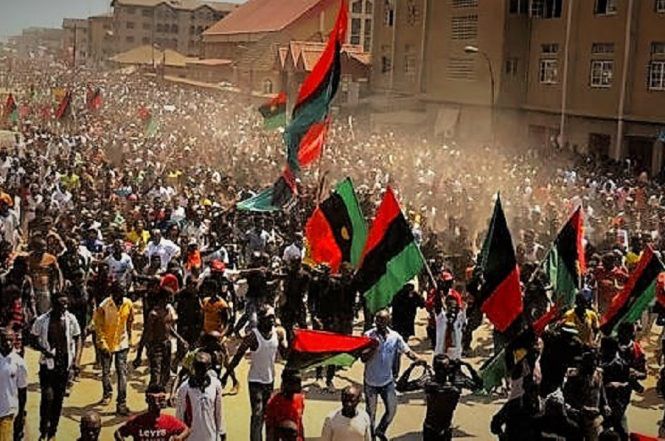
    I am waiting to hear from our presidential candidates about how they will tap into the entrepreneurial spirit of the southeast as part of a Nigerian Industrial Plan

    [1] The five states of the southeast geo-political zone will float a finance house called Ogbunigwe Bank. It will hand out loans to small businesses with a maximum interest rate of 5%

    [2] Every year, at least 200 Abriba and Ohafia cobblers will be sent to China to be trained on modern shoe production. The aim is to build the world’s largest shoe and leather accessories factory in Aba that eventually supplies the global mass market as well as all the major brands including the likes of Gucci and Luis Vuitton

    [3] We will build the world’s largest pharmaceutical plant in Orlu. Every year, at least 500 local people will be trained as pharmacists. They will then register their chemists as a chain of stores called Orlu Pharmaceuticals that is vertically integrated to this factory. That way, we can trace the origins of every single drug in Nigeria

    [4] Nnewi will be home to the world’s largest car engine factory. Aggressively pushed by the Anambra State government who will hold a 15% stake in the venture, a holding company will be created between Innoson and international automobile companies like Nissan, Peugeot, Volkswagen, Renault, Toyota etc. It will aim to manufacture at least 1m engines and gear boxes a year

    [5] A pan-Igbo holding company called Isiagu Enterprises will be created to drive investment. The five state governments of the southeast will hold a 25% stake in it, with international partners and the private sector owning the rest

    [6] Isiagu Enterprises will commit to building five crossings across the River Niger. At least three of them will be rail links

    [7] Isiagu Enterprises will also commit to dredging the River Niger up to Onitsha with the aim of building the world’s largest inland port. It will be Africa’s largest cargo port

    [8] Isiagu Enterprises will lease land in states like Taraba, Niger, Borno and Kaduna with the aim of growing cash crops to fuel its industries. Ambitious targets will be set for agricultural output with the aim of quadrupling the production of cash crops like palm oil, yam, cassava, maize, kolanuts, cashews, etc. Nigeria must grow every raw material it uses in its food processing business

    [9] Isiagu Enterprises will also undertake to dredge Ikot-Abasi and Calabar ports so they can take big ships like Apapa. Rail links will then be constructed linking them with the rest of the country

    [10] Isiagu Enterprises will introduce the world’s most humane corporate social responsibility contract that will fund education and infrastructure development in the host communities where it operates. For instance, if it is sourcing leather from Dapchi in Yobe State for its shoe processing factory, Isiagu Enterprises will fund the construction of a primary school there

  • Re: Stanbic IBTC Bank’s Side- Concerned Downstream Oil & Gas Industry Stakeholders

    Re: Stanbic IBTC Bank’s Side- Concerned Downstream Oil & Gas Industry Stakeholders

    The attention of our client, Stanbic IBTC Bank PLC (“our client/Stanbic”) has been drawn to a press release published on page 28 of The Guardian Newspaper of Wednesday, 9th November 2022 by a faceless “Concerned Downstream Oil & Gas Industry Stakeholders” and captioned “Stanbic IBTC Bank Contempt and Deliberate Sabotage of Judicial Process”. The publication, a diversionary tactic, aimed at misleading our client’s customers, stakeholders and the general public, maliciously insinuated that our client employed extra-judicial processes in its attempt to recover the indebtedness of Ascon Oil Company Limited (“Ascon”) and also sabotaged lawful judicial processes.

    We are not unaware of the fact that the dispute between our client, Ascon and Quest Oil and Engineering Services Limited (“Quest”) are currently sub judice as they are subject of cases pending before the High Court of Lagos State, the Federal High Court as well as the Court of Appeal. Without prejudice to the matters currently before the Courts, it is imperative to provide the following clarification to dispel the malicious misinformation contained in the publication.

    1.            Our client is a foremost financial institution committed to driving financial inclusion in Africa and contributing to the economic development of Nigeria. Our client as a law-abiding corporate organization has consistently carried out its businesses within the confines of the law.

    2.            Our client advanced several credit facilities to Ascon and Ascon serially defaulted in repaying the facilities. As of 11th May 2020, Ascon’s outstanding indebtedness to our client stood at the sum of N2,465,914,688 (two billion, four hundred and sixty-five million, nine hundred and fourteen thousand, six hundred and eighty-eight Naira) and USD$59,260.94 (fifty-nine thousand, two hundred and sixty Dollars, ninety-four Cents) with interest accruing daily.

    3.            Due to Ascon’s failure to repay its indebtedness, Stanbic appointed Mr. Olawale Akoni SAN (“the receiver”) as a Receiver over the petrol filling station at Block 36, Admiralty Way, Lekki Peninsula Scheme 1, Eti-Osa Local Government Area, Lagos State (“the property”) used as security for the loan, pursuant to its powers in the deed of legal mortgage it executed with Ascon.

    4.            Consequently, the Receiver approached the Federal High Court in Suit No. FHC/L/CS/567/2020 Olawale Akoni SAN v. Ascon Oil Company Limited, where he obtained an Order on 15th May 2020, directing the men and officers of the Nigerian Police Force to offer protection to the Receiver, to take over possession of the property used as security for the loan facilities.

    5.            The Receiver in the company of the men and officers of the Force, executed the said Order on 20th May 2020, as he peaceably took over possession of the property and handed same over to Stanbic who assigned its ownership to Rainoil Limited at the material time.

    6.            Stanbic thereafter instituted an action before the High Court of Lagos State in Suit No. LD/6965GCM/2020: Stanbic IBTC Bank Plc v Ascon Oil Company Limited to recover the balance of the sum owed to it by Ascon, which debt continues to accrue interest on a daily basis.

    7.            Ascon applied to the Federal High Court to set aside the Order made in favour of the Receiver on 15th May 2020. However, in the Court’s ruling of 24th July 2020, the Court affirmed that the actions of the Receiver taken pursuant to the Order of the Court directing police protection is valid and thus refused to set aside the Order or any actions or steps taken pursuant to the Order. Ascon immediately appealed this ruling to the Court of Appeal vide a notice of appeal dated 5th August 2021 and is requesting that the ruling of the Federal High Court be set aside. There is nowhere in the Court Orders of 15 May 2020 and 24 July 2020 or any other Court Order whatsoever that grants Ascon or anybody acting on their behalf to take possession of the property/Petrol Filling Station.

    8.            Nevertheless, Ascon, in a brazen display of self-help and disobedience to valid Court Orders, proceeded to the subject’s property on 4th August, 2020 and attempted to take over possession of the property. However, Ascon’s unlawful actions were swiftly repelled.  Unsatisfied with its failed attempts at unlawfully retaking possession, Ascon instituted multiple Court actions against Stanbic and reported Stanbic to several regulatory and law enforcement agencies.

    9.            Rather than respect the status quoand await the judicial resolution of the pending suits, Ascon on Friday, 13th August, 2021, in an illegal act of self-help, willful destruction and illegal takeover of property, led some thugs and unauthorized law enforcement officers to the subject property and unlawfully took over the property, despite the pendency of a Court Order. Ascon thereafter mischievously rebranded the name of the Petrol Station from Ascon to Quest Oil.

    10.       In Order to perpetuate and surreptitiously legalize its unlawful takeover, Ascon on Friday, 20th August 2021 obtained an Order from the Lagos High Court in Suit No. LD/8029GCMW/2021 – Ascon Oil Company Limited v Rain Oil Limited mandating that the parties maintain status quo. Stanbic is not a party to this suit nor was it named in the said Order. Interestingly, the status quo is that Stanbic remains the owner of the property having exercised its powers under the deed of legal mortgage and accordingly, Ascon (acting as Quest Oil) ought to have since relinquished possession to Stanbic in compliance with the status quo Order. However, Ascon/Quest has chosen to act in utter contempt and breach of the Court Order.

    11.       It is imperative to add that Ascon has never denied its indebtedness to Stanbic. Unfortunately, and contrary to the impression created in the malicious publication, Ascon has not made any offer for amicable settlement of the dispute or submitted any proposal to Stanbic for the repayment of its protracted debt, which continues to accrue interest on a daily basis. Rather, Ascon has characteristically challenged the quantum of the debt. In Order to determine its indebtedness to our client, Ascon filed an application in Suit No: FHC/L/CS/618/2020 Ascon Oil Company Limited vs. Stanbic IBTC Bank Plc, wherein, Honourable Justice I. N Oweibo of the Federal High Court, Lagos appointed Deloitte to conduct a forensic audit Ascon’s account with Stanbic and confirm Ascon’s outstanding indebtedness to Stanbic.

    12.       The publication in The Guardian Newspaper is not only regrettable, but it is malicious and a gross misrepresentation of facts as well as a disservice to the reading general public. The publication in The Guardian was obviously engineered under the guise of a faceless group called “Concerned Downstream Oil & Gas Industry Stakeholders”.

    13.       Our client will not join issues with Ascon and its multitude of intermediaries over the pages of newspapers. Our client believes that justice will prevail through the instrumentality of the judicial process. While we counsel Ascon, Quest and their directors to eschew its extra-judicial tendencies and focus on how to repay its debts, we have our client’s firm instruction to take all lawful steps to protect its image and goodwill and we will not hesitate to initiate appropriate lawful measures to execute this instruction.

  • Feature: 10 Unpopular Policies for Presidential Candidates in Nigeria

    Feature: 10 Unpopular Policies for Presidential Candidates in Nigeria

    10 unpopular but necessary policies I would like to have heard during yesterday’s presidential debate

    Ayo Akinfe

    [1] I would tell all the state governors that as from October 1 2023, we plan to scrap the federal allocation regime. They thus have to start thinking about getting their states self-reliant

    [2] I would scrap government subsidies on all religious pilgrimages. If you want to go to Saudi Arabia or Israel, you are on your own

    [3] I would scrap all government payments to traditional rulers. If any community wants a monarch, they must find ways to fund it themselves

    [4] I will give the evangelical churches an annual investment target of $50bn. They are sitting on a Pentecostal Pot of Gold and must invest that money in infrastructure, job creation and manufacturing. If they do not, we will tax that money at an 80% rate and invest it as a government

    [5] Muslim clergymen would be told they must match whatever investment the pentecostal movement comes up with. If the evangelicals invest $60bn in the Nigerian economy, I want to see $60bn worth of Islamic Finance invested in our economy too

    [6] Our agricultural boards will be given production targets for cash and food crops like cocoa, rubber, palm oil, cashews, coconuts, groundnuts, ginger, shea nuts, kolanuts, bananas, pineapples, yam, cassava, millet, sorghum, gum arabic, papaya, coco yams, etc. In all these areas, we must become the world’s undisputed number one producer. At the moment, the only area where we are that dominant is in yam as we control 70% of world production

    [7] I would refuse to import products from industrialised countries that refuse to invest at least $5bn a year in Nigeria. For too long, we have been a dumping ground for their finished products

    [8] I will send a bill to the National Assembly to introduce laws making it compulsory for every state contract with a foreign company to carry a caveat that they open a production facility in Nigeria to produce the goods they are selling us

    [9] I would also send a bill to the National Assembly on fair wages. This would link the pay of all politicians to a grade in the civil service and under it, no public servant will earn more than four times the minimum wage

    [10] I will also send a value added bill to the National Assembly under which it will be illegal to export raw and primary commodities. Everything we sell must have some value added to it

  • Feature: The Minister’s Order on the Removal of Sex Education from  the Curriculum

    Feature: The Minister’s Order on the Removal of Sex Education from the Curriculum

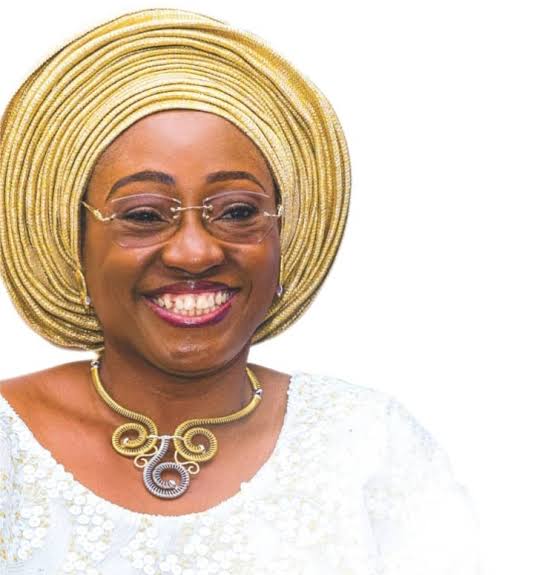
    Dear Honourable Minister for Education, I trust all is well with you sir. I hope you do not mind my writing this public letter to you. I thought that
    since this is a matter of national importance, and the position you have taken is public knowledge, I should table my concerns publicly as well. I took permission from my husband (who used to be your colleague on the Federal Executive Council) before writing this, and he will assure you when you talk that I mean no disrespect sir.

    Hon Minister sir, on Thursday November 2nd 2022 you gave a directive to the Nigerian Educational Research and Development Council (NERDC) to remove Sex Education from the Basic Education Curriculum. This statement was made when you declared open the 66th National Council on Education in Abuja which had the theme, ‘Strengthening of Security and Safety in Nigerian Schools for the Achievement of Education 2030 Agenda’. According to you sir, immediately you saw Sex Education in the curriculum, you called the NERDC Executive Secretary and asked him to expunge it, arguing that sex education should be left in the hands of parents and religious institutions and not be taught in schools in a manner that would further corrupt little children’. The NERDC Executive Secretary then promised to
    ‘act on it’. Hon Minister sir, I beg you in the name of all that is good, please rethink your position.
    A few years ago, I had cause to write a similar public letter in response to a gentleman who had been harassing me and a few of my women’s rights activist friends over our views on the importance of sex education. He decided to write an article mentioning my name and that of my friends as promoters of ‘foreign values’ so I was left with no choice but to respond publicly in an article I called ‘Let’s Talk about Sex’. Shortly after, mutual associates brokered a truce and we have stayed out of each other’s way since. Some of the arguments I will be making in this letter are the same as what I wrote back then, but I have also come across new information sir.

    I was First Lady of Ekiti State for eight years (2010-2014 and 2018-2022). During that time I interacted with many adolescent girls who were brought to me for protection due to one form of sexual exploitation or another. One of the cases that will always haunt me, is that of a thirteen-year-old girl who was pregnant, let me call her Tanwa. When I asked her how it happened, she told me that this neighbour of hers said, ‘You cannot get pregnant unless I do it with you more than ten times. I will only do it three times’. With more information and knowledge, this naïve little girl would have been spared her ordeal. In your speech on Thursday, you said parents and religious leaders should be solely responsible for sex education. I humbly but strongly disagree sir. Times are very hard in the country. Parents struggle to keep food on the table, roofs over their heads and clothes on the backs of their children. Even where education is free, there are still costs which many parents cannot afford. This is why they spend time
    working to make ends meet. Yes, I agree they should spend more time with their children, but they do have to work for survival. The religious leaders you mentioned sir, are not always helpful.

    The majority are true men (and women) of God, but we also have a handful who have no business being left alone with young children. If you are in doubt sir, please ask NAPTIP to show you their national list of Sex Offenders. A good number of teachers who populate the education architecture that you are responsible for, are also guilty of misconduct when it comes to the sexual exploitation of children. For these reasons sir, as the person responsible for ensuring accountability of the government in all matters to do with education, we expect you to think outside of the box and take steady steps forwards and not backwards. We need to talk about sex to our children. We need them to know about their bodies, rights and responsibilities. This is a task for families, religious institutions, schools and the community at large.

    I am fifty-nine years old. Like most people in my generation, my parents never had any deep discussions with me about sex. The most I was told was to ‘stay away from boys’. When I was in High School, there was this classmate of mine who was one of the brightest girls in the class. She also seemed to be the worldliest when it came to matters of boys and sex. One day about six of us were having a conversation about sex. We were all curious and asked each other questions which, in hindsight, none of us had any truthful answers to. My classmate declared, very confidently, ‘You can’t get pregnant unless you have an orgasm’. The rest of us did not know what an orgasm was, and we were too embarrassed to ask for fear of displaying our ignorance. We believed her because she seemed to know what she was talking about. This friend did not take her final examinations with us. She was pregnant. When I heard the news, I said to myself, ‘she must have had an orgasm’. That was over four decades ago. Every time the issue of
    adolescent sexuality comes up, I remember the sad case of my naïve, misinformed classmate and that of poor Tanwa from my State.

    Any parent would agree that they have primary responsibility for talking to their children about sex and related matters. Parents however do not bring their children up in isolation. Children spend long hours outside of the home in school, and even when they are home, parents are either too busy, too prudish or in too much denial to have these conversations. We go to great lengths to teach our children right from wrong, yet they still have to contend with peer influences, social media, popular culture, raging hormones and other forces that are not always within our control. If we are concerned about what goes into the sex education curriculum in our children’s schools, we can get involved and ensure that we know what is going on. What we cannot afford to do is throw the baby out with the bathwater. The abuse of children, especially girls, continues unabated. We continue to see alarming rates of teenage pregnancy. This is the time to arm ourselves with all the information we can and engage our children,
    their teachers and the government in meaningful ways. Providing our children with the information they need about their bodies, relationships and decision-making in order to protect them from sexual abuse,
    Sexually Transmitted Diseases, HIV and unwanted pregnancies, does not amount to ‘corrupting them’ sir. The times we live in call for us to be proactive and realistic.

    This is what the United Nations Fund for Population Activities (UNFPA) has to say about Comprehensive
    Sexuality Education, ‘Comprehensive Sexuality Education enables young people to protect their health, well-being and dignity. These programs are based on human rights principles and they advance gender equality and the rights and empowerment of young people’. UNFPA also goes on to state that, ‘every young person will one day have life-changing decisions to make about their sexual and reproductive health. Yet research shows that the majority of adolescents lack the knowledge required to make those decisions responsibly, leaving them vulnerable to coercion, sexually transmitted infections and unintended pregnancy’. One of my favorites is the UNESCO position which describes comprehensive sexuality education as an ‘age-appropriate, culturally relevant approach to teaching about sex and relationships by providing scientifically accurate, realistic, non-judgmental information’.

    Whether we like it or not, our children are exposed to situations or people who will take advantage of their innocence if they do not have the tools to understand what is happening to them and around them. When someone tells a young girl who does not know any better that she cannot get pregnant if she does not have an orgasm, you can just imagine the fate of millions of girls who have fallen victim due to ignorance and misinformation. I have noted from your remarks at the conference that you are very concerned about the high numbers of ‘Out of School’ children in the country. According to the latest figures from UNESCO and UNICEF, there are at least 20 million children out of school, at least 60% of this figure are girls. This should be linked to the theme of the conference you declared open. We cannot talk about safety in schools if we are not prepared to talk about the rights of girls and boys to bodily integrity, freedom from exploitation, and the right to learn in a conducive environment. Please
    sir, kindly summon the very capable NERDC Executive Secretary on Monday and ask him and his agency for further briefings on this matter. There are also many development and education organisations as well as individual experts who I am sure will be willing to offer appropriate technical advice. We need to talk about sex sir, it is not a private matter, it is of national importance. The lives and futures of our children are at stake.
    Many apologies for the length of my letter sir, and thank you for reading.

    Erelu Bisi Adeleye-Fayemi
    Gender and Development Specialist and Former First Lady, Ekiti State

  • Feature: Making The Circular Economy Work for 210 million Nigerians

    Feature: Making The Circular Economy Work for 210 million Nigerians

    By Elvis Eromosele

    Nigeria has a huge population. Current estimates put it in the region of 210 million. This is a huge number. There is no prize for guessing that this number of people will produce humongous amounts of waste. The challenge is how prepared are the managers of the economy to deal with the sheer volume of waste generated and ensure effective disposal. 

    Now, if you have ever wondered why drains are always blocked, dumpsites are created indiscriminately and pollution is the order of the day in many cities across the country, wonder no more. The answer is simply – People. People. People. This is the heart of the problem – a large number of people generating large volumes of waste without a discernable plan for proper disposal. 

    One thing is clear, Nigeria lacks a proper waste management system. Experts argue that the real problem is a large amount of ‘single-use’ items and products which effectively creates a linear economic model. 

    The linear economic model involves “take, make, use and dispose of”. Under this model items once used need to be disposed of and they subsequently end up in landfills and waste sites. Fun fact, the largest open waste site in Africa is situated in Nigeria, in Olusosun, Ojota, Lagos State.  

    And with the population expected to hit 400 million by 2050, according to the United Nations Population Fund, UNFPA, the quantity of waste generated annually is projected to continue to increase substantially. 

    Translation: unless we have a system in place, it is only going to get worse. 

    Describing the Nigerian economy as linear means that when raw materials are used to make products, once the item is used, it automatically becomes a waste product and is quickly thrown away.

    The linear model is defined as the traditional model where raw materials are collected and transformed into products that consumers use and discard as waste, with no concern for their ecological footprint and consequences.

    Of course, the indiscriminate dumping and burning of waste harm the environment. It pollutes the environment, degrades the quality of air, water and soil and contributes to climate change challenges. It equally affects the health of people, impacting productivity and economic development. 

    In seeking to effectively control the waste management problem, adopting global best practices in this space makes sense. The current trend is shifting from mere waste management to wealth creation, economic development and an improved environment. This is the emergence of the circular economy. 

    First off, the circular economy grew out of the urgent desire to curtail waste and drive the reuse of materials and waste to create economic value. A practical instance is where waste paper is used to make new paper and discarded plastic containers are used to make new plastic materials and other useful items for construction. The potential here is humongous. It guarantees that there will be enough raw materials in the immediate future to continue to produce these items. This is precisely what the circular economy is all about.

    Under the circular economy, production has as little impact as possible on the environment by leaving less of a footprint. To make it sustainable, it must follow these three principles: reduce, reuse and recycle. The principles are three approaches – reduce (minimize the quantity of resource use); reuse (optimized resource use) and recycle (turnaround and put the resource to use again).

    There are several ways to achieve this. Experts insist that with this system, value is created by focusing on value preservation.

    The circular economy can almost be viewed as the opposite of a linear economy. It focuses on optimizing the use of a product or service, a concept that is relevant to economic sustainability. The circular economic model can help promote and achieve environmental awareness, reduce the indiscriminate dumping of refuse and create wealth-making opportunities for the citizens. 

    The circular economic model benefits the citizens, the economy and the environment. It ensures that there are enough raw materials, promotes production efficiency and stimulates economic growth. 

    The real issue is how to ensure that the circular economy works for Nigeria’s 210 million people. When we consider the principles on which it is based – the circular economy can present innovative ways to recycle products and materials for the future. This can help to conserve the environment, combat climate change and generate endless job opportunities. Perhaps the biggest advantage the circular economy offers is the waste-to-wealth path for sustainable economic growth. 

    While the private sector organizations are already building massive in this direction, the government can help through the implementation of appropriate policies to fast-track the emergence of the circular economy across the country. 

    Studies indicate that single-use plastic waste makes up a huge portion of waste generated in an economy. So, policies that ban or restrict the importation, production and use of single-use and all variants of non-recyclable plastics will help precipitate the circular economy. 

    Eliminating single-use plastic waste from the environment will no doubt curb the clogging of public drains, curtail incidents of flooding and limit harm to the environment. 

    The government equally needs to collaborate more with the private sector to drive the circular economy agenda in much the same way it is pursuing and driving the digital economy agenda. The Minister of Environment can take a cue from Prof Isa Pantami, the Minister of Communications and Digital Economy. 

    In addition, portions of the ecological fund can be channelled into grants and rewards for firms that actively promote the circular economy through their business practices with widespread impact. 

    The introduction and enforcement of extended producer responsibility (EPR) can be another option to reduce waste, especially plastic waste. Consider container take-back programs, an example of EPR that has been effective in many places. Under this initiative, consumers will pay a small deposit when products are sold (usually beverages), which is refunded when the packaging waste is returned to the retailer. Naturally, the containers go back to the manufacturer for recycling and reuse. 

    There is no reason why a state like Lagos cannot adopt this strategy to reduce the volume of plastic waste in the streets and public drains. 

    For a country that urgently needs to diversify its economy, the circular economic model provides tremendous value and opportunities for Nigeria. When a country demonstrates a commitment to the circular economy, the rats don’t need to eat the poisoned holy communion to gain attention. International and multi-lateral agencies will be eager to provide grants to help drive inclusive circular economy projects. 

    For 210 million people to participate actively in the circular economy, the government must urgently step up and step in with relevant policies, collaborate with the private sector and engage the citizens. This is the way to go!

    Elvis Eromosele, a Corporate Communication professional and public affairs analyst lives in Lagos.

  • Feature: The need for a Fruit-Centre Agro-Processing Development Programme

    Feature: The need for a Fruit-Centre Agro-Processing Development Programme

    by Ayo Akinfe

    Does any of Nigeria’s presidential candidates have an agro-processing development programme centred around fruits

    [1] Nobody needs to be told that Nigeria can no longer rely on crude oil for survival. I am surprised that a national debate is not raging now about how we replace our petroleum revenue. We are certainly going to have to at some stage

    [2] Unlike many other African nations, Nigeria is fortunate to have an abundance of natural resources which if processed and exported could generate substantial foreign exchange. Fruit is one area where we are sitting on a potential gold mine as nothing stops the sector from matching the $30bn or so Nigeria was realising from the sale of crude oil pre-COVID-19

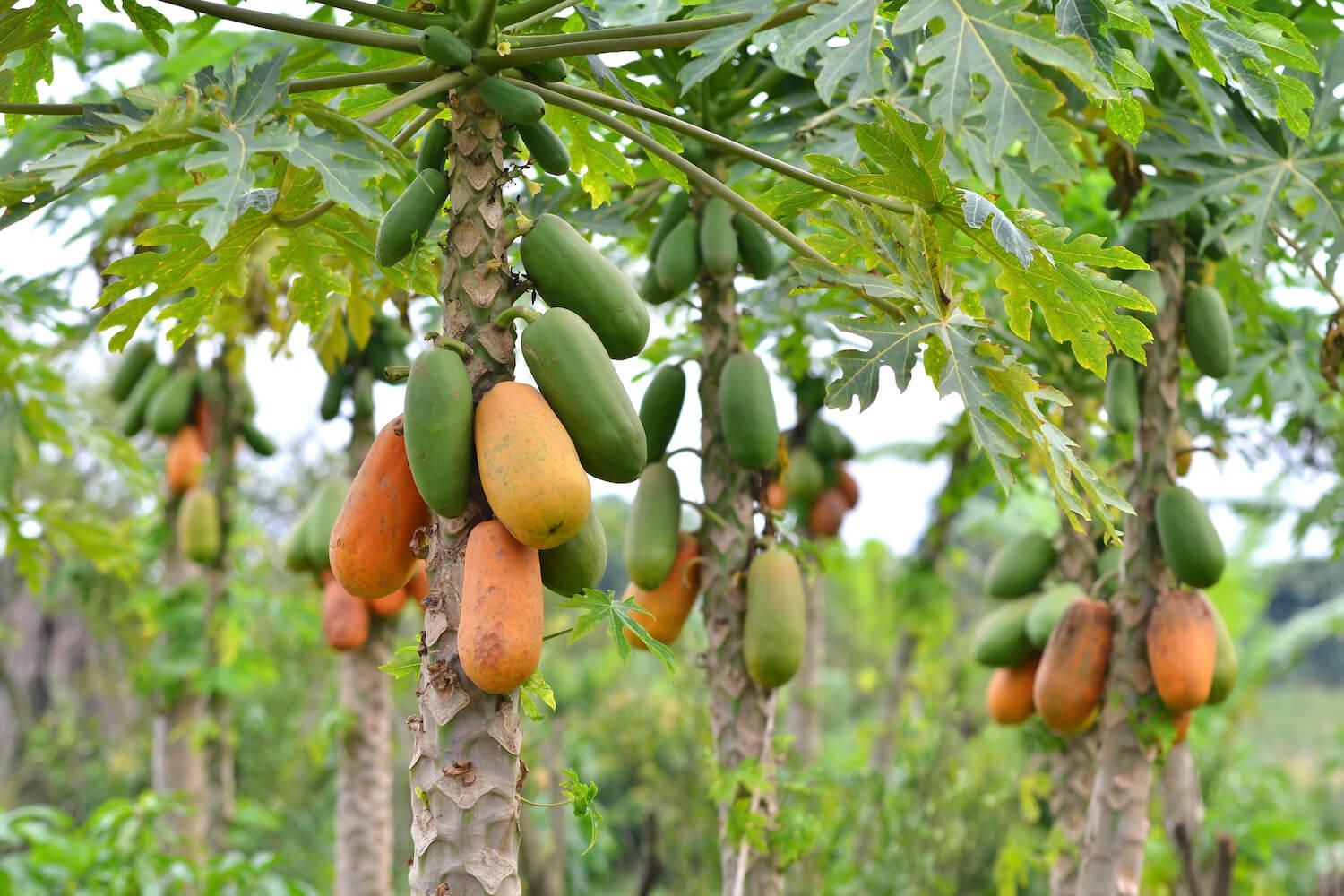
    [3] Here are the stats we should be working on now. Nigeria is the world’s largest producer of agbalumo, the fifth largest producer of plantains, the sixth largest producer of papaya, the seventh largest producer of pineapples and the tenth largest mango producer. All of these can be processed into a variety of products which Nigeria should be supplying the world market with

    [4] Let us start off with fruit juices. Do you know that the global fruit and vegetable juice market is expected to be worth $257bn by 2025. Now, we have to ask ourselves what Nigeria’s annual share of this $257bn will be. I would settle for 20%, which is about $50bn

    [5] There are a whole range of uses we can put these fruits to. We can process them into tinned fruit, make wines and spirits from them, manufacture animal feed and of course just sell into the fresh fruit market

    [6] Already, I understand that a group of Nigerians have come up with a plan to produce an agbalumo wine. There is no reason why Nigeria should not manufacture a range of fruit alcoholic beverages sold worldwide in retail outlets and off-licences

    [7] For every fruit we grow, we should have a four-pronged approach. Produce fresh fruit, manufacture a fruit juice, brew an alcoholic beverage and come up with a tinned product. I fail to see how this will not generate at least $30bn a year

    [8] Given that fruits are tropical products, we have an inbuilt advantage here. Temperate countries cannot grow fruits like us and we also have the advantage of having a large number of hands for the labour-intensive process of fruit picking

    [9] As a starting point, we need to gather data on what our fruit output is. We can then talk about expanding output and of course, move on to the main issue of processing, packaging and marketing. We should have a special brand of products. At the moment we should be thinking of the most catchy name we can come up with

    [10] What I have in mind is a private-sector fruit producer and processor that is vertically integrated right from farmer to brewery. Maybe if we called it say Azikiwe Enterprises and it produced unique drinks which we could name maybe Sango, Aboki, Izon, Nna, etc, we could be on to a winner here