Category: Features

Featured posts

  • Report: Pop culture is the biggest influencer of African Youth

    Report: Pop culture is the biggest influencer of African Youth

    Pop culture is the biggest influencer of African youth, according to the Who is Influencing Who? Unpacking Youth and Influence in Africa report

    The latest report by Africa No Filter investigates Africa’s influence on the world, its influences on African youth, and how dominant narratives about Africa shape the youth’s perception of the continent. The research interviewed 4500 people aged between 18 and 35 in Nigeria, Ghana, Ivory Coast, Morocco, Egypt, Uganda, Kenya, Zimbabwe and South Africa. 

    57% of respondents said pop culture has the biggest influence, followed by the US and Europe (45%), and politicians (31%). Regionally, pop culture had the strongest sway in Kenya (87%) and Zimbabwe, while West African respondents (65%) perceived the US and Europe as more influential.

    Interestingly, even though politicians are considered influential, only 11% of interviewees said they were influenced by politicians.

    Given that stereotypical narratives about Africa are abundant, the report asked young Africans what they believe to be the dominant negative stories about the continent in movies. 54% said that common negative narratives were about crime and corruption, followed by narratives set in underdeveloped cities (41%) and depicting uneducated, unexposed Africans (33%). 

    Regarding the impact on the world’s perceptions, 75% of respondents said the stories created a negative perception of the continent. However, it has not stopped them from loving their country and the continent (60%) or believing that African countries – especially South Africa, Nigeria, and Egypt – have a global influence (73%).

    Moky Makura, Executive Director at Africa No Filter, said: “This is a must-read for any organisation working with and in Africa because it unpacks what influences the largest demographic in the continent. Sadly, African youth haven’t escaped the impact of negative stereotypes but the good news is that it hasn’t defined their perceptions – and that has a lot to do with social media, and the agency it gives them. ” Here are key findings from the report: 

    1. Social media is powerful: 71% of respondents believed they could challenge negative stereotypes about the continent on social media. While the report does not dig into the origins of this belief, previous research has turned up several examples of how young Africans have – and continue to – shift negative stereotypes at a global level. 


    2. Love for country and continent: Even though 45% of respondents believed their perceptions had been shaped by negative narratives about the continent, 60% still loved their country and the African continent. Only 18% of respondents indicated that they would rather live in the United States or Europe and only 20% believed that there are fewer opportunities on the African continent than elsewhere.


    3. The power of pop culture: The main influences on respondents were pop culture (57%), social media (27%), family and friends (44%), religion (74%) and their communities’ cultural practices (54%). While 45% of respondents believed that other African youths were strongly influenced by the United States and Europe, they stated that, for them, family and friends had the biggest influence. 


    4. Politicians are influential, but they don’t influence the youth: Although 58% of respondents said politicians were the most influential people in their country, only 11% said they were influenced by politicians. The only time respondents said they were influenced by politicians was when making voting decisions (51%). 


    5. Movies perpetuate stereotypes: For 54% of respondents, the most common narratives about Africa in movies were about crime and corruption. 41% said they were stories about underdeveloped cities. 75% of respondents believed these stories created a negative perception of the continent, with Kenyans (83%), Ghanaians and Zimbabweans (82% each) most convinced of the negative impact. 

  • Report: Nigerians want competitive elections but don’t trust the electoral commission

    Report: Nigerians want competitive elections but don’t trust the electoral commission

    multiple political parties are needed to provide voters a genuine choice and that once elections are over, the losing side should accept defeat and work with the government to help the nation flourish
    A majority of Nigerians believe that elections are the best method to choose their leaders, according to the latest Afrobarometer survey. But as they approach their presidential election in February, fewer than one-fourth of citizens say they trust the Independent National Electoral Commission (INEC).

    Large majorities of survey respondents say that multiple political parties are needed to provide voters a genuine choice and that once elections are over, the losing side should accept defeat and work with the government to help the nation flourish.

    While a majority of citizens believe that the last national election in 2019 was generally free and fair, popular trust in the INEC – the institution responsible for ensuring a free and fair election – is declining.

    Key findings
    Most Nigerians (71%) support elections as the best way to choose their leaders (Figure 1).A similarly clear majority (69%) say Nigeria needs many political parties to ensure voters have a real choice, a 13-percentage-point rebound from 2020 (Figure 2). More than three-fourths (78%) of respondents say that once an election is over, the losing side should accept defeat and cooperate with the government to help it develop the country, rather than monitoring and criticising it (Figure 3). A majority (56%) of respondents say the last national election, in 2019, was generally free and fair, but almost four in 10 (38%) believe otherwise (Figure 4). Only 23% of Nigerians say they trust the Independent National Electoral Commission (INEC) “somewhat” or “a lot,” while more than three-fourths (78%) express “just a little” or no trust at all in the election-management body (Figure 5).Trust in the INEC has declined by 12 percentage points since 2017 (Figure 6).Afrobarometer surveys

    Afrobarometer is a pan-African, non-partisan survey research network that provides reliable data on African experiences and evaluations of democracy, governance, and quality of life. Eight survey rounds in up to 39 countries have been completed since 1999. Round 9 surveys (2021/2022) are currently underway. Afrobarometer’s national partners conduct face-to-face interviews in the language of the respondent’s choice.

    The Afrobarometer team in Nigeria, led by NOIPolls, interviewed a nationally representative sample of 1,600 adult citizens in March 2022. A sample of this size yields country-level results with a margin of error of +/-2.5 percentage points at a 95% confidence level. Previous surveys were conducted in Nigeria in 1999, 2002, 2004, 2008, 2012, 2014, 2017, and 2020.
  • Feature: What is the National Railway Plan of the Presidential Candidates in Nigeria?

    Feature: What is the National Railway Plan of the Presidential Candidates in Nigeria?

    By Ayo Akinfe

    Surely Nigeria cannot go to the polls without the presidential candidates debating a national railway plan

    Just look at how far we are behind other developing nations when it comes to kilometres of railway lines. In the 21st century, everyone is moving towards electrified trains to move goods and people around

    [1] India – 67,415km
    [2] Argentina – 36,966km
    [3] Brazil – 29,817km
    [4] Mexico – 23,389km
    [5] South Africa – 22,387km
    [6] Iran – 16,998km
    [7] Kazakhstan – 15,530km
    [8] Burma – 11,025km
    [9] Pakistan – 8,100km
    [10] Nigeria – 3,600km

    Do you know that we do not have one kilometre of electrified railway track in Nigeria? With the Dangote refinery set to make our three state-owned ones obsolete, I would convert them into railway carriage manufacturing plants.

    If we are churning our railway carriages, tracks and engines at Warri, Port Harcourt and Kaduna, it might just spur development in this sector. This should be our 10-point development plan which we aspire to achieve by 2030:

    [1] We should set ourselves the target of linking all our 774 local government areas by rail by 2030

    [2] Abuja and Lagos should be linked by a high speed network allowing travel within two hours

    [3] We should have a coastal high speed rail link that connects Calabar to Lagos within two hours

    [4] We should launch an Ecowas service linking Accra, Abidjan, Dakar, Freetown, Niamey, Bamako, Ouagadougou, Banjul, etc

    [5] All components must be manufactured locally

    [6] By 2030, the entire network must be electric-powered

    [7] The railway network must have its own electricity generating and distribution capability so it has nothing to do with the national grid

    [8] Every state capital must have an urban metro

    [9] Lagos and Abuja must have underground services

    [10] Every port, airport, refinery, heavy manufacturing facility and major industrial estate must have a railway link by 2030

  • Feature: Time To Leash The Sports Betting Behemoth

    Feature: Time To Leash The Sports Betting Behemoth

    By Elvis Eromosele

    Almost everyone has stories of someone who has made or lost tons of money from sports betting. A simple internet search will throw up tons of examples. There is the story of a popular Senior GP in the UK who was jailed three years for stealing £1.1m within a space of 3 weeks due to online gambling addiction. There is a block of four flats, off Ikotun Igando Road, that the rumours indicate was built from the proceed of sports betting success. The stories, whether of gain or pain, are endless.

    Experts point to the increase in penetration of mobile telephony, widespread availability of broadband internet and growing global attraction of football leagues in Europe as the principal drivers of the ubiquity and adoption of sports betting across Nigeria. The engagement of popular influencers in sports betting marketing is also a factor here. Despite the deeply religious orientation of the citizens, sports betting has continued to gain ground across the length and breadth of the country.

    Sports betting can be a fun and exciting form of entertainment, but it can also be addictive and potentially harmful if not approached with caution. In Nigeria, as in many other countries, sports betting has become increasingly popular in recent years, with an increasing number of online and offline betting companies offering a wide range of options for placing bets on various sports events.

    The concern is that there are risks associated with sports betting, including the potential for financial losses, addiction, and other negative consequences. In Nigeria, the young and women are particularly vulnerable as the operators invade every nook and cranny without thinking about the social impact of their endeavours.

    One of the main dangers of sports betting in Nigeria is the potential for financial losses. Betting in sports involves risking money on the outcome of a game or event, and it is not uncommon for people to lose more money than they can afford. Families have starved, children have had to stop schooling with many homes broken apart because of the financial losses occasioned by sports betting.

    Another risk is the potential for addiction. Some people may become so engrossed in sports betting that they neglect their personal and professional responsibilities. It can lead to problems such as neglect of family and work and even criminal activity in some cases. Experts concede that gambling is addictive. Sports betting, in all its forms, is gambling. It follows that sports betting is addictive, contrary to what operators may try to portray.

    In addition, the issue of underage gambling through sports betting deserves special attention due to the potential harm it can cause to minors, including addiction. Sadly, today minors can access sports betting facilities without any encumbrance.

    It is clear that to truly minimize the risks associated with sports betting in Nigeria, it is important to adopt a holistic approach. Yes, individuals engaging in sports betting must take responsibility for themselves and their families and know to proceed with caution and set limits for themselves. People must set a budget for how much money they are willing to risk, only betting with money that they can afford to lose, and be willing to seek help if they feel that their betting habits are becoming a problem.

    But the government must also take a more hands-on role in regulation, granting permits and protecting the citizens from unscrupulous sports betting operators.

    Operators, naturally, are quick to point out that sports betting creates jobs. They point to the myriad of betting shop outlets across the country in addition to in-house staff members to prove that they are a viable economic activity. In addition, they pay taxes. Their operations in many instances however may leave much to be desired.

    At over $2 billion, the nation’s sports betting industry is today a behemoth. It must however be tamed if the country wishes to harness the benefits. Again, the onus is on the government and the regulator to rein it in before it wrecks the future of the youth.

    Consider this, while sports betting is getting more and more popular, the impact on sports development is still largely negligible. We must ask questions. Over the last decade of tremendous growth, how many new sports grounds have been built with funds from sports betting?

    Can the sports betting industry point to athletes that its sponsorship has been supported and promoted? How much is paid in taxes and levies and which agency?

    What it is doing to curtail the increase in underage participation in sports betting?

    These are the issues. If sports betting exists only to make money for a few, fuel the gambling addiction and drive-up underage participation, it is not a business but a parasite. They, therefore, need to be tamed, their activities curtail and their modus operandi scrutinized more closely.

    The sports betting industry must demonstrate a clear commitment to sports development. It equally has to invest in measures to curb underage participation. In addition, it must pay commensurate taxes.

    The National Lottery Regulatory Commission, the regulator of the sector, urgently needs to rise to its responsibility to protect society. At the very least, the commission must insist that operators implement strict age verification processes to ensure minors cannot access sports betting sites or shops and push to educate the public, especially minors, on the dangers of underage gambling through school programs, media campaigns and community outreach.

    The National Assembly may also need to look at strengthening the laws prohibiting minors from engaging in gambling activities and include a provision to prosecute those who violate these laws. Security agencies must be willing to enforce the law to its full extent.

    Parents equally have a responsibility to care for their wards. They need to closely monitor their children’s online activities and have open communication with them about the risks of underage gambling.

    Overall, it is important to approach sports betting responsibly and to be aware of the potential pitfalls, risks and dangers and opportunities. If the country takes the necessary precautions, sports betting can make tremendous contributions to the nation’s economy. And it may be possible that individuals can enjoy sports betting as a form of entertainment without exposing themselves to unnecessary risk. This is the future. 

    Eromosele, a Corporate Communication professional and public affairs analyst, lives in Lagos.

  • Feature- Safeguarding democracy: why digital transformation of the electoral process is critical

    Feature- Safeguarding democracy: why digital transformation of the electoral process is critical

    by Titilayo Adewumi

    As Africa’s largest democracy gears up for its hotly contested elections, the question of technology’s role in enhancing the voting process is once again in the spotlight. 

    Nigeria goes to the polls in February to elect a new President, House of Representatives, and Senate, as well as new State Assemblies and Governors. More than 84 million of the country’s 211 million citizens are eligible to vote, but mobilising voters and getting them to the polls has proven challenging in recent years.

    Voter turnout at Nigeria’s elections has declined over the past few election cycles, with only 30-35% of eligible voters turning up to cast their vote at the ballot come election day. In some regions the voter turnout is as low as 8.3%, according to Nigeria’s Independent National Electoral Commission, driven in part by a general lack of young voters making their way to the poll. 

    Among the factors contributing to the low voter turnout are inadequate voter education, ineffective voter mobilisation, and low trust in state institutions. And despite the importance of elections to the broader democratic and nation-building effort, many countries in West Africa and across the continent are experiencing declining numbers of voter participation.

    Boosting youth participation in voting process

    About 60% of the Nigerian population consists of youth aged 24 or under. 

    Efforts driven by civil society have helped mobilise greater numbers of young voters. One recent partnership aimed at youth in Lagos and Abuja resulted in 74% of applications for a continuous voter registration exercise being young people

    Such efforts are vital as younger, digital-native voters may prove an influential force through their greater use and adoption of digital tools. Sixty per cent of Africa’s population is under the age of 25, and the continent’s youth is expected to constitute 42% of all global youth by 2030. Enhancing electoral systems to encourage greater involvement in voting and other democratic processes can only bode well for the continent’s democratic states. 

    Manual voting processes ripe for tech innovation

    Encouragingly, the Independent National Electoral Commission (INEC) has started making concerted efforts at introducing technology to protect and enhance the voting experience. 

    This includes the deployment of the Bimodal Voter Accreditation System (BVAS) which provides a dual fingerprint and facial recognition accreditation process to ensure only genuine voters are able to cast their ballots. The introduction of the INEC Result Viewing portal will bring greater visibility and transparency to the polling results in real-time come the 2023 elections.

    However, there is still enormous scope for the role of technology to enhance the electoral process. 

    Greater use of e-voting could encourage voters in outlying areas to cast their ballot. At the moment, voters have to travel to physical voting stations, often great distances away from where they live. While not widely used in Nigeria’s electoral system, e-voting was trialed during the 2018 local government elections in Kaduna State.

    The use of e-voting could also spark greater numbers of young voters to participate in elections, especially since adoption of digital technologies remain highest among youth. 

    Greater digitisation of voting processes can also give rise to innovative new start-ups, as is the case with Lagos-based data company, Stears. The company developed an elections tracker that displays results in near real-time in the hope of generating excitement for elections and beating voter apathy. At its first attempt in 2019, Stears received two million visitors to their election tracking website, with 99% of visitors accessing the site from their mobile phones. 

    Quick wins for tech’s role in elections

    Several parts of present electoral processes are ready to benefit from the introduction of digital technologies. 

    Firstly, citizens residing in other countries or who may be traveling abroad during election cycles have a mountain to climb to cast their votes. By introducing e-voting functionality to out-of-country voters, the country may benefit from greater voter participation.

    Secondly, current voting processes remain overwhelmingly manual and paper-based. Introducing greater efficiency during the voting process can improve the overall voting experience and may contribute to attracting larger numbers of voters. This is especially true in urban areas where technology adoption and mobile penetration remain highest.

    Third, technology can play a central role in building trust in voting by eliminating error-prone processes with more transparent, digitised processes. This can build trust in elections by ensuring the integrity of electoral results.

    Finally, considering Nigeria’s vast size and the disparate nature of many of its communities – especially in rural areas – the use of technology could enable marginalised communities to participate more easily in elections. This can encourage greater involvement in elections across the country and provide a welcome boost to the perceived fairness and integrity of election results.

    Titilayo Adewumi is the Managing Director at SAP West Africa

  • Feature: FIRS makes FAAC Fat

    Feature: FIRS makes FAAC Fat

    By Salisu Na’inna Dambatta

    Many Nigerians hold the notion and presume wrongfully that every money invested in various development projects by the three tiers of government came from one loan or the other.

    The fact is that most of the money deployed to finance national development in this country was generated internally through the efforts of the Federal Inland Revenue Service (FIRS).

    The rejuvenated FIRS is now turbocharged in its revenue drive to ensure that the country continues to finance the provision of transportation infrastructure, expansion in power generation, transmission and distribution and giving greater access to tertiary education to develop the necessary skilled manpower to support the economy and enhance our collective wellbeing.

    One of the most visible evidence of the effectiveness and historic success in revenue generation by the FIRS is manifested in the fatness of the distributable money that became available to the three tiers of government in the country, especially within the last two years.

    For it is on record that under the watch of FIRS Executive Chairman, Mr. Muhammad Nami and his team, the revenue declared at the Federation Account Allocation Committee (FAAC) meeting at least thrice  hovered around N1 trillion or even surpassed that figure at various months in the year 2022 . It was a feat.

    This story regarding that feat  from a news outlet is simply nice: “The Federation Account Allocation Committee (FAAC) has shared a total sum of N902.053 billion in  November 2022 as Federation Account Revenue to the Federal Government, States and Local Government Councils.” The sum  was a shade to a trillion Naira.

    But a nicer story regarding shared money at FAAC in August 2022 runs thus: “The Federation Account Allocation Committee, has shared a total sum of N954.085 billion Federation Account Revenue to the Federal Government, States and Local Government Councils.  Details of the revenue put gross statutory revenue at N1. 066 trillion for the month of July 2022.”  The total was above a trillion Naira.

    Yet another trillion Naira revenue shared at FAAC, courtesy of the FIRS, was reported in the media as quoted here: “The Federation Account Allocation Committee (FAAC), at its Meeting shared a total sum of N990.189 billion to the three tiers of government, as Federation Allocation for the month of December 2022.”

    Read the clincher in the N990.189 billion distributed story: “the Gross Statutory Revenue of N1,136.183 billion was received for the month of November 2022.” Again it was above a trillion Naira within 30 days.

    Commentators on national issues, especially those focusing on  the provision of essential facilities that improve the wellbeing of Nigerians had repeatedly insisted  that  there is a strong linkage between those facilities and the trillions of Naira raked in by the FIRS.

    The  direct role of the FIRS in enabling the three tiers of government to have the requisite financial muscles to fund  national development has placed the institution in the heart of national development.

    The ability of the FIRS to generate revenue above its target in the era of Muhammad Nami became boldly obvious when  the Service collected N6.405 trillion in 2021, which was over a hundred percent of its collection target for the year.

    It was the first time that the agency crossed the Six-trillion Naira mark. It was achieved in the face of an  economic downturn caused by  the coronavirus pandemic.

    The latest “FIRS 2022 Performance Update” report released by the Service indicates that the previous record of just over N6 trillion was dwarfed by the N10.1 trillion  revenue it garned for Nigeria in the year 2022.

    The  direct role of the FIRS in enabling the three tiers of government to have the requisite financial muscles to fund  national development is best illustrated  by the over N10 trillion the revenue generation machine netted in for the federation in 2022.

    The revenue Service said the amount was more than  96 per cent of its envisaged collection for the year.  It is reportedly the highest tax collected by the FIRS since its establishment in 1947.

    The good news from the FIRS, which made it possible for FAAC to have fat distributable amount of money for national development  has shown that with a sincerity of purpose in public service as demonstrated by Nami and his team, Nigeria can sustain its trajectory to becoming one of the top 15 best countries on earth within a generation. Money generated by the FIRS will finance the process.

  • Feature: As FIRS under Nami Jumpstarts the Economy

    Feature: As FIRS under Nami Jumpstarts the Economy

    By Chukwudi Enekwechi, JP

    The Federal Inland Revenue Service as we know it is the federal government agency charged with mobilizing revenues through tax collections across the length and breadth of Nigeria for the development of the country. At a time when the country is witnessing a significant reduction in oil revenues (Nigeria’s major revenue earner) as a result of several factors, such as low levels of oil production, oil theft and the global oil glut, the Buhari administration has had to devise creative ways of generating revenues for the execution of numerous government projects.


    With this policy direction and initiative, the Federal Inland Revenue Service took the challenge to bridge the yawning revenue gap. In doing this they expanded the tax net to include several profit-making companies and organisations which had prior to the emergence of the Buhari administration played artful dodgers in tax payments and remittances. Of course the FIRS also introduced other innovative measures which have today raised the tax revenue profile to N10.1trillion in 2022 from a low of N5trillion when he assumed office in 2019.

    Suffice it to say that the increase in tax collections has remained stable and consistent since Alhaji Muhammed Nami assumed the leadership of the FIRS as the Executive Chairman. As an expert in tax administration he realized the federal government’s predicament in sourcing for funds that will help rejuvenate an economy buffeted by the vagaries of the sharp drop in global oil prices. Therefore, as the price of oil kept plummeting at the international market, Muhammed Nami along with his management team took the gauntlet by quickly adorning their thinking caps and worked round the clock to help the Buhar administration deliver on its mandate and campaign promises to the Nigerian people.

    Since then the FIRS started witnessing a steady increase in tax collections, and the result is that Nigeria was able to survive the shocks associated with the unpredictable oil market. Simply put, the FIRS became the first federal government agency to achieve tangible results in the federal government’s revenue diversification policies.

    To put the monumental feat achieved by the FIRS with the realization of N10.1 trillion in tax collection within a period of one year in a proper perspective, it is pertinent to take a cursory look at the following four years figures of tax collection in the country and they clearly show how the Nami-led FIRS has fared under an inclement economic weather.

    In 2019, the agency realized N5.32 trillion; in 2020 the agency netted N4.9 trillion, this was the year that the COVID pandemic dealt a hard blow to the global economy; in 2021, the Service collected N6.45trillion, which was as at then the highest ever collected and over 100% of its collection target; while in 2022, it achieved the jaw-breaking highest tax collection ever of N10.1trillion.

    Perhaps, one interesting aspect of this report is the increase in non-oil collection achieved by the Service. Non-oil collection stood at N5.96 trillion, while oil collection was N4.09trillion. Before now Nigeria was helplessly dependent on oil revenues, and the reality is that the country was in no advantageous position to control or influence the impact of changes of oil prices on our national economy.

    The implication of these increases is that the FIRS has innovatively widened the scope of collectible taxes in Nigeria as well as applied an aggressive tax drive, and the result is that while oil prices were staggering across the globe, and to the detriment of oil-producing countries including Nigeria, the FIRS provided the financial succor that has helped Nigeria’s economy to withstand the debilitating impact and the federal government placed in a position to carry out its mandate of rendering service to the people.

  • Feature: Nigeria needs military aid like Ukraine to end Insurgency

    Feature: Nigeria needs military aid like Ukraine to end Insurgency

    By Ayo Akinfe

    I am gobsmacked that all these trips to London by our presidential candidates have not led to one of them requesting the same kind of military aid Ukraine is getting to help Nigeria eliminate terrorism

    [1] In total, the UK provided £2.3bn of military aid to Ukraine in 2022 and the government has committed to sustain the same level of funding in 2023

    [2] The UK has supplied Ukraine with 14 top-of-the range Challenger tanks. They cost about $2m each

    [3] In addition, the UK has donated more than 1,000 Vallonn metal detectors and 100 bomb de-arming kits to Ukraine to help clear minefields and make safe reclaimed territory, civilian homes and infrastructure

    [4] Also, the UK was the first country in Europe to send military aid to Ukraine, sending thousands of NLAW anti-tank missiles early in 2022

    [5] In addition, the British Royal Air Force (RAF) has flown over 240 flights to move thousands of tonnes of military aid from the UK and international partners, ranging from sophisticated missiles to clothing to support troops through the harsh winter

    [6] In addition to providing equipment, UK armed forces have trained thousands of personnel from the Armed Forces of Ukraine (AFU). Specialist training has also been conducted on equipment donated to Ukraine. In total, more than 11,000 AFU personnel were trained in the UK in 2022.

    [7] Helping to defend against attacks from the air, the UK has supplied Ukraine with Stormer vehicles and thousands of anti-air missiles including Starsteak and Advanced Medium Range Anti-Air Missiles

    [8] Visiting Kyiv in November, British Prime Minister Rishi Sunak announced a new air defence package including 125 anti-aircraft guns as well as radars and anti-drone technology

    [9] On the ground, Multiple-Launch Rocket Systems have allowed the AFU to strike targets with precision from up to 80km away, helping to push back Russian forces and counter their use of long-range artillery

    [10] Britain’s Ministry of Defence has also supplied dozens of M109 155mm self-propelled guns and L119 105mm light guns, along with over 100,000 rounds of artillery ammunition and millions of rounds of small arms ammunition

  • Feature- 10 Hot Consumer Trends: Life in a Climate-Impacted Future

    Feature- 10 Hot Consumer Trends: Life in a Climate-Impacted Future

    • Some 83 percent of urban early adopters believe the world will have reached or surpassed the 1.5°C global warming mark by the end of 2030
    • Almost 59 percent say innovation and technology will be crucial to handle everyday challenges caused by climate change
    • Climate-impact-driven behavioral changes could see major changes in the way we work and when we work

    Almost 99 percent of more than 15,000 global early technology adopters consulted by Ericsson say that they expect to be proactively using internet and connectivity-based solutions by 2030 to personally address the impact of climate change and global warming. The statistic is included in the latest annual 10 Hot Consumer Trends research from Ericsson ConsumerLab, this year called Life in a Climate-Impacted Future.

    The January 2023 publication marks the twelfth edition of the report, which this year outlines consumers’ concerns, expectations, and personal technology actions related to climate issues in 2030.

    Some 83 percent of respondents believe that the world will have reached, or surpassed, the 1.5C rate of global warming (above pre-industrial levels) deemed by international agreements to be the limit above which more extreme weather events and negative climate consequences are likely.

    About 55 percent of early adopters in metropolitan areas believe that climate change will have a negative impact on their lives and expect to turn to connectivity solutions as countermeasures.

    Main concerns include: the cost of living, access to energy and material resources, and the need for safe and reliable connectivity in turbulent times and chaotic weather. Some 59 percent of respondents believe that innovation and technology will be crucial to address everyday challenges caused by climate change in the 2030s.

    More than 15,000 early adopters of AR, VR and digital assistants in 30 cities globally were asked to evaluate 120 digital service ideas across 15 areas ranging from climate-related adaptation efforts in everyday life to ways to handle dire weather events.

    From the resulting data, Ericsson ConsumerLab experts created ten trend areas to group consumers’ answers.

    Magnus Frodigh, Head of Ericsson Research, says: Consumers are clearly saying that reliable and resilient internet connection will be of utmost importance to their daily lives, and their personal efforts to address climate change, as they expect extreme weather changes and negative climate impact to be more common. Consumers not only expect the needed connectivity to be in place on a global scale, but to be in place quickly.”

    The vast majority of early adopters not only believe that climate change is happening, but also that its results will have greater impact on their lives in the 2030s than it does now. While personal economy and lifestyle interests will be the top service adoption drivers for the survey respondents in the 2030s, possible new large-scale collective behaviors may result in big changes from daily life as we currently know it – in areas such as how we work, when we work and work-life balance.

    For example, the move away from ‘clock time’, such as the ‘traditional’ nine-to-five working day and routines, could be a key driver of the No-Rush Mobility trend. A society organized around energy use peaks and troughs, rather than clock-time, could become common.  

    Respondents also expect the role of AI to extend into consumer behavior – as outlined in the Less Is More Digital trend – for example to help shoppers reduce their material consumption impact by using digital alternatives to physical products.

    Report co-author Sara Thorson, Head of Concept Development, Ericsson ConsumerLab, addresses another of the identified trends, Smart Water: “Water use could also change dramatically, if rationing becomes much more widespread than today. Some sixty four percent of early adopters foresee digitally regulated monthly water allowances for all citizens by the 2030s.”

    Dr. Michael Björn, Head of Research Agenda, Ericsson Consumer and IndustryLab, and driver of the 10 Hot Consumer Trends report since its inception in 2011, says consumers also foresee the risk of misuse of climate-impact-related solutions.

    “The Climate Cheaters trend highlights an unfortunate, but very real, consideration for compliance with any climate-focused actions. There could be cheats who try to avoid compliance obligations related to climate impact regulations, perhaps such as paying a bill or recording data. In the face of climate change, about 72 percent of respondents foresee the use of digital technology to bypass environmental restrictions for personal short-term gain. This is a big warning about the continued importance of focusing on the reliability of services.”

     THE TRENDS

    1 Cost Cutters

    Digital services will help consumers control food, energy and travel costs in unstable climate situations. More than 60 percent of urban early adopters are concerned about higher costs of living in the future.

    2 Unbroken Connections

    Reliable and resilient internet connection will become more important if and as extreme weather events increase. Some 80 percent of urban early adopters believe there will be smart signal locators that show optimal coverage areas during natural disasters in the 2030s.

    3 No-Rush Mobility

    Strict time schedules may become a thing of the past as climate regulations and energy efficiency change the meaning of flexibility. About 68 percent of respondents would plan activities using schedulers that optimize based on energy cost, not time efficiency.

    4 S(AI)fekeepers

    AI is expected to power services that protect consumers during increasingly unpredictable and unstable weather. Almost half of urban early adopters say they will use personalized weather warning systems for their own safety.

    5 New Working Climate

    Corporate carbon footprint constraints, rising costs and accelerated digitalization will shape work routines of the future. Seven in ten foresee company AI assistants planning commutes, tasks and resources to minimize work-related carbon footprints.

    6 Smart Water

    As freshwater may become scarcer in the 2030s, consumers anticipate smarter water services to conserve and reuse water. Almost half of urban early adopters say their household will use smart water catchers on roofs, balconies and windows that intelligently open when it is raining to catch and clean rainwater.

    7 The Enerconomy

    Digital energy-sharing services may alleviate the burden of rising energy costs in the 2030s. Energy could become a currency as 65 percent of urban early adopters predict consumers will be able to pay for goods and services in kWh using mobile apps in the 2030s.

    8 Less is more digital

    Digital product replacements may become status markers as physical overconsumption could get both expensive and socially criticized. Dematerialization of consumption habits could accelerate as one-third of urban early adopters believe they will personally use shopping apps that suggest digital alternatives to physical products.

    9 Natureverse

    Experiencing nature in urban areas without traveling could be standard in the 2030s, in the face of continued climate change and potential travel limitations. Four in ten urban early adopters want to personally use a virtual travel service that lets them experience nature reserves and mountain trails in real time as if they were there.

    10 Climate Cheaters

    Respondents say consumers will find ways to bypass stricter environmental restrictions due to higher prices and energy and water rationing. Over half of urban early adopters predict online hacking apps will enable them to tap into neighbors’ water or electricity supply illicitly.

    Read the full 10 Hot Consumer Trends: Life in a Climate-Impacted Future report via this link.

    Report methodology

    The report insights are based on Ericsson ConsumerLab’s global research activities spanning more than a quarter of a century. It primarily draws on data from an online survey conducted during November 2022 of early adopters of AR, VR and digital assistants in 30. They are: Bangkok, Berlin, Brussels, Cairo, Dallas Fort Worth, Delhi, Jakarta, Johannesburg, Kuala Lumpur, Lisbon, London, Madrid, Mexico City, Miami, Milan, Munich, New York, Oslo, Rome, San Francisco, São Paulo, Shanghai, Singapore, Stockholm, Sydney, Taipei, Tokyo, Toronto, Vancouver, and Zürich.

  • Feature: 12 Things Every Public Relations Professional In Corporate Sector Should Do In 2023

    Feature: 12 Things Every Public Relations Professional In Corporate Sector Should Do In 2023

    By Elvis Eromosele

    The saying, “Inch by inch, life’s a cinch” is one for all seasons. As you go about your job as a public relations practitioner in a corporate organisation this year, you will do well to bear it in mind, always. You make progress in little steps. 

    This year, like all others, has 12 months. I have written out 12 things, you can do this year to be better at your job. 

    1. Be Up to Date 

    As public relations professional, you do yourself a world of favour when you stay up to date with the latest trends and technologies in the public relations industry. This includes understanding new social media platforms and communication tools, as well as keeping track of changes in media consumption habits (how people consume information). 

    2. Build and Maintain Relationships with Stakeholders 

    We can all agree that one of the most important connections for PR practitioners is the one with journalism. It is a symbiotic relationship. So, you will do well to build and maintain strong relationships with journalists, bloggers, and other key influencers in your industry. This will help you get your brand’s message out to a wider audience and gain valuable coverage for your company.

    3. Audience Analysis 

    It is equally important to develop a strong understanding of your target audience so that you can tailor your messaging and communications strategies accordingly. The focus here is understanding what motivates and interests your audience, as well as what channels and platforms they prefer to use for communication and to get news.

    4. Know How to Develop Social Media Strategies 

    In today’s world, social media gradually becoming the chief source of news for many people. You, therefore, need to understand how to create and implement a comprehensive social media strategy that includes a mix of paid and organic content. This will help you reach a wider audience and build brand awareness.

    5. Practice Openness 

    Endeavour to foster a culture of transparency and openness within your organisation. This will help you build trust with stakeholders and the media, and it will make it easier for you to respond to any issues or crises that may arise. You will have to lead by example and be willing to leave your desk. Funmi Onajide exemplified this in the MTN days. 

    6. Develop And Practice A Comprehensive Crisis Communication Plan. 

    This will help you effectively manage any negative situations and minimize damage to your brand’s reputation. The secret of effective crisis management is relentless preparation 

    7. Keep An Eye On The Data 

    They say data is the new oil, but to optimize it, you have got to keep your eyes on it, constantly. You must therefore explore how to use data and analytics to measure the effectiveness of your PR campaigns and identify areas for improvement. This will help you refine your strategies and get better results. PPlus Measurement Services is showing what is possible in this space. 

    8. Embrace Diversity And Inclusivity In Your PR Efforts. 

    This includes considering the needs and perspectives of diverse communities and promoting diversity within your organization. To achieve this, you must be aware of and sensitive to the different perspectives and experiences of diverse groups of people, make sure that the language and images used in PR materials are inclusive and respectful of all individuals and possibly consider providing diversity and inclusivity training for staff members.

    9. Explore The Power Of Storytelling

    You must explore how to use storytelling to engage your audience and build emotional connections with them. In telling stories, you highlight the human side of your organisation. It is a great way to create a sense of trust and relatability that can lead to stronger relationships with stakeholders. This can be particularly effective for building brand awareness and loyalty. 

    10. Videos And Other Visual Content

    Utilize video and other visual content to communicate your message and make it more engaging for your audience. The use of videos involves creating branded content for sharing company news and updates, hosting webinars and virtual events, creating social media content, thought leadership and even Influencer marketing. I can tell you for free that videos allow PR professionals to effectively communicate with their audience, humanize their brand, and create a deeper connection.

    11. Collaborate. Collaborate. Collaborate

    Enhancing cross-functional communication, increasing brand awareness and creating more effective content are great ways to improve collaboration within the firm. Overall, collaboration allows for more efficient and effective public relations strategies, by leveraging different perspectives, knowledge and resources to achieve common goals.

    12. Be Up To Date

    You will need to stay up to date with the latest laws and regulations related to public relations, particularly those related to data privacy and consumer protection. This will help you avoid legal issues and protect your company’s reputation. Of course, you should register with and be a part of relevant regulatory bodies and associations. The Nigerian Institute of Public Relations (NIPR) is calling you today. 

    The young public relations professional needs to understand that the work does not stop. You have to keep learning and keep doing. 

    Elvis Eromosele, a Corporate Communication professional and public affairs analyst lives in Lagos.

  • Feature: Nigeria’s Next President can growth the GDP at 15% Annually

    Feature: Nigeria’s Next President can growth the GDP at 15% Annually

    By Ayo Akinfe

    Do any of the Nigerian presidential candidates realise that they have to find a way to get annual gross domestic product growth rates of about 15% every year for the next decade

    [1] Nobody will admit it publicly but we are Africans are regarded as inferior beings simply because we are not productive enough. Until we start contributing our fair share to global development we really have no moral right to complain about this treatment

    [2] We are considered a burden and a nation of parasites by industrialised countries. Make no mistake about it, this will continue for as long as we remain an eternal consumer producing nothing

    [3] It is not right for a continent to account for 18% of global population, yet only account for 3% of world trade and 1% of global manufacturing

    [4] Does whoever becomes Nigeria’s president next year know that India for instance has plans to maintain to ensure it enjoys 10% economic growth every year. Do Nigerians even think this way at all?

    [5] Given that about 70% of the Nigerian budget goes on recurrent costs like salaries, transport, building maintenance, administration, etc does not help at all. If we want to enjoy any economic growth, we breed to attract large scale foreign direct investment to get round our current stagnation

    [6] As a nation, Nigeria needs an annual budget of at least $100bn to take care of her 200m people. We are currently only spending about $30bn a year, which is wholly inadequate

    [7] After World War Two, Germany was in utter ruins, with her cities bombed, her industry in tatters, the population dispirited and no government in place. However, within five years, the nation was back on her feet, with both West and East Germany becoming thriving economies again. Nigeria simply has to follow suit if we want to get out of this rut

    [8] We remain a mono-economy trapped by the vagaries of the global crude oil market. Our only hope of growth is economic diversification with a massive bias towards manufacturing

    [9] When you do the arithmetic, you cannot but despair. We will need something like 15% annual gross domestic product (GDP) growth year-on-year over the next decade to get out of this morass. If between 2023 and 2030 Nigeria enjoys 15% economic growth every year, we will be able to recover. It is either that or we perish

    [10] We do not even have the foreign reserves to prop us up as at the moment. No matter how you look at it, Nigeria needs to launch a radical and unprecedented industrial economic diversification. It is either that or we descend into becoming another Somalia or Afghanistan. With no jobs, our youth will revert to armed robbery, kidnapping, communal violence, ethnic hatred, religious bigotry and terrorism. Isis will just be licking their lips now as they have a very fertile ground to spread their hatred and indoctrination. Now is the time to start thinking how to avoid that doomsday scenario

  • Feature: Nigeria needs to have National Monument

    Feature: Nigeria needs to have National Monument

    Were someone like Obafemi Awolowo standing in next month’s presidential election, he would have plans to build a monument like this to not only revive tourism by also provide a feel good feeling

    Ayo Akinfe

    [1] Brazil’s Christ the Redeemer Statue
    [2] India’s Taj Mahal
    [3] Germany’s Brandenburg Gate
    [4] San Francisco’s Golden Gate Bridge
    [5] Australia’s Sydney Opera House
    [6] Egypt’s Great Pyramid in Giza
    [7] New York’s Statue of Liberty
    [8] London’s Big Ben
    [9] France’s Eiffel Tower
    [10] The Great Wall of China

    As a people, we need to start building massive edifices like this just to make ourselves feel good. It does a lot for national morale when you unveil architectural masterpieces.

    Sadly, nobody is discussing lifting national morale as part of this campaign. Our people need something to give them a lift just as the unveiling of Liberty Stadium, Cocoa House and the Western Nigeria Television Station once did.

  • Feature: The Foreign Policies that should dominate Nigeria’s Election Campaign

    Feature: The Foreign Policies that should dominate Nigeria’s Election Campaign

    By Ayo Akinfe

    Nigeria’s election campaign should be dominated by foreign policy proposals aimed at attracting at least $100bn annually in foreign direct investment

    [1] We are once again having an election with no policies and nobody is saying anything

    [2] The African Development Bank once said Nigeria has an annual infrastructural deficit of $100bn. Were we serious about fixing our country, plugging this gap would have become a national obsession

    [3] Why have we not set ourselves the target of matching up with other developing nations at the very least is totally beyond me. In terms of literacy rates, kilometres of rail track, number of hospital beds, etc, we should make sure we never fall behind a certain group of countries

    [4] Nigeria is a member of a group known as Mint, made up of Mexico, Indonesia, Nigeria and Turkey. Economists once expected these to be the miracle growth economies of the 21st century

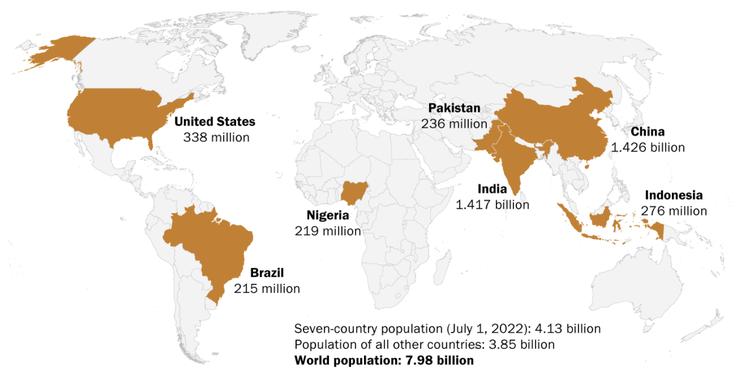
    [5] Nigeria is also one of seven countries that account for over 50% of the world’s population. The other six are China, India, USA, Indonesia, Brazil and Pakistan

    [6] Nigeria is a member of the D8 group of developing nations. Known as The D-8 Organisation for Economic Cooperation, its members are Bangladesh, Egypt, Indonesia, Iran, Malaysia, Nigeria, Pakistan, and Turkey

    [7] Nigeria is also a member of the E9 forum of nine countries, which was formed to achieve the goals of UNESCO’s Education For All initiative. Other members are Bangladesh, Brazil, China, Egypt, India, Indonesia, Mexico, and Pakistan, again representing over half of the world’s population and 70% of the world’s illiterate adults

    [8] E-9 countries have made significant socio-economic progress since the group was formed in 1993. Brazil, China, India, Indonesia and Mexico are members of G-20, Mexico is an OECD member, while China is now the second largest economy in the world. Brazil and India are also the top 10 economies, while Indonesia has also been growing fast

    [9] In 1993, E-9 countries accounted for only 16.5% of world’s nominal gross domestic product (GDP). Now, they represent almost 30% of world’s nominal GDP

    [10] Nigeria is also one of four countries with populations between 200m and 300m. The others are Brazil, Indonesia and Pakistan. Maybe we should start off by attracting foreign direct investment from Brazil and Indonesia.

  • Feature: Nigeria needs an Economic Sabotage Commission

    Feature: Nigeria needs an Economic Sabotage Commission

    Is any presidential candidate discussing creating an Economic Sabotage Commission to try actions which damage our economy and legitimise poverty even though they may not constitute corruption

    Ayo Akinfe

    [1] Buying private jets when we do not have an aviation maintenance, repair and overhaul (MRO) in Nigeria is just an act of economic sabotage as all is does is drain foreign exchange and enrich foreign aircraft manufacturers

    [2] Buying generators when you could install solar panels on your roof is not only economically damaging but an environmental crime

    [3] Nigeria spends about 1% of her annual budget on religious pilgrimages. This is a luxury we simply cannot afford

    [4] Nigerians who go and throw lavish parties in Dubai just want to keep us in perpetual poverty. Their actions ensure that our own tourist industry will never develop

    [5] Government departments and corporates who go and purchase fleets of foreign vehicles rather than patronise Innoson Motors simply do not wish Nigeria well

    [6] So-called businessmen who go and import luxury fashion accessories for distribution across Nigeria rather than manufacture them locally are just enemies of the people. Have they ever challenged the likes of Gucci or Luis Vitton to open plants in Nigeria?

    [7] All those government officials who go abroad for medical treatment clearly do not wish Nigeria well. What happened to dying for your country? The amounts they spend would make a huge difference if invested in local healthcare facilities

    [8] Our import licence regime needs a massive overhaul. Food items, clothing, automobiles, household goods, communication equipment, etc that can all be easily manufactured in Nigeria should not be imported. At the moment, all the Central Bank of Nigeria has done is place a foreign exchange ban on them. We need to go further by naming and shaming these importers

    [9] Nigeria’s aviation industry will never grow unless it is patronised. Flying by British Airways, Lufthansa, Air France, KLM, Emirates, etc when Air Peace plies the same route is perpetuating Nigeria’s under-development

    [10] We need a constitutional amendment that compels state governments to only award contracts to foreign companies that come to Nigeria to invest. If they are not prepared to invest in our people, we should not be giving them our business. I do not understand how Nigeria can be an investment risk to them yet Nigeria’s money is acceptable to such companies