














Category: News

  • LG Electronics Unveils ‘Make Life Good’ Reality Series for Africa Magic Viewers

    LG Electronics Unveils ‘Make Life Good’ Reality Series for Africa Magic Viewers

    LG Electronics Nigeria (LG) has announced the upcoming launch of Make Life Good, a heartwarming original reality series produced in partnership with MultiChoice. Debuting on 13 June on Africa Magic, the series shifts the traditional advertising narrative to focus on the powerful, real-life human connections enabled by technology within the African context.

    Built around the concept of gratitude and the spirit of Ọmọlúàbí, Make Life Good is hosted by celebrated television personality Jessica Dlamini. The show follows six prominent “Achievers” as they team up with LG to deliver a deeply personal expressions of gratitude to organisations and community leaders who support vulnerable Africans. These celebrated personalities include trailblazing mountaineer Saray Khumalo, football legend William Okpara, entrepreneur and author Thandi Mavata, data & analytics executive Esther Munyi, Pan-African PR executive Perpetual Kendi, and award-winning filmmaker Adze Ugah.

    In each episode, an Achiever secretly orchestrates a high-pressure, 24-hour facility makeover for their chosen cause. These makeovers are specifically designed to solve practical daily challenges for the volunteers and beneficiaries using the spaces.

    This project reinforces LG Electronics’ strong presence across Africa, showcasing its ability to deliver meaningful impact through simultaneous 24-hour transformations across multiple locations. By combining cutting-edge products with purpose-driven support, LG is empowering communities, addressing real-world challenges, and unlocking better living experiences through innovation.

    Utilising LG’s latest premium innovations, the building and design teams elevate these environments to ensure they are cleaner, more efficient, and more supportive. Kitchens and food preparation stations at facilities like LIV Lanseria and Botshabelo Babies Home are transformed with 671L InstaView™ Door-in-Door refrigerators and LG QuadWash™ dishwashers with TrueSteam™ to handle high-volume community feeding schemes efficiently. Youth hubs and training centres, such as the Bold Men Skills Program and The House Groups, receive 77-inch LG OLED evo AI G5 4K 165Hz Smart TV100 inch LG QNED evo AI QNED86 4K 120Hz Smart TV, and immersive soundbars to create dynamic, technology-driven learning and entertainment environments. Meanwhile, the heavy-duty 10Kg Front Loader with AI DD™ & Steam+™ in Black Finish and LG Heat Pump Dryer are installed at the Kensington Secondary School soccer programme to clean and maintain sports kits for young athletes.

    “At LG, our ‘Life’s Good’ philosophy is built on the belief that technology should serve humanity, making our daily lives more convenient, connected, and meaningful,” said Phil Jung, CEO of Middle East and Africa Region, LG Electronics. “With ‘Make Life Good’ series, we wanted to move beyond product specifications and celebrate the authentic, emotional human stories of our region.”

    Hyoung Sub Ji, Managing Director, LG Electronics West Africa, explains the strategy behind the campaign: “The ‘Life’s Good’ philosophy is rooted in the belief that technology should serve people, making daily environments more supportive, efficient, and connected. Collaborating with Africa Magic and these incredible achievers allows us to move beyond product specifications. We are celebrating the authentic stories of Nigerians who uplift their communities, while showing how our smart innovations can practically assist them in doing the hard work of hope every single day.”

    The series provides a renewed chance for these organisations to serve more people in need, restore dignity, and continue changing lives without the burden of failing or inadequate facilities.

    “It’s reality TV with purpose. We see it as a celebration of compassion and the unique Mzansi belief that when one rises, they should thrive to lift others as well,” says Mbali Ntuli, GE & Head of Unscripted Content at MultiChoice.” We are honoured to be at the centre of a project that is a reminder that even a small act of kindness can transform an entire community.”

    Tune in to Africa Magic Family (DStv Channel 154) for Make Life Good, airing from 13 June at 17:30, and witness the power of collective action. The series will also be repeated Monday and Thursday at 16:00.

  • Feature- BP’s Great Reversal and the Return of Energy Realism

    Feature- BP’s Great Reversal and the Return of Energy Realism

    By Sola Adebawo

    BP’s recent decision to eliminate its standalone Low Carbon Energy division and reorganize around upstream and downstream hydrocarbons is more than a corporate restructuring.

    It is one of the clearest signals yet that the assumptions underpinning the global energy transition are being reassessed.

    For much of the past decade, BP positioned itself as the oil major most determined to reinvent itself. Under its previous leadership, the company sought to transform from a traditional oil and gas producer into an integrated energy company, reducing emphasis on hydrocarbons while expanding investments in renewable energy and other low-carbon businesses.

    Today, that strategy is being recalibrated.

    Some observers see this as evidence that the energy transition is failing. Others view it as vindication for those who argued that oil and gas would remain dominant for decades.

    Both interpretations miss the deeper lesson.

    BP’s restructuring does not signal the end of the energy transition. Around the world, investments in renewable energy, battery storage, grid modernization, electric mobility, hydrogen, biofuels, and energy efficiency continue to grow. Electrification remains one of the defining trends of the twenty-first century.

    What BP’s decision reveals is something else entirely.

    The greatest challenge facing the energy transition is no longer technology.

    It is financing.

    For years, many policymakers, investors, and activists assumed that major oil companies would become the primary vehicles through which the world transitioned away from fossil fuels. BP embraced that vision more aggressively than most of its peers.

    Yet investors increasingly questioned whether low-carbon investments could consistently generate returns comparable to those available in traditional oil and gas businesses. At the same time, global energy demand continued to rise, oil and gas markets remained resilient, and concerns about energy security returned to the forefront of policymaking.

    The result is not a rejection of energy transition.

    It is a recognition that energy transitions are ultimately constrained by economics.

    BP’s decision should not be interpreted as an industry-wide retreat from lower-carbon energy. Companies such as Chevron, Shell, and TotalEnergies continue to invest in carbon reduction technologies, renewable power, biofuels, hydrogen, and other transition-related opportunities. The difference is increasingly one of emphasis rather than direction.

    Across much of the industry, the emerging consensus appears to be that hydrocarbons will finance the transition rather than be rapidly displaced by it.

    This reality reinforces an argument I advanced in an earlier article: the future of energy will not be built without hydrocarbon-generated capital.

    That statement is often misunderstood.

    It is not an argument against renewable energy.

    Nor is it an argument for perpetual dependence on fossil fuels.

    Rather, it is an acknowledgment of a simple reality. The capital required to build the future energy system must come from somewhere.

    Today, a significant portion of that capital continues to originate from hydrocarbons.

    Oil and gas revenues fund government budgets.

    Oil and gas revenues fund sovereign wealth funds.

    Oil and gas revenues support infrastructure development.

    Oil and gas revenues strengthen corporate balance sheets.

    Even many investments associated with the energy transition continue to depend, directly or indirectly, on wealth generated from fossil fuel production.

    This reality is especially important for Africa.

    The continent’s challenge has never been choosing between hydrocarbons and renewables.

    Its challenge is financing development.

    For many African countries, hydrocarbons remain among the few available sources of large-scale investable capital capable of funding electricity access,

    industrialization, transportation infrastructure, human capital development, and economic diversification.

    Yet history offers an important warning.

    Hydrocarbon wealth is not development.

    It is development capital.

    History demonstrates that resource wealth alone creates neither prosperity nor industrialization. Numerous countries have earned enormous revenues from oil and gas while achieving limited economic transformation. The difference between success and failure has never been the existence of resource wealth itself. The difference lies in institutions, governance, policy discipline, and the ability to convert natural capital into productive capital.

    Hydrocarbon revenues can finance transformation.

    They cannot substitute for it.

    This distinction is critical because the debate is often framed incorrectly.

    The choice facing Africa is not between producing hydrocarbons and pursuing energy transition.

    Nor is it between economic development and climate responsibility.

    The real challenge is using today’s resource wealth to build tomorrow’s economy.

    That means investing hydrocarbon revenues in power infrastructure, manufacturing capacity, transportation networks, technology ecosystems, educational institutions, and globally competitive industries.

    In short, it means transforming finite resource wealth into enduring economic capability.

    BP’s decision also highlights a broader shift in how the energy transition itself should be understood.

    For much of the past decade, many discussions assumed a future in which renewables would rapidly replace hydrocarbons. Reality is proving more complex.

    Across much of the world, energy demand continues to grow faster than new energy sources can fully displace existing ones. 

    Renewables are expanding. Electricity demand is expanding. Natural gas remains essential in many markets. Oil demand remains substantial. Developing economies continue to require increasing amounts of affordable and reliable energy to support industrialization and rising living standards.

    The emerging reality is not simply one of energy replacement.

    It is one of energy addition.

    The world is still transitioning, but it increasingly appears to be transitioning from a hydrocarbon-dominated system toward a hydrocarbon-plus-electricity system rather than rapidly eliminating hydrocarbons altogether.

    That distinction has profound implications for Africa.

    It suggests that the continent may have a longer window than many anticipated to convert hydrocarbon wealth into productive assets before global demand eventually peaks and declines.

    But a longer window should not be mistaken for an unlimited one.

    The opportunity remains significant, but it is not permanent.

    Countries that use hydrocarbon revenues to build productive economies will be better positioned for the future.

    Those that merely consume resource wealth will find themselves increasingly vulnerable as the global energy system evolves.

    Ultimately, BP’s restructuring is not a story about the failure of energy transition.

    It is a story about the economics of transition.

    It is a reminder that aspirations must be financed, infrastructure must be funded, and transformation requires capital.

    The future of energy may well be lower carbon.

    But for much of the world, and especially for Africa, the capital required to build that future will continue to come from hydrocarbon-generated wealth for decades to come.

    The real question is not whether Africa should produce hydrocarbons.

    The real question is whether Africa can convert hydrocarbon wealth into the infrastructure, industries, and institutions that ultimately make hydrocarbons less necessary.

    Oil is not Africa’s future.

    But for much of Africa, oil may still be the capital that finances it.

    Sola Adebawo is an energy industry executive and strategic advisor with nearly three decades of experience across Africa’s oil and gas sector. He is the Chief Executive Officer of Hyphen Partners Limited, a specialist advisory firm focused on policy and regulatory intelligence, market entry, stakeholder strategy, and executive positioning in complex and highly regulated industries. He writes on energy, industrialization, development sovereignty, and Africa’s economic transformation.

  • Access Holdings Affirms Long-Term Value Strategy at 4th Annual General Meeting

    Access Holdings Affirms Long-Term Value Strategy at 4th Annual General Meeting

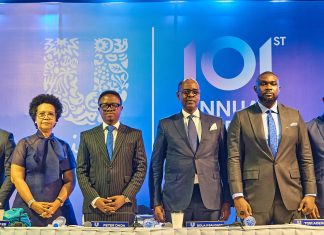
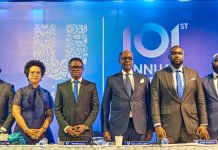
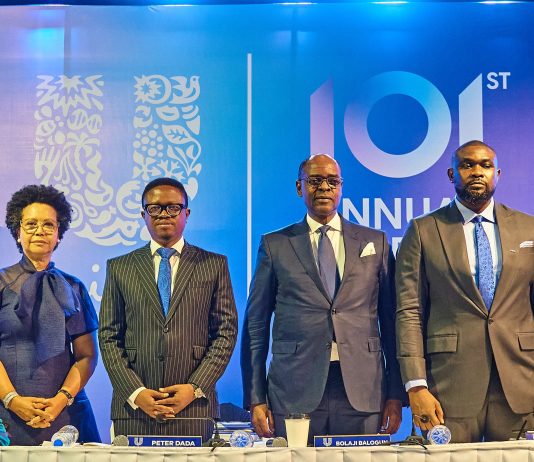
    Access Holdings Plc (Access Holdings) today held its 4th Annual General Meeting (AGM), reaffirming its strategic transition towards long-term value creation, balance sheet resilience, and disciplined growth, even as it navigates a dynamic and evolving operating environment.

    Speaking at the AGM, the Chairman, Aigboje Aig-Imoukhuede, CFR, emphasised that the defining test of a financial institution is not merely its capacity for growth, but its ability to grow profitably, sustainably, and with discipline over time.

    He noted that Access Holdings’ performance in 2025 reflects a deliberate approach to strengthening the institution’s long-term fundamentals while maintaining strong financial performance.

    The Group delivered Profit Before Tax of ₦1.007 trillion, underscoring the strength of its diversified platform and expanding earnings base across key markets. Total assets increased to ₦51.56 trillion, while customer deposits grew strongly, reflecting sustained franchise momentum and deepening customer trust.

    The Chairman, however, stressed that these results must be viewed within the context of the Group’s prudent risk management actions during the year. Access Holdings accelerated provisions on legacy and regulatory forbearance credit exposures, resulting in elevated impairment charges. He explained that the Group consciously prioritised balance sheet strength and long-term resilience over short-term earnings optimisation.

    “Periods of economic uncertainty often reveal more about an institution than periods of uninterrupted growth. Our focus remains on building a business that is not only growing, but improving in the quality, resilience, and sustainability of its earnings,” he stated.

    The AGM highlighted the Group’s continued evolution beyond traditional banking into a diversified financial services ecosystem, with growing contributions from investment management, insurance, pensions, consumer finance, and payments.

    While banking remains the Group’s core earnings engine, emerging growth platforms, including Access ARM Pensions, Access Insurance Brokers, Oxygen X Finance, and Hydrogen Payments, are expanding its footprint across digital finance, consumer lending, retirement services, and payments, thereby strengthening the Group’s long-term earnings mix and scalability.

    Looking ahead, the Chairman reiterated the strategic imperative underpinning the Group’s next phase of growth:

    “Our strategy, From Scale to Value, reflects the natural evolution of our journey. Scale created opportunity; value creation is how we fully realise it.”

    He noted that while the Group continues to generate strong returns, ensuring that earnings per share consistently exceed the cost of capital remains central to unlocking sustainable shareholder value. He also acknowledged the significant unrealised value embedded within the Group’s international subsidiaries and reiterated management’s focus on improving market recognition of that intrinsic value over time.

    The Board also addressed shareholders’ concerns regarding dividend payments, clarifying that the temporary suspension of dividend distributions was due to regulatory requirements rather than any deterioration in the Group’s financial performance.

    Aig-Imoukhuede reaffirmed that the Group’s earnings capacity remains strong and that the Board’s position reflects adherence to supervisory expectations and prudent capital management principles. He assured shareholders of the Board’s commitment to resuming dividend payments as soon as the relevant regulatory conditions are satisfied.

    “Our approach is clear: capital retained today must translate into greater value tomorrow and sustainable returns for our shareholders.”

    Access Holdings further highlighted progress in strengthening governance and leadership continuity. During the year, Innocent C. Ike was appointed Group Managing Director/Chief Executive Officer, while the Board was reinforced through the appointment of Ibironke Adeyemi as an Independent Non-Executive Director.

    Shareholders also expressed appreciation for the outstanding contributions of Bolaji Agbede, Executive Director, Business Development, who successfully led the management team as Acting Group Chief Executive Officer prior to the appointment of Mr. Ike.

    The Chairman noted that the leadership transition was executed seamlessly, ensuring continuity of strategy, operational stability, and stakeholder confidence.

    Despite continuing macroeconomic uncertainties across its operating markets, Access Holdings expressed confidence in its strategic positioning, underpinned by disciplined execution, a diversified business model, a strengthened capital base, and a clear focus on sustainable value creation.

    Concluding his remarks, Aig-Imoukhuede reaffirmed the Group’s long-term commitment to shareholders: “Our responsibility is to justify the confidence of our shareholders by building an institution that endures, one defined by clarity of purpose, discipline of execution, and sustainable value creation over time.”

  • World Environment Day: Rite Foods Takes Climate Campaign to Schools

    World Environment Day: Rite Foods Takes Climate Campaign to Schools

    As part of activities marking the 2026 World Environment Day, Rite Foods Limited has reaffirmed its commitment to environmental sustainability and climate action by engaging students in practical environmental education, tree planting, and recycling awareness programs across Lagos and Ogun States.

    The leading food and beverage company brought together students, teachers, and community stakeholders at Opebi Senior Grammar School, Ikeja, Lagos, and Moslem Primary School, Ososa, Ogun State, to promote environmental responsibility, sustainable living, and circular economy practices among young people.

    The initiative featured interactive sustainability sessions with students and teachers focused on proper waste management, recycling, water conservation, and environmental stewardship. Students also participated in tree-planting exercises designed to encourage afforestation, carbon dioxide capturing and instill a lifelong commitment to protecting the environment.

    Speaking during the outreach program tagged ‘Plant the Future’, the Head of Corporate Affairs and Sustainability at Rite Foods Limited, Ekuma Eze, stressed the importance of equipping young people with the knowledge and values needed to address environmental challenges.

    According to him, climate change remains one of the most pressing issues facing the world today, making it imperative for organizations, communities, and individuals to take deliberate actions that safeguard the environment.

    “Environmental sustainability begins with awareness and responsibility. By catching them young and teaching them the importance of protecting the environment, they become ambassadors of positive change within their homes and communities. We must therefore take intentional steps today to ensure we leave a healthier planet for future generations,” he said.

    Eze further highlighted Rite Foods’ broader sustainability agenda, including its recently launched Waste-Is-Naira (W.I.N.) initiative in partnership with RecyclePoints. The program enables residents to exchange used plastic bottles and beverage cans for cash, while promoting responsible waste management and advancing circular economy practices.

    Also speaking at the Ososa event, the Health, Safety and Environment (HSE) Manager at Rite Foods Limited, Timilehin Ajibola, emphasised the strong link between environmental sustainability, community development, and long-term business growth.

    “Our goal is to remain in business for the next century and beyond. Achieving that requires collective responsibility in protecting our environment through simple actions such as conserving water, disposing of waste properly, and planting trees that will benefit future generations. A healthy environment creates healthier communities, supports learning, and contributes to sustainable economic development,” he stated.

    A major highlight of the Lagos engagement was a hands-on recycling and sustainability session facilitated by Kazih Kits Limited, Rite Foods’ sustainability partners. The session exposed students to innovative ways of transforming waste materials into useful products, demonstrating how sustainability can create both environmental and economic value.

    Speaking on the initiative, the Chief Executive Officer of Kazih Kits Limited, Dr. Chinedu Azih, explained that recycling offers practical solutions to environmental challenges while unlocking opportunities for social impact.

    “Many of the materials people discard every day still have economic and social value. Through innovation and recycling, plastic bottles and product wrappers can be transformed into school bags and other useful products that support education, reduce pollution, and contribute to a more sustainable future,” she said.

    Commending the initiative, the Head Teacher of Moslem Primary School, Ososa, Lawal Oladele, described environmental education as vital to raising responsible future citizens.

    “The lessons shared with our pupils today go beyond the classroom. They will take this knowledge home and help promote environmental consciousness among their families and communities. Programmes like this help shape a generation that understands the value of protecting the environment,” he said. He also commended Rite Foods Limited for championing the initiative

    The World Environment Day outreach reflects Rite Foods Limited’s firm commitment to its Corporate Social Responsibility framework covering  Education, Youth Empowerment, Environmental Stewardship, and Community Development (EYEC), while reinforcing the company’s belief that real climate action begins with awareness, education, and collective responsibility.

  • Go Healthy with Taiwan 2026 Global Proposal Campaign – inviting the World to Co-create a New Paradigm for Healthier Futures

    Go Healthy with Taiwan 2026 Global Proposal Campaign – inviting the World to Co-create a New Paradigm for Healthier Futures

    To accelerate the global expansion of Taiwan’s health and wellness industries and deepen international collaboration, the International Trade Administration, Ministry of Economic Affairs, TITA, has once again commissioned the Taiwan External Trade Development Council, TAITRA, to organize the “Go Healthy with Taiwan 2026” Global Proposal Campaign. Under this year’s theme, “Designing Healthier Futures Together,” the initiative invites government agencies, legal entities, enterprises, and institutions worldwide to submit innovative application proposals that integrate Taiwan’s strengths in smart healthcare, sports technology, and high-end bicycles to create health solutions that can be implemented internationally and co-create a new Paradigm for healthier futures.

    During the launch press conference for this year’s campaign, Director General of TITA, William Liu, stated that “Healthy Taiwan” is one of the government’s key policy visions. To continue promoting Taiwan’s image as a healthy, innovative, and dynamic industrial powerhouse on the global stage, the “Go Healthy with Taiwan” Global Proposal Campaign has been launched once again. Through a comprehensively upgraded campaign, the initiative aims to generate demonstrable and multiplier effects, positioning Taiwan as the preferred global partner for health solutions. In addition, at the Taiwan Expo in Poland this June, organised by TITA, the top three winning teams from the 2025 campaign will be invited to share their collaboration experiences.

    President & CEO of TAITRA, Simon Wang, noted that this year’s campaign will be paired with a series of international trade shows and business-opportunity events to systematically bring Taiwan’s innovative strengths in cycling, sports technology, and smart healthcare to the world stage. The initiative will help Taiwanese enterprises build deeper connections with global buyers, investors, and startup teams, while creating tangible international orders and long-term partnerships.

    The event was attended by nearly 100 distinguished guests, including representatives from the Taiwan Bicycle Association, Taiwan Sporting Goods Manufacturers Association, the Taiwan Medical and Biotech Industry Association, and Taipei Veterans General Hospital, as well as enterprises and foreign envoys stationed in Taiwan.

    Looking back at the inaugural 2025 campaign, “Go Healthy with Taiwan” achieved outstanding results, attracting 638 proposals from 55 countries. Building on this experience, the 2026 campaign will further expand its scale to attract more than 800 proposals from five continents, demonstrating the strong international collaboration and the potential of Taiwan’s health and wellness industries.

    The launch press conference also featured a specially curated “Health AI Hub” product experience zone, spotlighting three key sectors: “Cycling,” “Fitness & Sports Technology,” and “Smart Healthcare”. The zone brought together Taiwanese companies, including Acer Gadge, Tokuyo, Makalot, Newtown, Gee Hoo, Ideas Lab, AKIMIA, and Vast, showcasing forward-looking applications in the global health and wellness industry, ranging from low-carbon mobility and smart sports to precision healthcare and healthy aging management. The exhibits collectively highlighted Taiwan’s strengths in integrating technological innovation with sustainability, offering a glimpse into the next generation of healthy living.

    The “Go Healthy with Taiwan 2026” Global Proposal Campaign is now open for applications until August 5. The top three winning teams will each be awarded US$30,000, taking action to contribute to global health and well-being. Through this platform, Taiwan aims to strengthen the international presence of its health and wellness industries and play a pivotal role in advancing health innovation on the global stage.

  • Infinix Launches HOT 70 Series with Industry-First 12-Colorway Dynamic Shine Design

    Infinix Launches HOT 70 Series with Industry-First 12-Colorway Dynamic Shine Design

    HOT 70 Series debuts with an industry-first lineup of 12 trend-forward colorways under Infinix’s all-new Dynamic Shine Design. It’s the most fashion-forward HOT release to date, designed for the next generation of young users worldwide

    In a smartphone market where devices increasingly look and feel the same, Infinix is taking a different approach. Today, the brand launched the new HOT 70, a lineup designed around a simple idea: smartphones should express personality, not just performance.

    Built for a generation that treats smartphones as part of personal style and everyday identity, the HOT 70 Series introduces an industry-first lineup of 12 colorways under Infinix’s all-new Dynamic Shine Design aesthetic. More than a hardware refresh, it represents the brand’s most fashion-forward and self-expressive HOT lineup to date.

    Anchored in “Colorful, Versatile, Fun” proposition, HOT 70 brings together expressive design, One-Tap AI, and everyday durability into a unified experience designed to stand out, keep up, and last. From colour-shifting finishes and light-reactive textures to instant AI actions and real-world resilience, HOT 70 reflects how today’s users move fluidly between self-expression, productivity, and everyday living. Ever-changing, ever-shining — HOT 70 is designed for a generation that never stands still.


    Stand Out Instantly with Dynamic Shine Design

    Infinix HOT 70 introduces a refreshed design with six colourways, giving users a wider range of options to express their personal style. Slim and light, the device features a Baby-Smooth coating that feels soft to the touch and resists fingerprints over time, keeping it clean and presentable through long days. At 7.49mm thin and 195g light, the phone sits comfortably in the hand and slips easily into any pocket or bag.

    Headlining the lineup is the Thermo Orange edition, with a temperature-responsive back cover featuring Dual-way Thermo Sensing Skin. The technology sets a class-leading benchmark for design innovation in its segment. The bistable thermochromic finish shifts orange tones with temperature: below 0°C, the back panel deepens to a saturated Deep Orange; at around 65°C, it lightens to a softer Light Orange. Most smartphones today look fairly similar, but the Thermo Orange edition goes the other way, giving users a way to personalise the device itself. Pairing the surface with custom stamps or moulds creates semi-permanent patterns; users can imprint a name, a favourite symbol, or any design they choose. The back of the phone effectively becomes a personal canvas, and more often than not, a conversation starter.

    For users who prefer a more fashion-led daily look, the Quiet Violet and Green Texture editions feature back panels rendered in the Lumina Flare Dynamic Flame Texture. Flowing, flame-like microstructures catch and refract light as the phone is tilted, producing shifting patterns of light and shadow with a sense of depth and motion. Quiet Violet draws from the calm depth of dusk-to-dawn skies; Green Texture echoes the freshness of layered leaf veins. Each carries its own distinct character. Like a well-chosen accessory, the two editions are designed to be the finishing touch to an everyday look, turning the phone into a subtle yet expressive style detail that complements a tailored outfit, a weekend fit, or an evening-out statement.

    Completing both editions (Quiet Violet and Green Texture) is the Crystal Mood Island camera deco, a refined craftsmanship detail rarely seen in this segment, where camera modules often feel like a purely functional afterthought. Its faceted ring refracts iridescent reflections from different angles, turning a typically overlooked area into a playful design signature that helps HOT 70 stand out in daily moments.

    One-Tap AI That Keeps Up With Every Mode

    Infinix HOT 70 introduces a dedicated One-Tap AI Button, a physical shortcut placed within natural thumb reach and easy to press whether the device is in hand or sitting on a desk. Instead of opening apps and digging through menus to access AI features, users can trigger what they need with a single tap. The result is one of the most accessible AI experiences in the segment, with every interaction starting in seconds.

    A short press launches One-Tap AI FlashMemo¹. For the first time on a HOT device, intent recognition is built directly into the capture experience: the phone not only saves what’s on screen, but it also interprets what users intend to do with it. A flight time spotted in a chat becomes a calendar event. A business card on the screen turns into a saved contact. A restaurant email address on screen jumps straight to a Gmail compose window with the recipient already filled in. What used to take several manual steps now takes one.

    Everything captured through AI FlashMemo flows into AI MindHub, the device’s central knowledge hub. Lecture notes, screenshots from a shopping spree, saved videos, and social media inspiration — content that is usually scattered across chat threads, camera rolls, and notes apps — are automatically tagged, categorized, and gathered into a single searchable knowledge base. Less time digging through old conversations to find that one link; everything worth keeping lives in one place, ready when it’s needed.

    A long press activates Folax AI, giving users one-tap access to five leading AI models, including ChatGPT and Google Gemini, for instant queries based on whatever is on screen. Users can switch between models with a tap to compare answers from multiple perspectives, without leaving the current page. No more bouncing between apps to look up a term, compare a product, or get a quick explanation.

    Personalization extends to the home screen, with AI Custom Wallpapers and themes that go beyond generic stock options, giving users a setup that feels like their own. On the imaging side, HOT 70’s 50MP main camera captures everyday moments with sharpness and detail, while a suite of AI tools makes editing simple: AI Live Photo Mode locks in the sharpest frame from a motion sequence, AI Eraser removes unwanted people or clutter, and AI Extender intelligently expands photo backgrounds for sharing. Share-ready content becomes the default, not the exception.

    From Morning to Late Night, Uninterrupted

    HOT 70 ships with an upgraded battery system built for a full day of use: a 6000mAh single-cell battery, or a dual-cell 5600mAh³ variant in select markets, paired with 45W Lightning FastCharge that goes from empty to full in an hour. A full day of classes, group chats, and video lectures rolls into an evening of streaming, social, and video calls without the constant hunt for an outlet or the dead weight of a power bank in the bag.

    HOT 70’s All-Scenario Bypass Charging addresses another familiar frustration: phones that overheat and slow down during long livestreams or video sessions while plugged in. The system routes power from the charger directly to the device, bypassing the battery entirely and keeping the phone cool and stable through demanding use.

    All those streaming, scrolling, and content-viewing hours play out on a 6.78-inch 120Hz display, with smooth visuals that match the device’s all-day stamina. Up to 700 nits HBM brightness keeps content sharp and readable outdoors, including under direct sunlight when checking navigation or replying to messages on a commute. Under the hood, the MediaTek Helio G100 Ultimate platform supports stable performance and smooth multitasking through extended use, keeping the device responsive across work, entertainment, and content creation.

    Military-Grade Durability for Real-Life Use

    HOT 70 brings Military-Grade Durability to the mid-segment, engineered to handle the kind of damage that usually shortens a phone’s life: rainy commutes, sweaty workouts, and phones slipping out of hands during the dash from a car. Behind that Military-Grade build is a comprehensive protection system. IP65-rated dust and splash protection guards against rain, sweat, and accidental exposure to water. SGS-certified Premium Performance and Gold Standard Drop Resistance back to the device, with rigorous testing — 1.5m extreme drops, multi-angle falls, and over 40 consecutive front-face drops with the screen and core functions intact.

    Protection extends inward, encompassing the HOT 70’s everyday functions and the personal data it holds. Folax-Speaker Cleaner uses sonic vibrations to clear dust and moisture from the speakers, preventing the gradual muffling that sets in months later. XGuard Full-Link Protection adds another layer for personal data, with XHide, App Lock, Unlock Security Protection, and Advertisement Control covering privacy, app access, and intrusive pop-up ads.

    The same protective logic carries through to how HOT 70 stays connected. Pure Voice noise cancellation protects the user’s voice from background noise such as busy streets, cafés, and transit, keeping calls clear on both ends without users having to step outside or ask the other person to repeat themselves. UltraLink also enables Bluetooth-based direct communication up to 1.5km away when the cellular signal drops out.

    Software longevity rounds out the durability story. HOT 70 ships with XOS 16 and supports up to 3 major OS upgrades and 5 years of security patches on supported models, keeping the device current with new features and protected against emerging threats well into its lifetime.

    Bringing More “Pro” Fun: Expanding the HOT 70 SERIES

    Sharing the same Colorful, Versatile, Fun spirit, Infinix also previewed the upcoming HOT 70 Pro. Designed for users seeking a step up from the HOT 70, the Pro will introduce refinements across design, imaging, AI, and performance. More details about the HOT 70 Pro will be announced at a later date.

    Price and Availability

    Infinix HOT 70 is available in Thermo Orange, Quiet Violet, Green Texture, Night Pulse, Silver Dancer, and Dive Blue. Users can choose between 128GB and 256GB storage configurations, with models offering 4GB/6GB/8GB of RAM and up to 8GB of extra expandable RAM.

  • Zoho Corporation Unveils Nathu La, a Designed-in-House Server, in a Move Towards Technological Sovereignty

    Zoho Corporation Unveils Nathu La, a Designed-in-House Server, in a Move Towards Technological Sovereignty

    The server will help the company bring down the total cost of ownership by 20-30% and power consumption by 12-18%, in turn reducing inference cost.

    Zoho Corporation, a global technology company and parent company of Zoho and ManageEngine, announced the launch of Nathu La, a designed-in-house server and a pivotal step in the company’s journey towards building its full technology stack, from the hardware layer to software applications.

    With Nathu La, Zoho has achieved equivalent performance with 12-18% lower power consumption and 20-30% lower total cost of ownership (TCO), thereby reducing inference costs. The Nathu La server, comprising Intel® Xeon® 6 processors, was developed collaboratively with Intel, leveraging their enablement capabilities and technical expertise.

    “Zoho Corporation has invested in building its own technology stack from the ground up over the last three decades. The Nathu La server launch is in line with that goal,” said Kehinde Ogundare, Country Head, Zoho Nigeria. “With our strategy of using contextual, right-sized models, running on our own platform, on our own servers, in our own data centres, we are compounding the benefits accrued from owning and operating our entire technology stack. This ensures that our solutions are more sustainable and accessible for businesses. These long-term R&D investments we are making at every layer of the stack are aimed at delivering customer value.”

    Building the Full Technology Stack

    The design philosophy behind Nathu La is rooted in the Open Compute Project (OCP), emphasising modularity, thermal efficiency, and ease of maintenance. This enables Zoho’s data centres to significantly reduce total cost of ownership and power consumption.

    Zoho plans to host its applications on the Nathu La server platform, enabling the company to optimise the full software-hardware stack for its specific workloads, reduce costs, improve performance, and strengthen data governance for its global customers. This will also help bring down inference costs for Zoho’s AI usage.

    Developed Hardware Engineering Talent

    In 2020, Zoho established a small R&D team in Nagpur, a Tier 2 town in India, focused on projects such as server design and systems engineering. Members of the Nathu La R&D team include hires from SETU – short for Student’s Engagement for Transformative Upskilling – an initiative designed to build a pipeline of industry-ready engineers, with a focus on advanced learning in Electronics System Design and Manufacturing (ESDM).

    The initiative directly addresses the growing need for stronger foundational engineering skills in an era increasingly influenced by AI-assisted development. By prioritising hands-on innovation and first-principles problem-solving, SETU helps cultivate deeper research capabilities, creativity, and applied engineering expertise. To date, over 300 students have been trained through the programme, some of whom have joined Zoho.

    What’s Inside

    The Nathu La server motherboard and chassis platform is the result of five years of R&D across hardware, firmware, and systems management. Based on Intel® Xeon® 6 Processors, the server is designed to optimise performance for virtualisation (VM), High Performance Computing (HPC), AI inference, and storage applications. This results in improved performance of Zoho applications for end users.

    The server features customised power delivery subsystems, an in-house DC-SCM (Data Centre Secure Control Module) design, and modular chassis options compatible with diverse end-user environments, offering flexibility across deployment types.

    All modular components – including the DC-SCM and NIC (Network Interface Card) – were designed in-house by Zoho’s hardware engineering team and assembled through electronics manufacturing partners, enabling tighter integration and quality control across the platform. Over five patents have been filed covering advanced thermal management and cost-optimised server architecture designs.

    Moving Towards Technological Sovereignty

    Nathu La is engineered with hardware-rooted security at every layer of the stack. The platform’s indigenous IP-driven approach reduces dependency on external entities for security audits, firmware updates, and licensing continuity.

    The solution aligns with open-source software principles and reflects Zoho’s broader commitment to building sustainable, secure, and scalable digital infrastructure. It also supports the growing global focus on digital sovereignty, local innovation ecosystems, and high-performance computing capabilities.

  • HabariPay Launches Maiden “HabariPay Impact Report 2025”, Showcasing Its Journey, Business Evolution, and Contributions to Digital Payments

    HabariPay Launches Maiden “HabariPay Impact Report 2025”, Showcasing Its Journey, Business Evolution, and Contributions to Digital Payments

    HabariPay Limited, the fintech subsidiary of Guaranty Trust Holding Company Plc (GTCO), has unveiled its maiden HabariPay Impact Report 2025, providing stakeholders with a comprehensive account of the company’s evolution, innovation journey, business performance, and impact on the digital payments landscape.

    The report captures HabariPay’s transformation from a newly established fintech venture into one of Nigeria’s leading payment infrastructure providers, highlighting the milestones, strategic decisions, and investments that have shaped its growth. It showcases the company’s contributions to enabling digital commerce, supporting businesses, strengthening payment infrastructure, and expanding financial access through technology-driven solutions.

    The HabariPay Impact Report 2025 also highlights the company’s strong financial and operational performance, the growth of the Squad platform, and the development of infrastructure that powers payment acceptance, switching, transfers, merchant services, and value-added solutions. The publication further explores the role of innovation, talent development, and ecosystem partnerships in driving the company’s success.

    Speaking on the launch of the report, the Managing Director of HabariPay, Eduofon Japhet, said: “As a technology-driven company, we believe that impact extends beyond financial performance. It is reflected in the businesses we enable, the merchants we support, the infrastructure we build, and the opportunities we create for the next generation of innovators. The HabariPay Impact Report 2025 captures this journey and demonstrates our commitment to creating sustainable value for customers, partners, and the broader economy.”

    She further added: “The HabariPay Impact Report 2025 represents more than a reflection on our achievements; it is a testament to the deliberate investments we have made in building sustainable payment infrastructure, empowering businesses, fostering innovation, and creating long-term value for our stakeholders. As we look ahead, we remain committed to expanding our capabilities, deepening our impact, and shaping the future of digital payments through technology-driven solutions that are secure, scalable, and inclusive.”

    The report also showcases HabariPay’s investments in innovation through initiatives such as the Take on Squad Hackathon and the Squad Hackademy, both of which are helping to develop future technology talent and accelerate the creation of practical solutions to real-world challenges.

    Looking ahead, the publication outlines HabariPay’s vision for the future, including continued investment in payment infrastructure, merchant solutions, digital innovation, and intelligent technologies that will shape the future of financial services.

    To access the HabariPay Impact Report 2025, please click the below:   https://squadco.com/impact-report/

  • Fidelity Bank Reaffirms Support for MSMEs, Drives Growth Agenda at SME Forum

    Fidelity Bank Reaffirms Support for MSMEs, Drives Growth Agenda at SME Forum

    Leading financial institution, Fidelity Bank Plc, has reaffirmed its commitment to advancing the growth and sustainability of Micro, Small and Medium-scale Enterprises (MSMEs), positioning itself as a trusted partner beyond traditional banking and financing.

    This commitment was reiterated by the bank’s management during a keynote address delivered by the Executive Director, South, Mrs. Pamela Shodipo, at the recently held SME Quarterly Business Forum in Port Harcourt, Rivers State.

    The Forum, themed “Scaling Trade and Distribution of Businesses for Sustainable Growth,” brought together entrepreneurs, business owners, industry experts and customers for insightful discussions on strategies for expanding businesses, strengthening distribution networks and unlocking sustainable growth opportunities in Nigeria’s evolving marketplace.

    In her address, Shodipo reiterated Fidelity Bank’s commitment to supporting SMEs beyond traditional banking and financing. She stated, “Our objective is clear: to help Nigerian enterprises grow, become more competitive and create sustainable value in their communities and the wider economy. We want to be more than a provider of funds; we want to be your trusted partner in growth,” she said.

    Further emphasising the strategic importance of the host city, the bank’s Executive Director described Port Harcourt as a critical economic hub, with significant influence across trade, logistics, marine services, manufacturing, agriculture, and the energy sector.

    “Port Harcourt occupies a strategic place in the economic life of Nigeria. It is a major commercial hub, a gateway to the South-South and a city whose influence extends across trade, logistics, marine services, manufacturing, agriculture and energy. Businesses here understand what it means to operate in a dynamic environment, respond to market demand quickly and keep commerce moving,” she said.

    Shodipo maintained that, the Forum’s theme was particularly relevant given the vital role trade and distribution businesses play in connecting producers to consumers, supporting supply chains, creating jobs and sustaining livelihoods.

    “Trade and distribution businesses play a critical role in the Nigerian economy. They connect producers to consumers, support supply chains, create jobs and sustain livelihoods. In the South-South, this role is even more significant because the region remains one of the vital arteries of commerce in Nigeria, with strong links to ports, industrial activity, wholesale trade and regional distribution networks,” she remarked.

    The bank’s Executive Director also highlighted initiatives such as the Fidelity Nigeria International Trade and Creative Connect (FNITCC), which connects businesses to international markets like the UK and US, as well as partnerships with the Nigeria Export Promotion Council (NEPC) and Lagos Business School through the Export Management Programme, alongside the Fidelity SME Hub for advisory support.

    In her remarks, Mrs. Ugochi Osinigwe, Divisional Head, Small and Medium-scale Enterprises, Fidelity Bank Plc, said the forum was designed to provide business owners with actionable insights and valuable networking opportunities that can accelerate growth.

    “SMEs remain the backbone of Nigeria’s economy, and at Fidelity Bank, we are deliberate about creating platforms that expose entrepreneurs to knowledge, innovation and opportunities that help them build resilient and scalable businesses. This forum reflects our ongoing commitment to supporting SMEs beyond banking by equipping them with the tools and connections needed to thrive in today’s competitive environment,” Osinigwe said.

    She encouraged participants to leverage the Bank’s various SME-focused initiatives, advisory services and digital solutions to strengthen their operations and position their businesses for long-term success.

    Participants at the forum commended Fidelity Bank for creating a platform that addresses real business challenges and provided practical solutions.

    One of the participants, Mr. Andy Macozi, praised the initiative, saying, “The forum was timely and informative. The discussions addressed challenges many business owners face daily, and I believe more entrepreneurs will benefit if Fidelity Bank continues to organize such seminars and knowledge-sharing sessions.”

    Also speaking, Chief Uche Aham, an oil and marine services entrepreneur, described the forum as insightful and impactful.

    “I commend Fidelity Bank for bringing together business owners to learn and exchange ideas. The sessions were practical and insightful. It would also be helpful if participants could receive comprehensive materials from the forum for future reference and implementation,” he noted.

    The Fidelity Bank SME Quarterly Business Forum is the latest of the bank’s initiatives aimed at empowering entrepreneurs, fostering innovation and driving sustainable economic development across Nigeria.

    Ranked among the best banks in Nigeria, Fidelity Bank Plc is a full-fledged Commercial Deposit Money Bank serving over 10 million customers through digital banking channels, its 255 business offices in Nigeria and its United Kingdom subsidiary, FidBank UK Limited.

    The Bank is a recipient of multiple local and international awards, including the 2025 Development Bank of Nigeria (DBN) Innovation Award for MSME support; Best Retail and SME Bank Award from Independent Newspapers; Best Bank for Export & Trade Finance and Most Innovative Bank of the Year at the 2025 BusinessDay Banks and Financial Institutions (BAFI) Awards; and Nigeria’s Best Private Bank at the 2025 Euromoney Awards. The Bank also received the inaugural Most Improved Commercial Bank of the Year award by Nairametrics, the SME Bank of the Year award by NewsDirect, and the Straight-Through Processing (STP) Excellence Award by Citi Group, in addition to recognition by Global Brands Magazine for Excellence in Community Empowerment

  • Nigeria Celebrates Femi Osofisan at 80 with Week-Long Festival of Theatre, Film and Intellectual Discourse

    Nigeria Celebrates Femi Osofisan at 80 with Week-Long Festival of Theatre, Film and Intellectual Discourse

    CELEBRATIONS of the 80th birthday anniversary of one of Africa’s venerable culture personality, playwright, poet, novelist, and essayist, Professor Femi Osofisan, kicked off on Monday, June 8 with a presentation of one of his satires, Love’s Unlike Lading, at the Wole Soyinka Arts Theatre of the University of Ibadan. Featuring students and staff of the Department of Theatre Arts, UI, the presentation ran for three days, concluding with a Command Performance on Wednesday, June 10.

    First published in 2012, Love’s Unlike Lading: A Comedy from Shakespeare, is a striking Nigerian re-reading of Shakespeare’s Merchant of Venice. This is, however, only a taste of the feast of theatrical productions that have been earmarked to feature in the scheduled 8-day celebration of the multi-skilled culture icon, who is also known for his pen name, Okinba Launko.

    Other productions are Yungba Yungba and the Dance Contests, directed by Bunmi Adedina and featuring theatre students and faculty of the Lagos State University of Education, LASUED, Ijanikin; No More the Wasted Breed, directed by Segun ‘Oriade’ Adefila for the Crown Troupe of Africa; Medaaye, directed by Tunde Awosanmi, featuring students and staff of University of Ibadan; and The Engagement, directed by Adedapo Treasure for Fadaka.

    Programme Outline

    The landmark birthday anniversary of the distinguished playwright, critic, poet and public intellectual, whose work has shaped generations of artists, scholars and audiences across the world, continues in three venues in Lagos later in the week, with a rich programme of activities including performances, screenings and conversations as outlined below:

    • Lagos (June 11–15, 2026)
    • Ibadan (June 17–18, 2026).

    June 11–15  2026

    The Department of Theatre Arts, Lagos State University of Education, Ijanikin, Lagos, will stage a three‑day stage production of Osofisan’s acclaimed play Yungba Yungba and the Dance Contest (June 11–13). Directed by Bunmi Adedina, the production will run daily at 2:00pm, with a Command Performance at 1.00 pm on June 11. The Command Performance will be hosted by the pioneer Vice Chancellor of the university, Professor Bidemi Bilkis Lafiaji-Okuneye.

    On June 13 and 14, events move to Freedom Park, Broad Street, Lagos, with the performance by Crown Troupe of Africa of Osofisan’s No More the Wasted Breed, directed by Segun Adefila.

    On June 14, dramatist and culture communicator, Ben Omowafola Tomoloju with deliver a Talk titled The Femi Osofisan I Know at JRandle Centre for Yoruba Culture and History, Onikan, Lagos at 3.00 pm. This will be followed by the unveiling of 100 SONGS OF FEMI OSOFISAN, produced by Semoore Badejo for Concrete Studios.

    Roundtable: “Femi Osofisan’s Drama and the Deconstruction of the Nigerian Postcolonial State” – featuring scholars, practitioners and admirers reflecting on Femi Osofisan’s legacy. Time 4.00pm

    Speakers include: Baba Agba Tunde Kelani, filmmaker, culture advocate; Professor Mabel Evwierhoma, theatre and culture scholar, University of Abuja; Professor Akin Adesokan, culture and media scholar, Indiana University, Bloomington, USA; Professor Razinat Mohammed, writer and literary scholar, University of Abuja; Dr. Onyekaba Cornel-Best, theatre and media scholar, University of Lagos; Professor Ifure Ufford-Azorbo, theatre practitioner and scholar, University of Uyo; Israel Eboh, theatre director and former President of National Association of Nigerian Theatre Arts Practitioners, NANTAP. It will be moderated by Jahman Anikulapo, culture curator and communicator.

    Guests will enjoy a screening of Maami, adapted for film by Tunde Kelani from Osofisan’s original work. The screening begins at 6:00pm.

    The Lagos programme concludes on 15 June with a second Roundtable at 4:00 pm, which would feature a treat on the theme: Interpreting Femi Osofisan for the Stage. Speakers are: Professor Grace Adinku, Performance and Visual Arts Studies Scholar, Texas A & M University, USA; Dr Teju Kareem, theatre practitioner, CEO Zmirage Multimedia Company; Dr Toyin Ogundeji, theatre practitioner, teacher, Obafemi Awolowo University; Professor Rasheedat Liman, theatre teacher and culture scholar; Mrs Joke Silva (Jacobs); veteran actress and culture entrepreneur; Segun Adefila, theatre practitioner and President Guild of Nigerian Dancers, GOND; and Makinde Adeniran, theatre director, President of National Association of Nigerian Theatre Practitioners, NANTAP. It will be moderated by Professor Tunji Azeez, theatre teacher, scholar and President of Society of Nigerian Theatre Artists, SONTA.

    The Roundtable will be followed by a screening of Cordelia, an adaptation of Osofisan’s novella of same title at 6:00pm

    The Talk and Roundtables will also be accessible via Zoom. To attend virtually, audiences may register using the link: https://us02web.zoom.us/meeting/register/8q1R0ZdaQrGNBrbDEY4YRA

    On June 17–18 2026, the celebrations continue at the Staff Club, University of Ibadan, beginning on June 17 with a recorded presentation of Yungba Yungba and the Dance Contest as performed at the University of Ghana, Legon, directed by Grace Adinku. The screening starts at 2:00 pm, and is followed by a Q&A.

    The Ibadan programme concludes on 18 June with a recorded performance of Farewell to a Cannibal Rage, staged at Texas A&M University and directed by Grace Adinku. The screening begins at 2:00 pm, followed by a Roundtable session and Tributes

    Prof Femi Osofisan was born at Erunwon on the 16th June 1946, Femi Osofisan (aka Okinba Launko) had his secondary education at the Government College, Ibadan and then proceeded to the University of Ibadan where, after a year abroad in Dakar, Senegal, he obtained an Honours degree in French in 1966. Eight years later, after aborting his postgraduate studies in Paris, he returned to Ibadan to obtain his PhD in 1974, and then joined the faculty as an Assistant Lecturer. He rose to the post of Professor in 1985, and was made Emeritus Professor in 2014 on retirement. Osofisan has published over 40 plays, five novellas, six volumes of poetry, as well as the acclaimed biography of J.P. Clark, entitled, J.P. Clark: A Voyage. A former President of the Association of Nigerian Authors [ANA], of PEN-Nigeria and the Pan African Writers Association [PAWA], Osofisan has been the recipient of several Fellowships and Awards, including the French National Order of Merit Award (1991); the University of Ibadan Faculty of Arts Distinguished Alumnus Award (2001); the Nigerian National Order of Merit Award for the Humanities (2004); and the prestigious Fonlon-Nichols Award (2005). In 2006, he became a Fellow of the Nigerian Academy of Letters. He is married to the first female Professor of Computer Science in Africa, Professor Adenike Osofisan. They are blessed with children and grandchildren.

  • Watching BBN and the World Cup Is No Longer a Location Thing

    Watching BBN and the World Cup Is No Longer a Location Thing

    Big Brother Naija Reunion is on, the World Cup tournament is kicking off, or that new DStv/GOtv series everyone has been talking about just dropped, and somehow, you’re not at home. Maybe you’re in traffic, at work, or just not near a TV. In moments like these, the real question is no longer “what’s showing?” but “how do I not miss it?”

    That shift is precisely why the DStv and GOtv Stream have become more than just viewing platforms. They are now part of how people actually experience television on the move, at home, on phones, and in real time.”

    Whether it’s someone trying to catch a live show while commuting, watching highlights during a break at work, or simply preferring to stream directly from their device instead of using a decoder, these apps have quietly changed how entertainment is consumed.

    But beyond streaming and access, many users still don’t fully understand how to navigate them properly. Here’s a simple guide.

    1. Getting Started

    Download the DStv Stream or GOtv Stream app from your device’s app store and sign in using your DStv or GOtv account details.

    Once you’re logged in, you’ll land on the home page, where you’ll find a mix of live TV, recommended content, trending titles, and recently added shows.

    2. Watching Live TV

    One of the easiest ways to use the platform is through the Live TV section.

    Simply:

    • Tap on Live TV
    • Browse available channels
    • Select the channel you want
    • Start watching instantly

    This is especially useful for:

    • Big Brother Naija live broadcasts
    • Football matches and tournaments
    • News coverage
    • Reality shows
    • Live events

    You can move between channels just as you would on a decoder.

    3. Finding Shows and Movies

    For viewers who already know what they want to watch, the search feature offers a quick way to find specific shows, movies, channels, or sporting events without scrolling through categories.

    The platform also organizes content into categories, making it easier to discover something new.

    4. Catch Up on Missed Episodes

    If you missed an episode because you were busy, the catch-up feature allows you to watch selected programs after they have aired. Instead of waiting for reruns, you can simply search for the show and pick up right where you left off. This feature is especially useful during busy periods when it can be difficult to keep up with daily shows.

    5. Explore Recommended and Trending Content

    The home page regularly highlights:

    • Trending shows
    • Newly added content
    • Popular movies
    • Recommended titles based on viewing habits

    If you’re not sure what to watch next, this section can help you discover content you may have otherwise missed.

    6. Accessing Showmax Content

    One of the biggest additions to the streaming experience is the integration of Showmax content.

    Viewers can now access a wide range of Showmax movies, series, and entertainment content directly through the streaming platform, making it easier to move between live TV and on-demand viewing without constantly switching services.

    From international blockbusters to local favorites, there’s significantly more content available to explore.

    7. Creating a Personal Viewing Experience

    The platform allows users to:

    • Continue watching from where they stopped
    • Save favorite content
    • Browse viewing history
    • Discover personalized recommendations

    This makes it easier to keep track of ongoing series and find content that matches your interests.

    With the DStv Stream and GOtv Stream, live channels, catch-up viewing, on-demand entertainment, and Showmax content are all available in one place, making it easier than ever to watch what you want, when you want, and wherever you are.

  • Nigeria Advances Local Healthcare Manufacturing Through Strategic Multi-Stakeholder Collaboration

    Nigeria Advances Local Healthcare Manufacturing Through Strategic Multi-Stakeholder Collaboration

    …The Federal Ministry of Health and Social Welfare, PVAC, Afrimedical and Abbott reaffirm their shared commitment to strengthening healthcare systems through local capacity building, innovation and sustainable partnerships

    The Federal Ministry of Health and Social Welfare, the Presidential Initiative for Unlocking the Healthcare Value Chain (PVAC), Afrimedical, a division of Mikano International Limited, and Abbott today marked an important milestone in advancing healthcare localization in Nigeria.

    The collaboration, convened under PVAC’s mandate to unlock Nigeria’s healthcare value chain, underscores a shared commitment to strengthening healthcare access, supporting local capacity building, and contributing to sustainable health system development in Nigeria. It brings together public and private stakeholders to strengthen domestic healthcare manufacturing capabilities and improve access to quality diagnostics solutions.

    As African countries continue to prioritize healthcare resilience and local production, this initiative contributes to broader regional and global agendas, including the African Union’s focus on health product manufacturing, the Global Fund’s sustainability and transition objectives, and global efforts to expand equitable access to point-of-care diagnostics through stronger, integrated health systems.

    Under the leadership of the Coordinating Minister of Health and Social Welfare, Professor Muhammad Ali Pate, Nigeria’s healthcare transformation agenda is built on the foundation of   strong public-private partnership, strengthening local capacity, building technical expertise and improving access to essential healthcare solutions remain critical priorities for the Ministry. The Ministry welcomes collaborations that contribute meaningfully to these goals.

    In his remarks during a reception in Lagos, U.S. Consul General Rick Swart highlighted the importance of cross-sector collaboration and investment in strengthening healthcare systems. Consul General Swart noted that linking American private-sector technical expertise with the talented human resources in Nigeria can lead to improvements in the health of all citizens.

    “Abbott’s decision to invest and deepen its footprint in Nigeria underscores the United States commitment to both the immense potential for transformative healthcare partnerships in Nigeria and opening the door to key markets for American companies on the continent,” Consul General Swart added. 

    Dr Abdu Mukhtar, National Coordinator of PVAC, emphasised the broader impact of the partnership: “This is a strong example of the kind of partnerships needed to accelerate healthcare industrialisation in Nigeria. Localization is not only about infrastructure, but also about building ecosystems that enable innovation, strengthen supply chains and create long-term economic and health impact.”

    As part of the collaboration, Afrimedical will play an important role in supporting the development of local manufacturing capabilities. The manufacturing facility, located at Afrimedical’s site in Ogun State, is expected to begin phased operations following completion of regulatory evaluations and approvals.

    “This partnership represents an important step in building a stronger and more self-reliant healthcare ecosystem in Nigeria. At Afrimedical, we believe sustainable progress is driven by strategic investments, technology transfer, and meaningful partnerships,” said Mr Mofid Karameh, Group Chairman & CEO of Mikano International Limited. “Together, we are helping to strengthen local manufacturing capacity, improve healthcare access, and support the country’s long-term economic growth.”

    Rabah Elsayed, Divisional Vice President, Commercial Operations at Abbott’s rapid diagnostics business, added: “At Abbott, we are committed to helping people live healthier lives through access to quality healthcare technologies. We are proud to support this collaborative effort to strengthen healthcare systems in Nigeria, build local capacity and contribute to more resilient healthcare systems across the continent.”

    This milestone reflects PVAC’s mandate in action, coordinating government, industry and healthcare stakeholders to advance shared goals of improved access, stronger systems and sustainable healthcare development in Nigeria and across Africa.

  • Seplat Energy Announces Board Changes- Elumelu to succeed Udo Udoma as Chairman; Okon to succeed Brown

    Seplat Energy Announces Board Changes- Elumelu to succeed Udo Udoma as Chairman; Okon to succeed Brown

    The Board of Seplat Energy PLC has announced Board and executive management changes that will further support the Company’s growth, whilst emphasising continuity in strategy and governance.

    In the announcement, the Chairman, Senator Udoma Udo Udoma, CON, has given notice of his intention to retire at the end of the year on 31 December 2026. Senator Udoma joined the Board in December 2023 and became Independent Chairman in April 2024. Since assuming the role, he has also worked closely with the Board and Management to oversee the successful integration of MPNU and setting out the 2030 strategic plan for the Company. Through his leadership and guidance, the Company has continued to thrive and play an increasingly important role in Nigeria’s energy sector.

    The Board has accordingly elected Mr. Tony O. Elumelu, CFR, as the next Chairman of Seplat Energy, effective 1 January 2027. Mr. Elumelu, who joined the Board in January 2026, is the Founder and Chairman of Heirs Holdings, which has a 20.07% shareholding in Seplat Energy. Heirs Holdings is a diversified investment company, with interests across strategic sectors of the African economy, including energy, power, banking, insurance, technology, real estate, hospitality, and healthcare. Mr. Elumelu has a multi-decade track record of value creation in listed and non-listed entities. Mr. Elumelu is also a distinguished philanthropist, globally recognised as one of the leading voices on Africa’s
    transformation and governance agenda. The Board believes this succession plan will support the Company’s strategic vision as it executes delivery of its 2030 plan and strives to accelerate the growth projects in its portfolio.

    After successfully leading the Company during a period of significant strategic expansion and transformation, including the acquisition of Mobil Producing Nigeria Unlimited (‘MPNU’), Mr. Roger Brown will retire as Chief Executive Officer and as a Board Director on 31 July 2026. During Mr. Brown’s 13-year tenure, initially as the Company’s CFO through its landmark dual listing in 2014 and for the past 6 years as CEO, Seplat Energy has grown significantly through a combination of financial discipline, asset development and successful acquisitions, including Eland Oil and Gas in 2019 and the transformational acquisition of MPNU in 2024. Under Mr. Brown’s leadership, Seplat Energy has established itself as one of Africa’s leading independent energy companies, with a strong pipeline of organic growth projects.

    The Board is pleased to announce the appointment of Engr. Effiong Okon as Chief Executive Officer and Executive Director commencing 1 August 2026. An accomplished leader with over 35 years of global industry expertise, he brings a formidable track record of operational excellence and strategic execution. He is deeply familiar with the organization having been with the Company since 2018, initially serving on Seplat Energy’s Board as Operations Director for four years, then as our New Energy Director and most recently as Managing Director of ANOH Gas Processing Company (AGPC), where he successfully drove the project’s execution to achieve first gas in January 2026. Prior to joining Seplat Energy, Engr. Effiong cultivated a globally diverse operations portfolio during a distinguished career at Royal Dutch Shell spanning Africa, the USA, Europe, and the Middle East.

    Mr. Roger Brown, Chief Executive Officer, said: “It has been the greatest pleasure to be part of Seplat Energy’s growth since joining in 2013 as CFO and having led the Company as CEO since August 2020. I am immensely proud that we have built a Company that has now become synonymous with financial resilience, balanced capital allocation strong corporate governance and shareholder reward. The Company is a strong and reliable partner to the Government and is well placed to support Nigeria in its ambitious growth targets. I want to personally thank the Board, Management and the entire workforce for all the support they have given me over the years, and I look forward to watching the Company grow from strength to strength.”

    Senator Udoma Udo Udoma, Chairman of Seplat Energy, commented: “On behalf of the entire Company, I wish to express our sincerest thanks to Roger for his exceptional contribution to the development of Seplat Energy into a leading African independent energy company. His legacy was cemented in the transformational acquisition of MPNU in 2024 and in the Roadmap 2030 strategy that we set out in 2025. Roger has been ever present in Seplat Energy’s journey and under his leadership, Seplat Energy has materially outperformed the sector and delivering exceptional returns to shareholders; he leaves us well-placed to continue to deliver for all our stakeholders. I would also like to
    welcome Mr. Okon as our incoming CEO. He has extensive operational experience that will support our ambitious growth aspirations.”

    Mr. Effiong Okon, Incoming Chief Executive Officer, said: “I am delighted to be taking on this appointment at an important juncture. My immediate focus will be on ensuring the Company executes the 2030 Roadmap, alongside development of the long-term plan to ensure we deliver on the immense potential inherent in our portfolio.”

    Mr. Tony O. Elumelu, Incoming Chairman of Seplat Energy, commented: “I am honoured to succeed Senator Udoma as Chairman in January 2027 and to lead the Board through Seplat Energy’s next phase of growth. I firmly believe in the critical role indigenous resources play in the economic transformation of Nigeria and Africa, and Seplat Energy’s culture of execution and governance aligns strongly with my own values. I thank Senator Udoma and Roger for their stewardship and look forward to delivering further value for shareholders. I also congratulate Mr. Okon on his appointment as Chief Executive Officer. His deep industry experience gives me great confidence that Seplat Energy is well positioned for its next chapter of growth.”

  • Standard Bank Group Backs Dangote IPO listing, Expansion Drive

    Standard Bank Group Backs Dangote IPO listing, Expansion Drive

    Africa’s largest financial institution, Standard Bank Group, has reaffirmed its commitment to support the growth of Dangote Industries Limited, pledging backing for the planned listing of the Dangote Petroleum Refinery while expressing readiness to finance future expansion projects across the continent.

    The commitment came during a strategic visit by Standard Bank Group Chief Executive, Sim Tshabalala, and senior executives to the Dangote Petroleum Refinery and Dangote Fertiliser complex in Lagos.

    Speaking after touring the facilities, Tshabalala described the refinery as a transformational industrial project with far-reaching implications for Nigeria and Africa.

    “We are here because the Dangote Group is a large and important global player and a significant force on the African continent,” he said. “Standard Bank is the largest financial institution in Africa and we have partnered with Dangote on a variety of initiatives. We are here to lend support, to see this magnificent refinery and to discuss Vision 2030 and how we can continue supporting the Group’s growth ambitions.”

    Tshabalala disclosed that Standard Bank intends to play a leading role in the refinery’s planned Initial Public Offering and future growth initiatives.

    “As Dangote lists, there is an IPO coming up and we are a leading player in that process,” he said. “As the Group continues to expand in Nigeria and across Africa, there will be opportunities for financial advisory services and balance sheet support, and we stand ready to provide both.”

    He described the refinery as “a wonder of the world,” noting that its impact is already being felt through stronger foreign exchange earnings, improved balance-of-payments performance and enhanced energy security.

    “This is a wonder to behold. It is massive, productive and transformative. It is already making a significant contribution to Nigeria’s economy through its impact on foreign reserves, the balance of payments and the lives of ordinary Nigerians,” he said.

    Group Vice President, Oil and Gas, Dangote Industries Limited, Devakumar Edwin, said the visit represented a significant milestone in a partnership that began during the refinery’s construction phase.

    “The bank visited us during construction and understood the scale of what we were building,” Edwin said. “Today, the refinery is fully operational and they can see what their support has helped to create. It is like nurturing a tree and eventually seeing it bear fruit.”

    He added that both organisations are exploring opportunities to deepen collaboration as Dangote expands its industrial footprint across Africa.

    Managing Director and Chief Executive Officer of the Dangote Petroleum Refinery, David Bird, said the visit highlighted the importance of long-term partnerships in delivering large-scale industrial projects.

    “Standard Bank has been one of our strongest supporters throughout the history of the refinery and the broader Dangote Group,” Bird said.

    “This visit was an opportunity to demonstrate what that support has enabled. Seeing is believing, and it allows our partners to appreciate the scale of what has been achieved.”

    The visit also coincided with a major operational milestone for the refinery, which has now exceeded its original design capacity.
    Bird disclosed that the refinery recently completed performance test runs at 700,000 barrels per day, above its nameplate capacity of 650,000 barrels per day.

    “We have always believed there was engineering flexibility built into the design,” he said. “Achieving sustained production of 700,000 barrels per day is a testament to the technical capability of our people and the strength of the systems we have built.”