







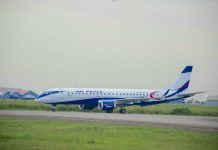

















In about two years, 42 domestic aircraft have been grounded primarily due to a lack of foreign exchange to keep the airplanes flying or stringent regulatory actions in the country’s aviation sector, The PUNCH reports.
Findings showed that as of 2022, the number of aircraft plying domestic routes in Nigeria was 107. However, the challenges of forex and tough regulatory verdicts reduced this number to about 65, a 39 per cent plunge.
The crash in the number of operational domestic aircraft, among other industry challenges, contributed immensely to the very high airfares on local routes in the country, operators explained.
Checks by our correspondents showed that the average price for a one-way ticket to any destination has surged by approximately 180 per cent to over N150,000 in one year.
The average price of a one-way trip from Lagos to Abuja is now about N143,000, as against less than N51,000 that it was sold early last year, indicating a 180.4 per cent increase in price.
On the Abuja to Port Harcourt route, the average price of a flight ticket is N143,000 jumping from N45,000 in the corresponding period of 2023.
Similarly, a one-way trip ticket from Abuja to Enugu, which used to be N90,000 in 2023, now costs about N152,000 depending on the date chosen and how short the booking notice is.
This came as airline operators told our correspondents that they could not retrieve their planes which had gone on checks at different maintenance organisations outside the country over the non-availability of forex to pay for services and spare parts. Transactions regarding aircraft maintenance are largely done in foreign currencies.
This has caused a shortage of available aircraft amid the increasing number of air travellers in the country. The reduced number of aircraft has prompted a hike in airfares, making passengers lament.
Stakeholders called on the Federal Government to ease foreign exchange scarcity to prevent the further collapse of businesses in the sector.
Findings showed that aside from Rano Air, 12 scheduled airlines are operating across various airports in the country, using different brands of airplanes.
These airplanes include Airbus A320-300, A220-300, ATR, Embraer CRJ, Boeing 737 series, Embraer E2, Embraer ERJ-145, Dash 8, MD 83, and Bombardier CRJ 100/900, among others.
It was gathered that between 2022 and 2024, about 63 aircraft were reduced from the number of airplanes that operated on the domestic routes earlier.
Some affected airlines include Max Air, Overland Airways, United Nigeria, Air Peace, Aero Contractors, Arik Air, Dana Air, Azman Air, Green Africa, Ibom Air, ValueJet, and NG Eagle.
Findings from the sector indicated that Max Air at its peak operated six Boeing 737 aircraft but the fleet has depleted to just two airplanes as of the time of filing this report.
Also, United Nigeria Airlines with six aircraft at its peak; Embraer ERJ 145 (four) and Airbus 320-300 aircraft (two wet-leased aircraft), currently operates two ERJ 145 and two A320 wet-leased aircraft.
Findings showed the firm had expected the delivery of an aircraft in June. But up till the time of this report, the airline has yet to take the delivery.
Further checks showed that Aero Contractors currently operates three aircraft; two B737 (Cally Air operated by Aero), a Dash 8 aircraft, and one rotary wing. The airline had five aircraft in its fleet about two years ago.
Arik Air’s fleet depleted from 10, comprising B737, Bombardier CRJ-900, Fokker 50/60, and Dash 8, to the current four serviceable aircraft in its fleet including a B737.
An official of the airline who pleaded not to be named due to the ownership and debt crisis rocking the airline told the PUNCH that out of the remaining four serviceable aircraft, two were already out of the country for maintenance and would soon be joined by another one leaving the airline with just one surviving airplane.
The Federal Government through the Nigeria Airspace Management Agency grounded the aircraft recently and lifted the ban after a few days.
For Dana Air, before it was grounded in April, the airline operated two aircraft – MD 82 and B737. About two years ago, the airlines had a fleet of six aircraft, consisting of MD and Boeing fleet.
The Nigerian Civil Aviation Authority waded the big stick against the airline following an incident involving one of Dana’s aircraft at the Lagos airport on April 23, 2024, after the aircraft veered off the Lagos airport runway.
The decision to ground the airline was greeted by stiff criticism from aviation stakeholders. But the Minister of Aviation, Festus Keyamo, insisted that the issues with the airline had to do with safety concerns and could not be taken with levity.
Former commandant of the Murtala Mohammed International Airport, Lagos, Group Captain, John Ojikutu, tackled the minister for ordering the grounding of Dana airline, adding that skidding off the runway was not peculiar to the airline.
“What is the big deal in skidding? Is that the first time we would be experiencing such an incident in the aviation industry? What is the matter? And also, the minister has no right to ask the NCAA to ground the airline, not at all,” he stated.
The airline that is most hit by the economic crunch and dollar scarcity is Azman Air. For almost a year now it has not operated.
At its peak, the airline had seven aircraft, including leased airplanes, which were Airbus A320 and A330, while the remaining five were Boeing 737 aircraft, but it suffered gradual depletion till it no longer had an airplane to operate with.
The airline, which commenced scheduled flight services in 2014, had last August, sent its staff on compulsory leave due to its failure to return its aircraft that is on maintenance aboard.
Two out of the four aircraft were taken to Turkey for C-checks in a Maintenance, Repair, and Overhaul facility recognised by NCAA while the other two remained in an MRO facility in Nigeria.
While the leased aircraft had been returned to their original owners, the other aircraft owned by the airline were due for maintenance at different times, but the management could not raise funds to conduct checks on them.
This was largely because of the high dollar-to-naira exchange rate and the shortage of the currency available, sources at the carrier told one of our correspondents.
Also, Green Africa Airways operates a fleet of ATR 72/42 aircraft. At its peak, the airline had three aircraft but currently operates two airplanes as the third has also gone on maintenance checks.
Operators said ValueJet has three operational aircraft including Bombardier, CRJ 100, and CRJ-900LR. The PUNCH gathered that the airline will take delivery of an aircraft soon to swell its number of planes to four.
In the same vein NG Eagle, which commenced operations in December 2023 with three B737, now operates two wet-leased aircraft.