




















The Managing Director of the International Monetary Fund (IMF), Kristalina Georgieva, today delivered a comprehensive address at the G20 Leaders’ Summit in Johannesburg, South Africa, expressing profound appreciation to President Cyril Ramaphosa, the Government of South Africa, Minister Enoch Godongwana, and Governor Lesetja Kganyago for their hospitality and effective leadership throughout the summit. She noted that this historic gathering, taking place for the first time on African soil, unfolded against a backdrop of major global transitions, with one unifying theme consistently emerging from the conversations: the urgent need to build resilience.
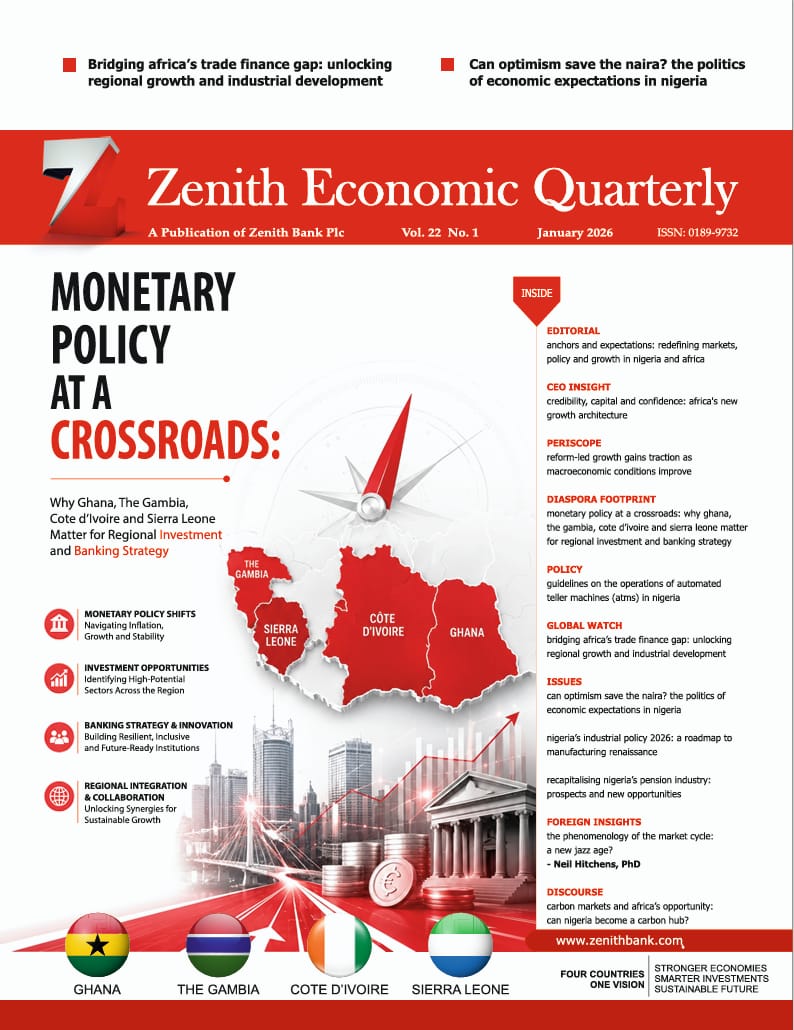 https://www.digital.zenithbank.com/ZEQ/ZEQ-jan-2026/index.html#p=1
Georgieva explained that the global economy is performing “better than we feared, but worse than we need.” She observed that despite multiple shocks, rising geopolitical tensions, trade frictions, and persistent uncertainty, the world economy has shown remarkable resilience. This resilience, she said, is largely anchored in the adaptability of the private sector and years of strengthening economic policies and institutions across many countries. However, she cautioned that this improvement is still insufficient. Global growth remains sluggish, still below pre-pandemic levels, while exceptionally high debt burdens continue to weigh heavily on many economies, particularly developing and low-income nations. She emphasized that governments must take deliberate steps to restore policy buffers, reinforce institutional credibility, and address domestic imbalances, while also accelerating structural reforms that empower the private sector, modernize outdated regulations, and support long-term productivity growth.
The IMF Managing Director stressed that domestic reforms must be matched by collective action at the global level. She reaffirmed that international policy cooperation remains vital, especially in an increasingly uncertain world. Georgieva highlighted the need to modernize global trade rules to reflect today’s digital realities and diverse global community, and she underscored the importance of mobilizing more financing—both public and private—to support countries in need. She confirmed that the IMF is increasing its permanent quota resources by 50 percent, a move supported by many G20 members and one that will enhance the institution’s ability to assist its global membership.
She acknowledged recent progress on debt treatment under the G20 Common Framework but stressed that far more needs to be done to achieve faster, more predictable, and fairer debt restructuring outcomes. Georgieva praised South Africa’s leadership, particularly the work leading to the October Declaration on Debt, which she described as a meaningful roadmap for future coordination. She added that the IMF continues to play its part by providing record levels of financing to its members, with 50 ongoing programs, including 21 across sub-Saharan Africa, tailored to the specific circumstances and reform priorities of individual countries.
Turning to technology, Georgieva described Artificial Intelligence as a transformative force capable of reversing the trend of slow global productivity growth. She noted that IMF research suggests AI could contribute nearly one percentage point of additional growth to the global economy. However, she warned that AI is advancing rapidly and unevenly, with profound implications for labor markets worldwide. According to the IMF’s analysis, up to 60 percent of jobs in advanced economies may be affected by AI, compared with 40 percent in emerging markets and 26 percent in low-income countries. She described this wave of technological disruption as “a tsunami hitting the labor market,” emphasizing that countries must quickly assess and strengthen their readiness.
She explained that the IMF has developed a new AI readiness index that evaluates countries across four dimensions: digital infrastructure, workforce skills and labor market flexibility, diffusion of AI across the economy, and ethical and regulatory frameworks. The findings show significant divergence across countries, with only a few performing strongly across all dimensions while many developing economies lag behind. Georgieva urged governments to invest swiftly in workforce skills, reliable energy infrastructure, and innovation-friendly tax systems that support technological adoption without disadvantaging workers. She called for renewed efforts to build a global platform for AI ethics and regulatory principles, led by the United Nations, and stressed the need to ensure that developing countries are not left behind in this technological shift so that AI becomes a source of shared prosperity rather than deeper inequality.
Georgieva concluded by expressing sincere gratitude to President Ramaphosa and the people of South Africa for their generous hospitality and strong leadership in hosting this milestone G20 Summit.