






















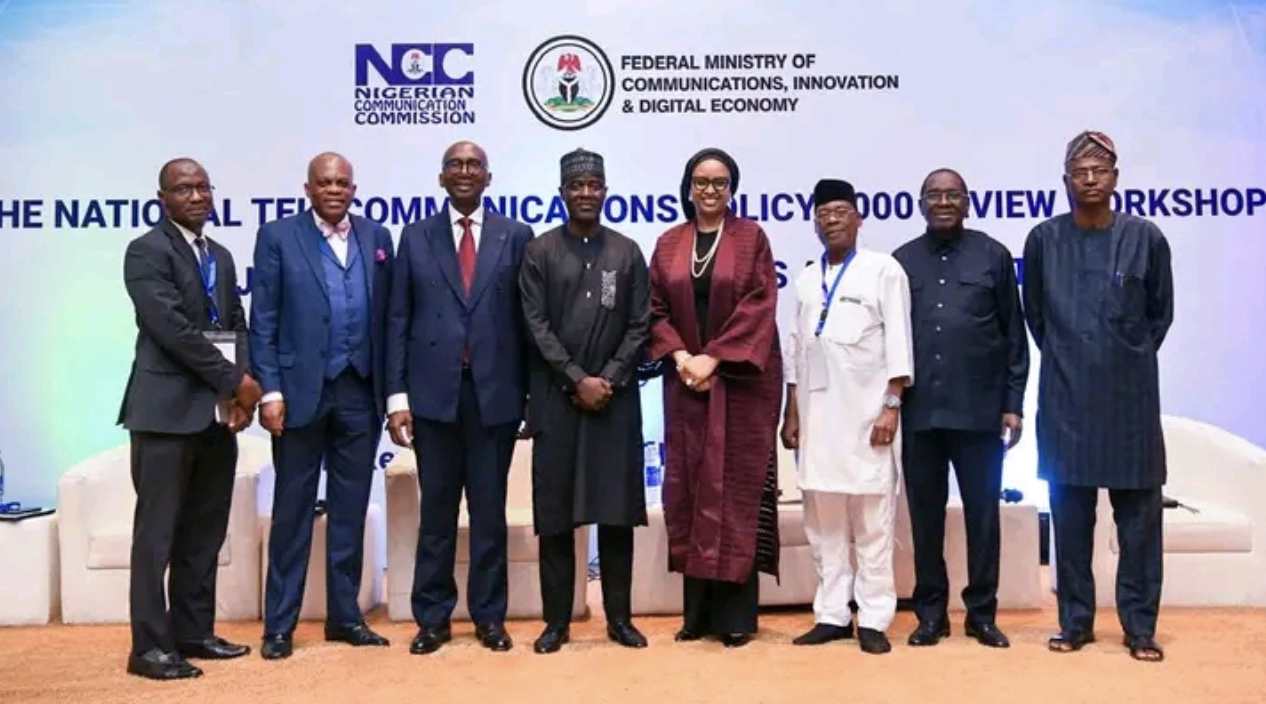
The Nigerian Communications Commission (NCC) has commenced a two-day Stakeholders’ Policy Review Workshop in Lagos to deliberate on the review of the National Telecommunications Policy (NTP) 2000, with stakeholders converging at the Marriott Hotel, Ikeja, to assess the trajectory of the sector and chart the next phase of Nigeria’s digital economy.
In his opening remarks, the Executive Vice Chairman and Chief Executive Officer (EVC/CEO) of the NCC, Dr. Aminu Maida, said the communications sector has moved beyond being a standalone industry to becoming a foundational ecosystem for national development.
“The communications sector has evolved from an isolated vertical into a foundational ecosystem,” Maida said, stressing the need for stronger policy frameworks to address emerging technologies including Artificial Intelligence (AI), Satellite Broadband, the Internet of Things (IoT), Critical National Information Infrastructure (CNII), Digital Sovereignty, Network Resilience, Sustainable Innovation and Quality of Experience (QoE).
He added that modern regulation must also respond more urgently to cybersecurity, data governance, digital financing and online safety.
Citing projections from the Global System for Mobile Communications Association (GSMA), the NCC chief noted that strategic digitisation of agriculture, manufacturing, transport and trade could contribute an additional two percent to Nigeria’s Gross Domestic Product (GDP), create up to two million jobs and generate about 1.6 trillion naira in tax revenue.
“The strategic digitisation of key sectors of the economy will unlock significant value for Nigeria, not just in GDP growth but in jobs and revenue generation,” he said.
The workshop brought together key stakeholders and industry figures including former NCC Executive Vice Chairman (EVC), Dr. Ernest Ndukwe, alongside other sector leaders, regulators and private sector participants, who are contributing to discussions on the evolution and legacy of the National Telecommunications Policy 2000, strategies for bridging the digital divide, strengthening regulatory frameworks, and aligning Nigeria’s telecom ecosystem with global best practices.
Technical sessions also examined stakeholder feedback on the Commission’s policy proposals, as well as pathways toward a more resilient, inclusive and future-ready digital economy.