





















…increase in MPR will lead to imminent recession in the manufacturing sector
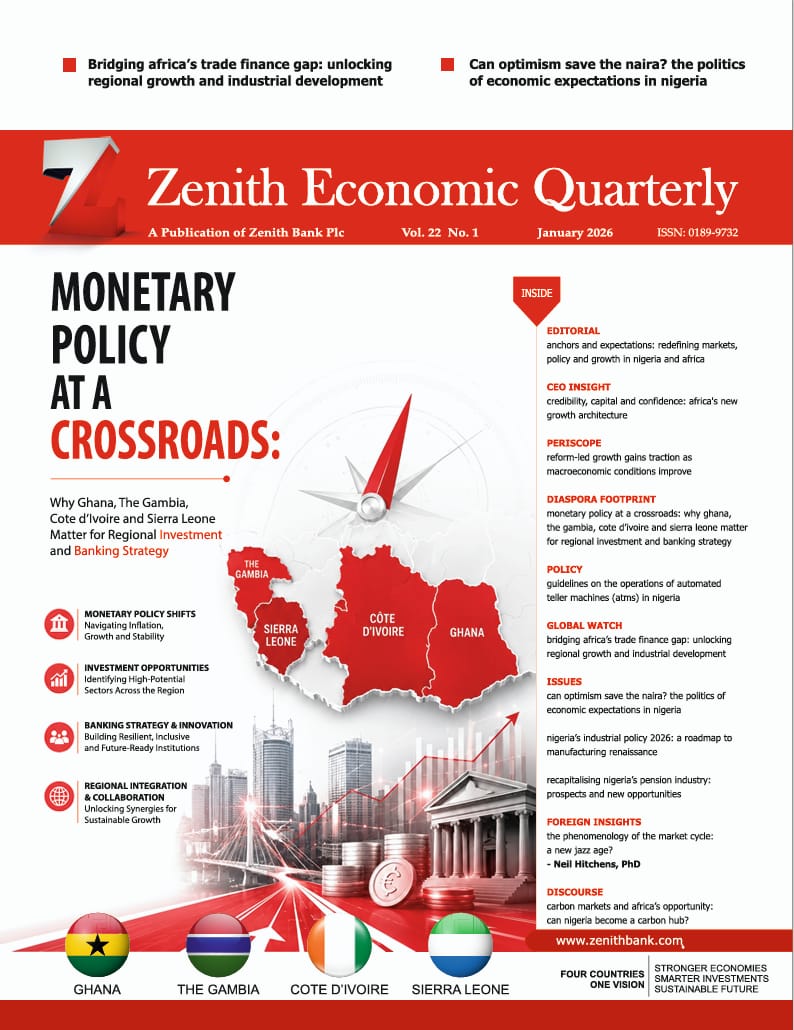 https://www.digital.zenithbank.com/ZEQ/ZEQ-jan-2026/index.html#p=1
The Manufacturers Association of Nigeria (MAN) has advised the Federal Government to develop an implementable, non-contradictory and well-synthesized Monetary and Fiscal Policy. This was mentioned in a statement released after the Monetary Policy Committee of the Central Bank of Nigeria (CBN) has raised in quick succession.
The Monetary Policy Rate (MPR) to 18.5 percent in May 2023 from 18 percent that was fixed at the 290th meeting of the committee held in March, 2023. The rate was raised by 50 basis points, while the Cash Reserve Ratio (CRR) and the Liquidity Ratio (LR) were maintained at 32.5% and 30% respectively.
In his justification for this, Mr. Godwin Emefiele, the Governor of Central Bank of Nigeria, the decision is to curtail the rising inflation in Nigeria, the rate which stood at 22.22 per cent as released by National Bureau of Statistics (NBS) in April 2023. This MPR increase is the 7th in a trend and the inflation rate continues to rise despite the increases. This is a clear indication that the policy tightening is not effective in curbing the inflationary pressures and more needed to be done.
The statement by the Manufacturers Association of Nigeria signed by the Director General, Segun Ajayi-Kadri, mni revealed that it was evident that the continuous and consistent increase in MPR is not yielding the desired growth in the economy. The Nigerian economy remains fragile and bedeviled with numerous challenges that inhibit growth. Therefore, the monetary authority needs to pay closer attention to rethink the policy mix, bearing in mind the parlous state of the economy, especially the effect of a high MPR on the manufacturing sector and the economy.
The increase will compound the imminent recession in the manufacturing sector and negatively impact its operations in so many ways, including increase in the cost of borrowing that will further discourage investments in the sector. High cost of production which will lead to higher commodity prices and inventory of unsold manufactured products. The decline in capacity utilization owing to high interest rate and reduction in sales and reduction in the output of the sector which will further reduce the national productivity and per capita income.
Others are reduction in manufacturing employment, thereby fueling insecurity and social vices. Decline in Government revenue as a result of low productivity of the manufacturing sector and the resulting low taxes. Reduction in inflow of investment owing to increase in cost of borrowing for manufacturing investment. High product prices owing to rising factor costs, which will in turn render the sector less uncompetitive.
According to the statement by MAN, the increase in MPR from 18% to 18.5% will certainly lead to an increase in lending rates and worsen the uncompetitiveness of the manufacturing sector. The Association has been clamoring for single-digit lending rates to allow manufacturers access needed funds to boost the performance of the sector. This increase, like the previous ones, is evidence that the CBN is either unperturbed about the plight of the productive sector or is unable to fathom out a more creative policy mix that would reflate the sector.
We are persuaded that monetary authority is oblivious of the fact that the failure of its tightening policy to address the inflationary pressure is because the hike in inflation is largely caused by a combination of familiar challenges, including low output which is attributed to instability of macroeconomic variables, inconsistent and lackluster fiscal policy regime, incoherent industrial policies, challenging and expensive operating environment, exploitative regulation, external shocks and poor exchange rate management.
Therefore, there is a need to address the identified root causes of inflation and refrain from intensifying policy choices that hamper the performance of the real sectors of the economy.
The interrelationship among macroeconomic variables is essential in policy formulation, as the movements of interest rate, inflation rate and exchange rate have direct impact on investment, employment and output of any economy.
According to the conventional monetary framework that was adopted by the CBN, increase in MPR should increase interest rate and by extension attract financial investment. However, it will also increase the cost of borrowing, crowd out more investments in the real sector and lower the output of the manufacturing sector.
Therefore, it is necessary for government to think outside the conventional monetary policy framework and take pragmatic steps to quell the inflationary pressure and reposition the economy.
To avert these undesirable trend, MAN recommends that the cost of lending from the Commercial Banks is expected to increase with the increase in MPR, it is important that priority attention should be given to improving the size of the available special funding windows and making them accessible to the industries at liberal conditionality.
Also, the Federal Ministry of Finance, Budget and National Planning and the Central Bank of Nigeria should collaborate to develop an implementable, non-contradictory and well-synthesized monetary and fiscal policy that support domestic manufacturing and the productive sector in general. By doing this, the supply of goods and local production will increase relative to current demand thereby improving aggregate output.
Similarly, immediate and concrete action should be taken to address the manufacturers’ forex needs in order to support and sustain production. There is no doubt that prioritizing allocation of forex to the manufacturing sector to procure raw materials, machines and spare parts that are not available locally is the way to go.
The implement strategies to encourage local raw material development and procurement, enhance infrastructure development, obviate prohibitive electricity tariffs, and increase productivity in key industries like manufacturing. Efforts should be made to tackle smuggling and insecurity by stepping up capacity building and providing sufficient security equipment and technology for monitoring and intelligence gathering.