





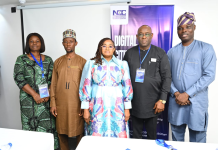















Esso Exploration and Production Nigeria Deepwater Limited (Esso E&P), an affiliate of ExxonMobil Corporation, has reiterated its commitment to strengthening Nigeria’s energy sector through strategic collaboration, regulatory clarity, and sustainable capacity development. This reaffirmation came during the 2025 Practical Nigerian Content (PNC) Forum, an annual oil and gas industry conference held in Yenagoa.
 https://www.digital.zenithbank.com/ZEQ/ZEQ-jan-2026/index.html#p=1
Speaking during the panel session on “Streamlining Project Delivery for Improved Efficiency”, Hazizi Hassan, Executive Director and Production Manager for ExxonMobil affiliates in Nigeria, emphasized the need for alignment across policy, investment, and execution to unlock efficiency and competitiveness.
“Nigeria’s aspiration to grow crude oil production to 2 million barrels per day by 2027 and 3 million barrels per day by 2030 is bold and achievable—but only if we focus on operational efficiency, reduce complexity, and create a predictable investment climate,” Hassan said.
He acknowledged the positive impact of the Petroleum Industry Act (PIA), noting that while not perfect, it has addressed structural challenges and improved stability for investors. However, he cautioned that recent changes in the Nigeria Tax Act 2025 have rolled back key incentives, creating uncertainty for long-term planning.
On the Presidential Directives on Local Content, Hassan stressed the importance of faithful and expedited implementation, particularly in streamlining contracting processes. He called for eliminating middlemen who inflate costs without adding value and advocated for a lifecycle-based approach to capacity development.
“True local content is not about short-term compliance; it’s about building sustainable capacity that strengthens Nigerian companies for the long haul. Partnerships must attract investment and remain globally competitive—this is how we deliver real value to Nigeria,” he added.
Hassan highlighted that Nigeria’s cost of doing business remains over 40 per cent higher than that of peer countries due to duplicated fees and overlapping agency roles, making deepwater development uncompetitive. He urged stronger collaboration between regulators and operators to address these challenges.
“This is a defining moment for Nigeria’s energy sector. We must harmonize policy, investment, and execution so that our industry delivers not just increased production, but sustainable prosperity for generations to come,” Hassan concluded.