Tag: inflation

  • Feature: The Post-Oil Future Will Not Be Built Without Oil Revenue

    Feature: The Post-Oil Future Will Not Be Built Without Oil Revenue

    By Sola Adebawo

    For much of the last decade, discussions about Nigeria’s economic future have been trapped between two opposing extremes.

    On one side are those who speak as though the global energy transition means oil no longer matters. In this view, Nigeria should simply move beyond hydrocarbons and focus entirely on renewable energy and the industries of the future.

    On the other side are those who behave as though the world will continue indefinitely as it has for the past fifty years. In their view, oil remains Nigeria’s destiny and there is little urgency to fundamentally restructure the economy.

    Both positions are flawed.

    The reality is more nuanced. Nigeria must prepare urgently for a post-oil world. But that future will not be built by abandoning oil. It will be financed, in large part, by the responsible and strategic management of oil and gas revenues.

    The global energy transition is real. Governments, investors, and corporations are committing trillions of dollars toward lower-carbon energy systems. Yet transition does not mean immediate replacement. The International Energy Agency projects that oil and gas will remain significant components of the global energy mix for decades, even as renewable energy expands rapidly.

    For Nigeria, this reality carries an important implication. The question is not whether oil has a future. The question is whether Nigeria will use the remaining decades of hydrocarbon relevance to build a more diversified, competitive, and resilient economy.

    Unfortunately, history offers a cautionary lesson.

    For more than half a century, oil has been Nigeria’s principal source of export earnings and a major contributor to government revenues. The problem was never the existence of oil. The problem was that successive governments became accustomed to consuming oil wealth rather than systematically converting it into productive national assets.

    Countries become trapped not because they possess natural resources, but because they consume resource wealth faster than they transform it into productive capacity.

    This distinction is important.

    Nigeria’s challenge is not dependence on oil alone. It is dependent on what oil revenue buys. When oil prices rise, spending expands. When prices fall, fiscal pressures emerge, foreign exchange shortages intensify, and economic vulnerabilities become exposed. The World Bank and the International Monetary Fund have repeatedly highlighted the risks associated with excessive reliance on commodity revenues and the macroeconomic instability that often follows.

    Every time oil prices collapse, the consequences eventually reach ordinary citizens through inflation, exchange-rate volatility, reduced public spending, pressure on jobs, and weaker public services. Diversification is therefore not merely an economic objective. It is a national resilience strategy.

    To be fair, important reforms are underway. The Petroleum Industry Act has improved regulatory clarity. Efforts to increase production are yielding results. Domestic refining capacity is expanding. Gas development is receiving greater policy attention. These are positive developments.

    Yet the strategic question remains unchanged: are today’s gains being converted into the foundations of a post-oil economy?

    That is where the real debate should be focused.

    The most successful resource-rich countries did not prosper because they extracted commodities. They prospered because they used resource revenues to build institutions, infrastructure, human capital, and industrial capability.

    The difference between Norway and Venezuela was never the presence of oil. It was the quality of institutions managing oil wealth.

    For Nigeria, the central challenge is therefore one of statecraft rather than geology.

    Oil revenues should increasingly finance investments that expand the productive capacity of the economy: reliable electricity, transportation infrastructure, digital networks, education, skills development, industrial clusters, research capability, and modern manufacturing. Every barrel produced today should help reduce dependence on future barrels.

    Natural gas deserves particular attention.

    For Nigeria, gas is not merely another hydrocarbon. It may well be the most important bridge between today’s resource economy and tomorrow’s industrial economy. With one of the largest proven gas reserves in the world, Nigeria possesses a strategic asset capable of supporting power generation, industrialisation, fertiliser production, petrochemicals, manufacturing competitiveness, and energy security.

    While many countries pursue net-zero ambitions, hundreds of millions of Africans still lack access to reliable electricity. For Nigeria, gas represents both an economic opportunity and a pragmatic transition fuel capable of supporting development while lower-carbon technologies continue to mature and scale.

    At the same time, policymakers must recognise that the window for monetising hydrocarbon resources may not remain open indefinitely. The challenge is not predicting the precise pace of global demand decline. The challenge is recognising that capital flows, technology, climate policies, and investment priorities are evolving rapidly. Countries that fail to prepare may discover that valuable resources remain underground while opportunities move elsewhere.

    This is why the conversation about diversification must also evolve.

    The goal is not simply to diversify away from oil.

    The real objective is to build an economy whose prosperity is no longer determined by oil.

    There is an important difference.

    A country can continue producing oil while ensuring that growth, innovation, employment, exports, and fiscal stability increasingly come from multiple sectors. That is the path followed by economies that successfully escaped the resource-dependence trap.

    Ultimately, the debate should not be framed as a choice between oil and the future.

    Nigeria needs both.

    The country should neither apologise for developing its hydrocarbon resources nor assume those resources guarantee future prosperity. The wiser course is to treat oil and gas not as a permanent economic model, but as development capital for building what comes next.

    The post-oil future is coming. The critical question is whether Nigeria will arrive there by design or by default.

    If the answer is by design, then today’s hydrocarbon revenues must become tomorrow’s productive economy.

    That is the true meaning of energy transition for Nigeria.

    And that is why the post-oil future will not be built without oil revenue.

    Sola Adebawo is an energy executive, institutional strategy, and public affairs leader with deep experience at the intersection of energy, governance, policy, and strategic communication. He currently leads Hyphen Partners Limited, a specialist advisory firm supporting organisations navigating complex, policy-sensitive environments. His writing explores reform, political economy, leadership, culture, and the relationship between institutions and public life. He is an author, scholar, and ordained minister.

  • FrieslandCampina WAMCO declares 566% Growth in PBT at 53rd AGM

    FrieslandCampina WAMCO declares 566% Growth in PBT at 53rd AGM

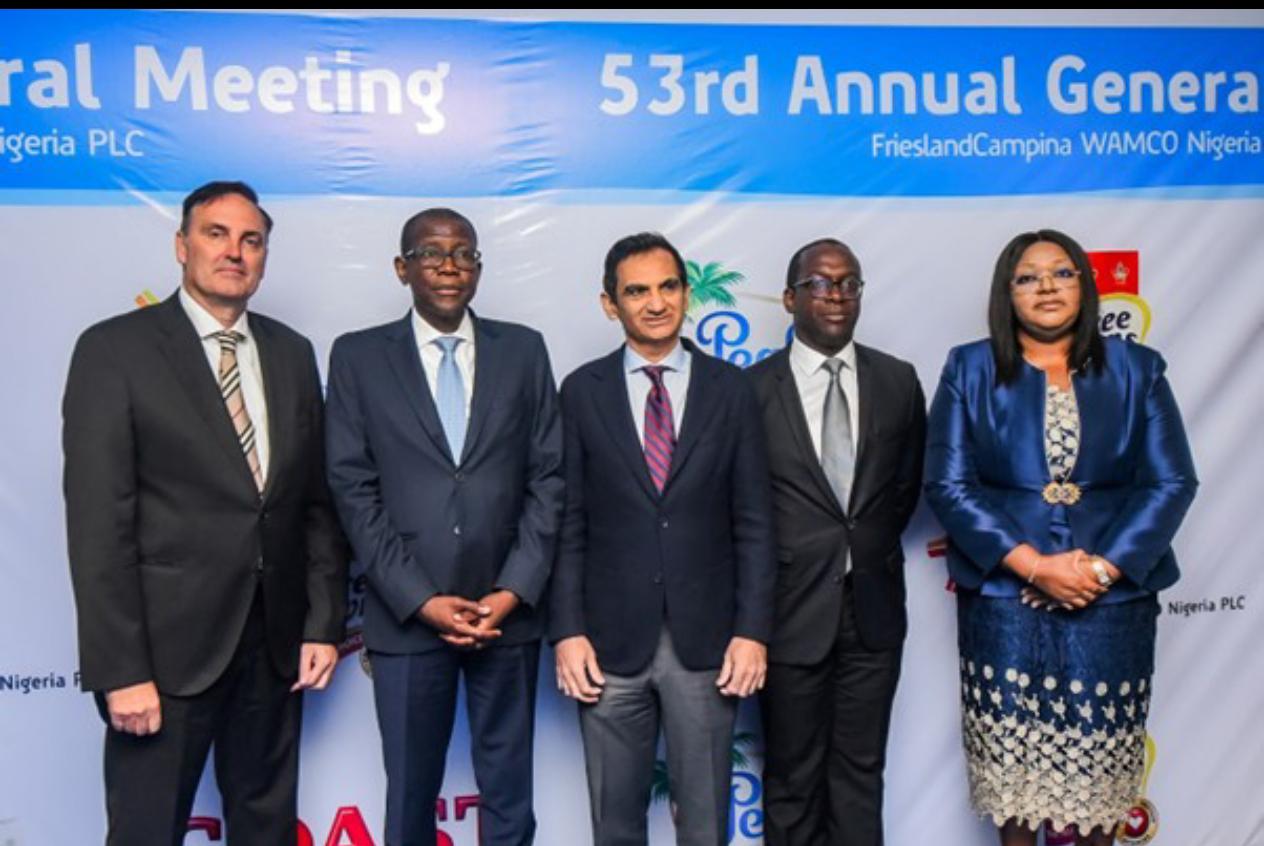
    FrieslandCampina WAMCO Nigeria PLC, the leading dairy company in Nigeria and maker of Peak, Three Crowns, Coast, Olympic, and Nunu milk brands, successfully held its 53rd Annual General Meeting (AGM), reporting strong financial recovery and significant growth across key performance indicators in its financial year ended 31 December 2025.

    The AGM, which took place in Ikeja, Lagos, on Tuesday, May 19, 2026, brought together shareholders, board members, and key stakeholders to deliberate on the Company’s 2025 performance and strategic outlook for the future.

    The Company delivered a strong rebound in 2025, returning to profitability and strengthening its balance sheet and liquidity position despite continued macroeconomic pressures within the operating environment.

    Revenue increased by 25% from ₦493.6 billion in 2024 to ₦615.9 billion in 2025, driven by strong volume growth, targeted pricing initiatives, and sustained market expansion across key product categories.

    Gross Profit rose significantly to ₦119 billion in 2025, driven by improved product mix, operational efficiency, cost-saving initiatives, and the relative strengthening of the Naira during the second half of the year.

    Profit Before Tax (PBT) increased remarkably by 566% from ₦4.9 billion in 2024 to ₦32.7 billion in 2025, supported by improved operating profit, reduced finance costs, and lower borrowings.

    The Company recorded a Profit After Tax of ₦18.4 billion in 2025, representing a major recovery from the ₦749 million loss recorded in 2024. Consequently, total equity improved significantly from ₦3.8 million in 2024 to ₦18.8 billion in 2025.

    The Board of Directors proposed and the shareholders approved a dividend payout of ₦1.00 per 50k ordinary share for the 2025 financial year, reflecting the Company’s commitment to balancing shareholder returns with the need to strengthen equity and maintain business resilience.

    In the words of Roger Adou, Managing Director, FrieslandCampina WAMCO, “2025 was a defining year for FrieslandCampina WAMCO Nigeria PLC as we successfully returned the business to profitability despite persistent macroeconomic and operational challenges. The operating environment remained complex with high interest rates, supply chain disruptions, inflationary pressures, and foreign exchange volatility continuing to impact businesses across Nigeria.

    “Despite these headwinds, our teams demonstrated exceptional resilience, agility, and commitment. We significantly improved operational efficiency across our factories, strengthened our route-to-market capabilities, enhanced our commercial execution, and optimized our supply chain operations.

    “We also continued to invest in our brands, our people, and our sustainability agenda. Our dairy development initiatives recorded strong progress in improving local milk sourcing, farmer capability development, and dairy ecosystem sustainability. In 2025 alone, over 13,000 farmers were trained, while raw milk volumes increased by 19% compared to the previous year.

    “As a company committed to nourishing Nigerians with quality dairy nutrition, we expanded several consumer engagement initiatives and reinforced our presence across strategic categories and channels. We remain focused on operational excellence, innovation, sustainability, and long-term value creation for all stakeholders.”

    In his address, the Chairman, Board of Directors, Mr. Olayinka Sanni said: “2025 marked a year of recovery, resilience, and strategic progress for FrieslandCampina WAMCO Nigeria PLC. Although the macroeconomic environment remained challenging, we witnessed gradual improvements in economic stability, moderation in inflation, and relative stability in the foreign exchange market, which positively impacted business confidence.

    “The Company’s strong recovery in profitability and equity position demonstrates the effectiveness of our strategic actions, disciplined financial management, and operational transformation initiatives. Our focus remains on building a more resilient business capable of delivering sustainable long-term value despite ongoing economic uncertainties.

    “On behalf of the Board, I would like to sincerely appreciate our shareholders for their unwavering confidence and support, our employees for their dedication and resilience, our customers and consumers for their loyalty, and our partners for their continued collaboration.

    “As we look ahead to 2026, we remain optimistic about the future of our Company. We will continue to focus on sustainable growth, operational efficiency, responsible business practices, dairy development, and investments that strengthen our long-term competitiveness in Nigeria’s dairy industry” Sanni concluded.

  • Guinness Nigeria CEO Attributes Strong 2026 Start to Operational Efficiency, Localised Decision-making, Others

    Guinness Nigeria CEO Attributes Strong 2026 Start to Operational Efficiency, Localised Decision-making, Others

    The Managing Director/CEO of Guinness Nigeria Plc, Girish Sharma has attributed the company’s strong start in 2026 to a blend of operational efficiency, localised decision-making, and expanded market reach – factors he says have fundamentally repositioned the business for sustained growth.

    Speaking in an interview with CNBC Africa, Sharma said the results reflect not only financial resilience but the strength of a deliberately re-engineered operating model.

    “We grew distribution, we’ve become far more efficient today, and we were able to make our people more agile because we brought decision-making down to Nigeria,” he said. “The past year has been a year of reset, but expecting 144 per cent revenue growth might not be what we should be looking at. However, I don’t see why we’d not be growing by double digits at the very least.”

    His comments come as Guinness Nigeria Plc opened 2026 on a notably strong footing, delivering a performance that underscores financial resilience and strategic discipline in a challenging operating environment.

    The company reported a 48 per cent year-on-year increase in Profit After Tax to ₦10.39 billion, alongside a 4 per cent rise in revenue to ₦122.77 billion. Earnings per share improved, while net finance costs declined significantly, signalling tighter cost management and improved capital efficiency. In a strong show of confidence, the Board approved an interim dividend of ₦2.00 per share, amounting to approximately ₦4.38 billion in total payout.

    The results position Guinness Nigeria among a select group of consumer-facing firms sustaining shareholder returns despite macroeconomic pressures, including inflation and currency volatility. More broadly, the performance reflects disciplined execution, a strengthened balance sheet, and a business increasingly optimised for long-term value creation.

    Beyond the topline figures, Sharma emphasised that the company’s performance is rooted in a deliberate strategic reset executed over the past year. According to him, the leadership team developed a structured blueprint anchored on four key pillars.

    “From a strategy perspective, I spent the first 100 days drawing the blueprint,” he explained. “At the end of it, we actually broke the strategy into four pillars. First was culture; we needed to make people feel more empowered, more than anything else. Second was operational excellence by localising what we do; we wanted to achieve more efficiency with this.”

    He added that consumer-centric innovation remains central to the company’s growth ambitions. “Thirdly, we are very obsessed with the consumers, so we had them at the centre of our strategy – we took out a few products and became a lot more innovative in adding some. And finally, is the financial performance.”

    Looking beyond the numbers, Sharma pointed to a portfolio strategy increasingly shaped by Nigeria’s cost-of-living realities. While premium brands will continue to receive investment, he noted that future growth is likely to be driven by value-led innovation tailored to pressured consumer wallets, pointing to the recent launch of Orijin Beer in PET format as an early example of how pack sizes and propositions are being reworked to meet shifting demand.

    He also mentioned that he sees growth opportunities across several categories over the next two to three years, including ready-to-drink beverages, mainstream spirits, beer, and malt. “Consumer tastes are evolving quickly,” he said, “and our job is to stay close to those shifts and respond with the right products.”

    For Guinness Nigeria, the reset year has cleared the pathway to a sharper phase of execution, one focused on translating operational discipline into category leadership and durable consumer relevance.

  • Nigeria’s Macroeconomic Stability Tested by OilShock in March 2026

    Nigeria’s Macroeconomic Stability Tested by OilShock in March 2026

    The global economy entered the month on a fragile footing, and the escalation of tensions around the Strait of Hormuz triggered a sharp repricing across energy markets. Oil moved above $110 per barrel, not as a demand-driven rally but as a supply shock.

    March 2026 marked a clear shift in the macroeconomic trajectory, both globally and in Nigeria, with the external environment becoming the dominant force shaping domestic outcomes. Nigeria’s macroeconomic space in March was a month of consolidation of reforms that have been gaining traction since last year. The month started on a down note due to the geopolitical situation, which began in the last days of February and carried into the new month. This raised concerns about future inflation spikes and economic instability.

    Nigeria entered this environment from a position of improving macro stability. Inflation had been on a sustained downward trend, with headline figures declining to 15.06% by February from 15.10% the previous month. This reflects the ongoing disinflation trend from the much higher levels seen in 2024, though food prices still exerted some pressure with year-on-year food inflation at around 12.12%. Core inflation remained firm at about 15.8%, suggesting that underlying price pressures in non-food items have not yet fully subsided.

    This disinflation path was supported by tighter monetary policy, relative exchange rate stability, and base effects. At the same time, foreign exchange reforms were beginning to gain credibility. Liquidity in the FX market improved, and the naira traded within a more stable band, supported by better reserve dynamics and reduced speculative pressure.

    However, the global oil shock in March disrupted this trajectory. The transmission into Nigeria was both direct and immediate, as the economy remains highly sensitive to energy prices despite its status as an oil producer. The increase in crude prices fed into domestic fuel costs, with petrol prices reaching record levels at N1270. This exposed a structural paradox: even as the Dangote Refinery ramped up, domestic fuel pricing remains anchored to international benchmarks.

    Global prices offered a positive surprise as Brent and Nigerian crude rose notably in early March due to geopolitical tensions, often trading well above the 2026 budget benchmark of around $64.85 per barrel. This creates extra revenue potential for government spending plans. However, Nigeria’s actual crude oil output continued to lag behind its OPEC quota of 1.5 million barrels per day. Production averaged roughly 1.4–1.47 million barrels per day in recent months, with shortfalls persisting due to ongoing challenges like theft, pipeline issues, and insecurity in the Niger Delta. This gap has led to missed revenue opportunities despite higher prices.

    At the same time, the increase in oil prices creates a fiscal offset. Government revenues improve, providing short-term relief to fiscal balances and potentially reducing borrowing needs. This introduces a classic policy trade-off. Higher oil prices support public finances and external reserves, but they also tighten financial conditions for households and businesses by raising costs. The net effect on growth
    becomes ambiguous. Consumption weakens under inflation pressure, while government spending capacity improves. The balance between these forces will determine the growth path over the next two quarters.

    The inflation outlook, therefore, shifted within the month. What had been a clear disinflation trend is now at risk of reversal. Higher fuel prices raise transportation costs, which feed into food distribution and the pricing of core goods. Given the weight of food in Nigeria’s CPI basket, this second-round effect is significant. March effectively represents the point at which imported inflation, via energy, re-enters the
    system.

    The Exchange Market

    Nigeria’s foreign exchange reserves and exchange market presented a picture of cautious stability for the month of March. The exchange rate roughly hovered stable, with a starting value of N1,376/$ and a closing value of N1,387/$, showing a depreciation of 0.79%. The
    rate showed minor daily fluctuations but no major depreciation or appreciation spikes, with volatility low.

    The slight erosion was mainly attributed to external debt service obligations and ongoing interventions by the CBN in the foreign exchange market to support the naira and manage liquidity demands. The average exchange rate for the month stood approximately at ₦1,527/$.
    These movements reflected ongoing demand for foreign currency amid imports, debt obligations, and seasonal factors, balanced partially by CBN dollar sales to smooth volatility.

    The depreciation trend in March reversed some of the gains seen in the early part of 2025, as external factors such as global oil price fluctuations and higher demand for dollars for invisibles contributed to selling pressure. However, the CBN maintained active market participation, injecting dollars at various intervals to defend the currency and prevent disorderly movements. This helped keep the official rate relatively stable compared to more turbulent periods in prior years.

    In the foreign exchange market, the outlook projected that the naira would face mild to moderate depreciation pressures through April. Overall, the market environment pointed toward a consolidation phase rather than sharp swings, supported by the CBN’s willing-buyer,
    willing-seller framework, but vulnerable to any spikes in global oil price weakness or heightened import demand.

    Gross External Reserve

    Nigeria’s gross external reserves recorded a modest 1.22% month-on-month decline to $49.29bn. This slight slip occurred despite the broader upward trajectory in reserves seen through late 2025 and early 2026, during which gross reserves had climbed significantly from around $40 billion at end-2024 to over $45 billion by end2025 and further toward the $50 billion mark in early 2026.

    Heightened geopolitical tensions among the US, Israel, and Iran triggered risk aversion among global investors, prompting a flight to safety that dampened foreign portfolio inflows. Even though global oil prices surged above $100, this did not translate into a meaningful boost to Nigeria’s foreign exchange receipts, as production constraints played a major role here.

    On a policy front, the Central Bank of Nigeria’s new policy, introduced around late March 2026, allowed International Oil Companies (IOCs) to fully repatriate 100% of their export proceeds without previous retention or cash-pooling restrictions. This move was designed to liberalise the FX market, attract more upstream investment, and improve transparency. It contributed to short-term outflows as IOCs moved dollars offshore more freely, thereby reducing reserves.

    Looking ahead, Nigeria’s foreign reserves are stabilising or showing a modest recovery. Higher Brent crude prices, sustained well above Nigeria’s 2026 budget benchmark of roughly $65 per barrel due to supply disruptions and fears around the Strait of Hormuz, should begin translating into stronger FX inflows from crude exports, although production capacity still remains a constraint.

  • How the War in the Middle East Is Affecting Energy, Trade, and Finance

    How the War in the Middle East Is Affecting Energy, Trade, and Finance

    By Tobias Adrian, Jihad Azour, Nigel Chalk, Pierre-Olivier Gourinchas, Alfred Kammer, Abebe Aemro Selassie, Krishna Srinivasan, Rodrigo Valdés

    The world faces yet another shock. The war in the Middle East is upending lives and livelihoods in the region and beyond. It is also dimming the outlook for many economies that had only just shown signs of a sustained recovery from previous crises.

    The shock is global, yet asymmetric. Energy importers are more exposed than exporters, poorer countries more than richer ones, and those with meager buffers more than those with ample reserves.

    Beyond its painful human toll, the war has caused serious disruption to the economies of the most directly affected countries, including damage to their infrastructure and industries that could become long-lasting. Although these countries are resilient, their short-term growth prospects will be negatively affected.

    Meanwhile, large energy importers in Asia and Europe are bearing the brunt of higher fuel and input costs: about 25 to 30 percent of global oil and 20 percent of liquefied natural gas pass through the Strait of Hormuz, feeding demand not only in Asia but also in parts of Europe. Economies heavily dependent on oil imports in Africa and Asia are finding it increasingly hard to access the supplies they need, even at inflated prices.

    Parts of the Middle East, Africa, Asia-Pacific, and Latin America face the added strain of higher food and fertilizer prices and tighter financial conditions. Low-income countries are especially at risk of food insecurity; some may need more external support—even as such assistance has been declining.

    Strait of Hormuz tanker traffic plunges

    Although the war could shape the global economy in different ways, all roads lead to higher prices and slower growth. A short conflict might send oil and gas prices soaring before markets adjust, while a long one could keep energy expensive and strain countries that rely on imports. Or the world may settle somewhere in between—tensions linger, energy stays costly, and inflation proves hard to tame—with ongoing uncertainty and geopolitical risk. Much depends on how long the conflict lasts, how far it spreads, and how much damage it inflicts on infrastructure and supply chains.

    We are closely monitoring these developments and will provide a fuller assessment in our World Economic Outlook and Global Financial Stability Report, to be published on April 14, followed by our Fiscal Monitor on April 15.

    Energy prices

    Energy is the main transmission channel. The de facto closure of the Strait of Hormuz and damage to regional infrastructure have produced the largest disruption to the global oil market in its history, according to the International Energy Agency. For fuel‑importing economies, the effect is that of a large, sudden tax on income.

    Oil and gas prices surge amid conflict

    The multi-regional impact is apparent. Energy‑importing economies in Africa, the Middle East and Latin America are feeling the strain from higher import bills on top of already limited fiscal space and external buffers.

    In Asia’s large manufacturing economies, higher fuel and power bills are raising production costs and squeezing people’s purchasing power; in some, balance‑of‑payments pressures are already weighing on currencies. In Europe, the shock is reviving the specter of the 2021–22 gas crisis, with countries such as Italy and the United Kingdom especially exposed by their reliance on gas‑fired power, while France and Spain are relatively protected by their greater nuclear and renewables capacity.

    By contrast, oil‑exporting countries in the Middle East, parts of Africa, and Latin America that can still get their barrels to market have a prospect of stronger fiscal and external positions from higher prices. Producers whose exports are constrained or curtailed—including several Gulf Cooperation Council members—can expect much less upside. Even after transit resumes, higher risk premia and uncertainty may curb investment and growth

    Supply chains

    The war is also reshaping supply chains for non-energy and critical inputs. Rerouting tankers and container ships raises freight and insurance costs and lengthens delivery times. Air‑traffic disruptions around key Gulf hubs affect global tourism and add another layer of complexity to trade.

    In addition to higher commodity prices, countries, companies, and consumers already face the effects of these supply‑chain complications. With shipments of fertilizer—of which about one-third passes through the Strait of Hormuz—disrupted, concerns about food prices are mounting. The interruption of crop-nutrient supplies from the Gulf comes just as planting season begins in the Northern Hemisphere, threatening yields and harvests through the year and pushing food prices higher.

    The most vulnerable will bear the heaviest burden. People in low‑income countries are most at risk when prices rise because food accounts for about 36 percent of consumption on average, compared with 20 percent in emerging market economies and 9 percent in advanced economies. That makes any spike in fertilizer and food prices not just an economic problem but a socio-political one, especially where fiscal resources to cushion the blow are limited.

    There could also be shortages or price surges of other materials used in manufacturing. The Gulf supplies a large share of the world’s helium, used in a vast array of products from semiconductors to medical imaging devices. Indonesia, which provides roughly half of global nickel—a key component in electric‑vehicle batteries—could face a shortage of sulfur needed to process the metal. Eastern African economies that depend on trade links with and remittances from Gulf countries face weaker demand for their services exports, logistical bottlenecks and reduced remittances.

    Inflation and inflation expectations

    If elevated energy and food prices persist, they will fuel inflation worldwide. Historically, sustained oil‑price spikes have tended to push inflation higher and growth lower. Over time, higher transport and input costs work their way into the prices of manufactured goods and services. For many countries that had only just brought inflation closer to target, and even more so those with stickier inflation, this risks a renewed period of uncomfortable price pressures.

    Here, too, the pattern is uneven. In much of Asia and parts of Latin America, where inflation had been relatively low, higher energy and food costs will test the resilience of expectations, particularly in economies with weaker currencies and large energy imports. In Europe, another energy‑driven spike in prices would come on top of existing cost‑of‑living strains, raising the risk of more persistent wage demands. In low‑income countries where people spend a large share of their income on food, especially in Africa and parts of the Middle East, and Central America, higher food prices carry acute social and economic costs.

    If people and businesses in any of these regions believe inflation will remain higher for longer, they may build this into wages and prices, making it harder to contain the shock without a sharper slowdown. The war thus raises not only current inflation but also a risk of expectations becoming less firmly anchored.

    Financial conditions

    Finally, the war has unsettled financial markets. Global stock prices have declined, bond yields have risen across major advanced economies and many emerging markets, and volatility has increased. The market sell-off has so far been contained compared with past global shocks. Nonetheless, these moves have tightened financial conditions worldwide.

    Again, effects vary. In Europe and many emerging markets, higher yields and wider credit spreads raise debt‑service burdens and complicate refinancing for governments and firms alike. In sub‑Saharan Africa and some low‑income economies in the Middle East and South Asia, already meager reserves and limited market access make external shocks to financing conditions more dangerous—especially as higher import bills for fuel, fertilizer, and food widen trade deficits and put pressure on currencies. In the Middle East and elsewhere, high levels of debt and tighter financial conditions may further raise debt financing costs.

    By contrast, advanced economies with deep domestic capital markets and some commodity exporters with ample buffers—such as Saudi Arabia and United Arab Emirates, or Latin American commodity producers like Brazil and Ecuador—can better absorb market stress, even if they are not immune to higher risk premia.

    The IMF’s role

    These channels show why the war’s economic impact is both global and highly uneven. They help explain why the same shock can look like a terms‑of‑trade windfall for some countries, a balance‑of‑payments strain for others, and a renewed cost‑of‑living squeeze across many economies.

    Such complex spillovers confront us at a time when many economies have limited room to absorb shocks. Many countries were already facing record-high debt levels, raising concerns about fiscal sustainability.

    To manage the shock and maintain resilience, it is therefore more important than ever that countries adopt appropriate policies. Measures need to be carefully calibrated to country-specific needs. Countries with limited reserves and little fiscal room to maneuver should be especially cautious.

    At this pivotal moment, the IMF is stepping up as well. We are supporting our members—especially the most vulnerable—with policy advice, capacity development and, where needed and in coordination with the international community, financial assistance. As Managing Director, Kristalina Georgieva has said: “In an uncertain world, more countries are needing more of our support. We are there for them.”

  • MAN Raises Alarm Over US-Iran Crisis, Warns of Severe Impact on Nigeria’s Manufacturing Sector

    MAN Raises Alarm Over US-Iran Crisis, Warns of Severe Impact on Nigeria’s Manufacturing Sector

    The Manufacturers Association of Nigeria (MAN) has expressed deep concern over the escalating geopolitical tensions involving the United States, Israel, and Iran, warning that the crisis poses significant risks to Nigeria’s manufacturing sector and broader economic stability.

    In a position statement, MAN noted that the intensifying conflict in the Middle East has already sent shockwaves across the global economy, disrupting energy markets, shipping routes, and supply chains. The association cautioned that although the conflict is geographically distant, its economic consequences could have direct and far-reaching implications for Nigeria’s industrial base.

    According to MAN, the crisis comes at a delicate time for Nigeria’s economy, just as inflation had begun to moderate to 15.10 percent and manufacturing capacity utilization showed signs of recovery above the 60 percent threshold. The association warned that these gains are now under threat from rising global uncertainties.

    MAN highlighted that disruptions in critical transit corridors, particularly around the Strait of Hormuz and the Red Sea, have triggered sharp increases in global oil prices, freight costs, and war-risk insurance premiums. Brent crude prices have surged beyond $84 per barrel, while shipping vessels are increasingly rerouting, leading to higher logistics costs and longer delivery timelines.

    The association stressed that for Nigerian manufacturers, global geopolitics now translates directly into increased production costs. It explained that while higher oil prices could theoretically boost Nigeria’s foreign exchange earnings, the country’s limited crude production capacity—currently between 1.3 and 1.4 million barrels per day—means it is unable to fully capitalize on these gains.

    MAN further warned that the crisis could disrupt Nigeria’s trade relationship with the United States, one of its key trading partners. With exports to the US valued at $5.91 billion in 2024 and imports at $4.33 billion, any disruption in trade flows could exacerbate supply chain challenges and increase the cost of imported raw materials.

    The association outlined several immediate implications for the manufacturing sector, including escalating energy costs, rising freight expenses, and increasing imported inflation. Manufacturers, it said, are already grappling with soaring diesel and gas prices, which are eroding operating margins. At the same time, declining consumer purchasing power is reducing demand, leaving companies with unsold inventories.

    MAN identified the chemical and pharmaceutical sector as the most vulnerable, noting its heavy dependence on petroleum-based inputs and its dominance in manufactured exports to the United States. The basic metals, iron and steel sector, as well as the food, beverage, and tobacco segment, were also highlighted as particularly exposed due to their reliance on energy and imported inputs.

    Drawing parallels with the economic fallout from the US-Iraq War, MAN recalled that Nigeria’s manufacturing sector experienced severe setbacks during that period. Manufacturing exports fell sharply from $901.35 million in 2002 to $496.87 million in 2003, while sectoral GDP growth plunged from 17.74 percent to -10.8 percent.

    The association warned that a similar trajectory could unfold if proactive measures are not taken, emphasizing Nigeria’s continued vulnerability to external shocks due to its dependence on imported raw materials.

    To mitigate the impact, MAN called on the Federal Government to urgently implement targeted interventions. These include accelerating the adoption of compressed natural gas (CNG) for industrial use, establishing a dedicated foreign exchange window for manufacturers, prioritizing domestic supply of refined petroleum products to local industries, and suspending logistics and haulage levies to ease transportation costs.

    MAN stressed that the current crisis presents a critical opportunity for Nigeria to strengthen its manufacturing base and reduce dependence on external inputs. It urged policymakers to act decisively to protect jobs, sustain production, and safeguard economic stability.

    “The time for reactive measures has passed. This moment calls for deliberate and strategic action to fortify Nigeria’s manufacturing sector against external shocks,” the association stated.

  • Why JustMarkets Is a Strong Choice for Gold Trading

    Why JustMarkets Is a Strong Choice for Gold Trading

    Over the past four years, gold has risen by more than 400%. The precious metal has long been one of the most traded assets in global financial markets. From its role as a traditional store of value to its sensitivity to inflation, interest rates, and geopolitical uncertainty, gold continues to attract traders seeking efficient, predictable opportunities amid global uncertainty and high volatility.

    For traders looking to effectively access gold markets, choosing the right trading environment is as important as timing their entry. One of the most popular and effective gold trading platforms is JustMarkets, offering the tools, conditions, and infrastructure to enable traders to achieve their most ambitious gold trading goals.

    Tight Spreads on XAU/USD

    Cost efficiency is a critical factor in gold trading, especially for active day traders. JustMarkets offers extremely competitive XAU/USD spreads, allowing traders to open and close positions with reduced transaction costs. Lower spreads can significantly impact short-term strategies, where precision and timing are key to effectively entering a trade. By minimizing trading costs, JustMarkets helps traders focus more on market analysis and finding the ideal entry point, and less on overhead.

    Fast and Reliable Execution

    Gold is recognized for its volatility, especially during the day, especially with economic announcements or geopolitical events. Speed is of the essence in volatile markets. JustMarkets provides high-speed execution of orders, which helps minimize the risks of delays, especially during periods of high volatility. This ensures that traders are able to respond better to market conditions, thereby having better control over trade management.

    Flexible Trading Conditions

    Each trader has their own approach to gold, ranging from intraday trading to position trading. JustMarkets offers flexible leverage and account types, enabling traders to adjust their exposure based on their risk tolerance and trading style. This flexibility is suitable for both conservative and aggressive traders while still allowing them to access the same global gold market.

    Advanced Platforms and Tools

    Successful gold trading is based on thorough technical and fundamental analysis. JustMarkets provides access to industry-standard trading platforms equipped with advanced charting tools, multiple timeframes, and a wide range of indicators for recognizing divergences and clear entry points. These features help traders analyze price trends, identify key levels, and plan their trades with greater confidence.

    Accessibility via mobile devices and computers via the JustMarkets Mobile Trading app also ensures traders can monitor positions and market movements from anywhere and at any time.

    Education and Market Support

    Gold is also affected by factors such as inflation rates, central bank policies, and currency fluctuations. Understanding these factors is important for developing a structured trading strategy.

    JustMarkets offers resources for traders, which provide information on how global events can impact the price of gold like case studies, daily, bank and weekly analysis. This is a knowledge-based system, which enables the trader to make more informed decisions rather than relying on the price movements of gold.

    Trading Activities That Keep Gold Traders Engaged

    In addition to the competitive trading environment, JustMarkets also runs various special activities and campaigns that aim to make the trading experience more interesting. At certain intervals, the special activities may include trading contests on specific trading instruments, such as gold, which are highly sought after by traders. This will give the traders an added impetus to keep trading.

    The special activities are designed to encourage trading, consistency, and skill-building among the traders, along with the additional motivation for the trading strategies. This is also in line with the overall philosophy of JustMarkets to create a dynamic trading environment where trading, learning, and motivation are linked together.

    A Trading Environment Built for Gold Traders

    Gold is still one of the most dynamic markets with the greatest number of opportunities in the world. With tight spreads on XAU/USD, fast execution, flexible trading terms, and access to advanced analytical tools, JustMarkets creates an optimal trading environment for those who want to trade gold efficiently.

    In addition to the comprehensive educational assistance, JustMarkets continues to position itself as a strong competitor for traders who are looking for professional trading conditions combined with growth opportunities.

  • Inflation Drops to 15.10% as Food Prices Fall Sharply; Treasury Yields Ease and Naira Strengthens

    Inflation Drops to 15.10% as Food Prices Fall Sharply; Treasury Yields Ease and Naira Strengthens

    Nigeria’s headline inflation rate eased further to 15.10% in January 2026, down slightly from 15.15% in December 2025, according to the latest Consumer Price Index report released by the National Bureau of Statistics. On a year-on-year basis, inflation fell sharply by 12.51 percentage points from 27.61% recorded in January 2025, highlighting a significant slowdown compared to last year’s elevated levels.

    On a month-on-month basis, prices contracted by 2.88% in January, a notable reversal from the 0.54% increase in December, indicating that the general price level declined relative to the previous month. However, broader underlying pressures remain visible, as the twelve-month average inflation rate stood at 21.97%, higher than the corresponding period a year earlier. Year-on-year food inflation dropped to 8.89% from 29.63% in January 2025, while month-on-month food prices fell sharply by 6.02%.

    The decline was attributed to lower prices of key staples such as yam, eggs, grains, beans, palm oil, beef, and cassava. Core inflation, which excludes volatile agricultural produce and energy prices, moderated to 17.72% year on year, down from 25.27% in January 2025, while month-on-month core prices declined by 1.69%. Urban and rural inflation rates both followed a similar downward trajectory, with urban inflation at 15.36% and rural inflation at 14.44% year on year. 

    Money Market

    System liquidity saw a decreasing trend throughout the trading week, opening at ₦4.32 trillion on Monday and closing at ₦2.16 trillion. Week-on-week, the Open Buy Back (OBB) remained flat at 22.50%, while the Overnight (OVN) rates decreased by 7 bps to close at 22.71%.

    We expect rate to continue to hover around this level.

    Treasury Bills Market: The Treasury Bills market began the week on a quiet note following the CBN’s announcement of an OMO auction, where ₦600bn was offered across the 8-day and 99-day maturities, attracting robust subscriptions of ₦2.04trn with ₦1.35trn eventually allotted at stop rates of 22.39% and 19.48%, respectively. Subsequent OMO activity saw ₦600bn offered across the 7-day and 105-day tenors, with ₦2.30trn sold at 19.44% for the 105-day paper, while the NTB auction recorded strong demand of ₦4.28trn, out of which ₦1.91trn was allotted as stop rates on the 91-day and 364-day bills declined to 15.80% and 15.90%, respectively. In the secondary market, sustained interest in the newly issued 1-year NTB supported trades around the 15.75/15.60% levels midweek, although the market closed the week on a relatively calm but mildly bearish note as offers outweighed bids on the 18 Feb 2027 bill, with trades averaging 15.70%. Week-on-week, the average benchmark yield decreased by 20 bps to close at 17.42 %.
    We expect a calm start to the week as market participants assess the outcome of the FGN bond auction and digest the MPC’s decision.

    FGN Bond Market: The FGN Bonds market opened the week on a calm note, with improved sentiment observed as buying interest emerged in the 2034 and 2035 maturities, with trades consummated on the latter at 16.35%, supported by a marginal decline in January inflation to 15.10% from 15.15%. Activity remained largely subdued through midweek, as market participants adopted a cautious stance ahead of NTB auction results, although intermittent demand on the 2035 maturity saw it quoted around 16.45/16.20%. Toward the end of the week, the market maintained its quiet bias ahead of the upcoming auction, with selective buying interest observed along the belly of the curve, particularly on the 2032 and 2034 maturities which traded at 16.15% and 16.10%, respectively. Week-on-week, the average benchmark yield decreased by 7 bps to close at 15.92%.
    We expect an active week as investors react to the bond auction results and the MPC decision.

    FGN Eurobond Market: The Eurobond market traded on a calm note at the start of the week amid subdued volumes due to the U.S. bank holiday in observance of Presidents’ Day, with modest buying interest supporting a slight decline in yields. Sentiment remained largely muted through midweek as investors positioned ahead of the Fed meeting minutes, with the average benchmark yield compressing to 6.83% before reversing course on Thursday as the market digested the minutes. By Friday, the market adopted a bearish tone as participants awaited key PCE and GDP releases; PCE printed at 2.9% above the 2.8% forecast, while GDP came in weaker at 1.4% versus expectations of 2.8% and a previous reading of 4.4%, further compounded by risk-off sentiment following the U.S. Supreme Court’s ruling on tariff measures, which prompted external selling pressure across the curve. Week-on-Week, the average benchmark yield decreased by 11 bps to close at 6.84%. 
    We look forward to the release of PPI, unemployment claims data, and more updates on the Trump tariff saga.

    Currency Market

    The value of the Naira to the dollar appreciated by 0.67% week on week to close at ₦1,346.32/$ at the Nigerian Foreign Exchange Market Window (NFEM).

    Equities Market
     The local bourse ended the day with the benchmark NGX All-Share Index (ASI) appreciating by 0.99% to close at 194,989.77. Market capitalization also appreciated, closing at 125.16 trillion. Market breadth was positive at 2.30x. Trading activity was robust on the day, with the volume of shares traded decreasing by 9% to 820.45 million units, while total value of shares traded decreased by 26% to ₦28.27 billion.

    Reflecting the week’s performance, the NGX All-Share Index recorded a 6.95% appreciation, as gains in ZICHIS (+60.74%), JAPAULGOLD (+60.16%) and INFINITY (+59.09%) were offset by declines in RTBRISCOE (-20.78%), MECURE (-18.99%), and TRIPPLEG (-18.80%). 

    Overall, the NGX has posted a year-to-date gain of 25.30%. Other notable indices are the NGX Top 30 Index (+0.86%; +9.22% 1WK; +24.37% YTD), NGX Banking Index (+1.43%; +8.31% 1WK; +23.93% YTD), NGX Oil & Gas Index (+0.05%; +10.88% 1WK; +52.73% YTD), and NGX Insurance Index (+2.52%; +5.49% 1WK; +15.06% YTD). 

  • Employee Corruption and Occupational Fraud Threaten Nigeria’s MSME Sector – CPPE Raises Alarm

    Employee Corruption and Occupational Fraud Threaten Nigeria’s MSME Sector – CPPE Raises Alarm

    The Centre for the Promotion of Private Enterprise (CPPE) has raised serious concerns over the growing impact of employee corruption and occupational fraud on Nigeria’s Micro, Small and Medium Enterprises (MSMEs), describing the problem as a major but largely invisible threat to economic resilience, job creation, and inclusive growth.

    According to a statement signed by the Chief Executive Officer of CPPE, Dr Muda Yusuf, MSMEs remain central to Nigeria’s economic stability. They account for the overwhelming majority of businesses nationwide, sustain millions of livelihoods, and contribute roughly half of the country’s non-oil GDP. However, beyond the visible pressures of inflation, weak purchasing power, high operating costs, infrastructure challenges, and limited access to finance, a more corrosive internal threat persists—employee corruption and workplace fraud.

    These practices manifest in various forms, including theft of cash and inventory, diversion of sales proceeds, payroll manipulation, procurement kickbacks, customer diversion, collusion with suppliers or clients, abuse of expense reimbursements, and falsification of financial records. While often treated as internal management concerns, CPPE warns that their cumulative economic impact is profound and far-reaching.

    Drawing from global occupational-fraud research, CPPE notes that organisations worldwide typically lose between 5 and 10 percent of annual revenue to employee-related fraud. Small businesses, however, suffer disproportionately higher losses due to weaker internal control systems, heavy dependence on cash transactions, limited audit capacity, lower detection and recovery rates, and a high level of informality. Applying conservative estimates to Nigeria’s MSME sector suggests that annual losses from occupational fraud could range from ₦5 trillion to ₦10 trillion. This, CPPE emphasizes, represents a massive hidden tax on entrepreneurs, eroding profits, weakening investment capacity, and constraining job creation.

    For many MSMEs operating on thin margins—often below 15 percent of turnover—fraud losses of 5 to 10 percent of revenue can eliminate profits entirely, deplete working capital, and accelerate business closure. The Centre notes that this dynamic contributes significantly to the high mortality rate among small businesses, with studies indicating that up to 80 percent fail within five years and over half fail within the first year, with employee fraud as a key contributing factor.

    Beyond profitability, corruption-induced leakages reduce retained earnings available for reinvestment, technology adoption, inventory growth, and productivity-enhancing upgrades. The result is a persistent low-productivity trap that weakens competitiveness and suppresses enterprise scaling. Because many MSMEs are labour-intensive, contraction triggered by fraud often translates directly into job losses, declining household incomes, rising informality, and deeper poverty. CPPE stresses that occupational fraud is therefore not merely a governance issue but a national welfare concern.

    Certain sectors within Nigeria’s MSME landscape are particularly vulnerable. Retail and wholesale trade face risks linked to high daily cash turnover, weak reconciliation systems, and inventory pilferage. Hospitality, food services, and entertainment operations are exposed to stock diversion, revenue understatement, and payroll manipulation in shift-based systems. Agribusiness and produce trading are challenged by informal procurement chains and weak record-keeping. Transport and logistics services face risks such as fuel diversion, ticketing fraud, and limited real-time monitoring. Small manufacturing enterprises grapple with procurement collusion, raw-material diversion, and ghost workers, while personal services and informal businesses often operate with minimal bookkeeping and high dependence on trust-based employment arrangements.

    CPPE attributes the persistence of fraud to structural vulnerabilities, including weak internal governance, poor segregation of duties, inadequate bookkeeping and reconciliation practices, heavy reliance on cash, discretionary procurement authority, informal hiring processes, and slow legal enforcement with low asset-recovery rates. These conditions allow fraudulent activities to remain undetected for extended periods, compounding financial losses.

    The Centre, however, notes that evidence from occupational-fraud prevention research shows that even simple governance improvements can significantly reduce losses. Strengthening basic internal controls—such as separating cash handling from record-keeping and approvals, conducting routine reconciliation of sales and inventory, and instituting periodic independent reviews—can sharply reduce fraud opportunities. Reducing cash dependence through digital payment channels and basic accounting software enhances transaction traceability and makes diversion more difficult. Improved hiring practices, written employment terms, background checks, rotation of sensitive responsibilities, and closer supervision can further limit exposure.

    For smaller enterprises unable to afford dedicated audit structures, CPPE recommends pooled bookkeeping and compliance services through business associations, participation in governance training programmes, and periodic professional reviews to lower oversight costs.

    At the policy level, CPPE calls for coordinated public-sector action, including the development of a national MSME internal-control framework linked to access to credit and government support programmes, accelerated digital financial inclusion, stronger legal enforcement and asset-recovery mechanisms, and expanded governance education for entrepreneurs.

    In conclusion, CPPE states that employee corruption and occupational fraud constitute one of the largest hidden drains on Nigeria’s entrepreneurial economy, with annual losses estimated between ₦5 trillion and ₦10 trillion. These losses silently destroy profitability, suppress investment, eliminate jobs, weaken government revenue, and slow inclusive growth. Addressing the challenge, the Centre asserts, is not merely an ethical or managerial imperative but a strategic economic priority essential for unlocking the full potential of Nigeria’s MSME sector.

  • CBN’s 303rd MPC Meeting: A Technocratic Victory, an Economic Setback, and a Missed Opportunity on Nigeria’s Real Crisis

    CBN’s 303rd MPC Meeting: A Technocratic Victory, an Economic Setback, and a Missed Opportunity on Nigeria’s Real Crisis

    by Blaise Udunze

    The Central Bank of Nigeria (CBN) 303rd Monetary Policy Committee (MPC) meeting arrived at a time of unprecedented tension within the Nigerian economy. The country has not faced a more difficult convergence of challenges for more than a decade in the area of crushing food inflation, unrelenting insecurity, slowing growth, weak purchasing power, a fragile exchange rate, and rapidly eroding business confidence, as these are the current realities.

    Yet, against this troubling backdrop, the MPC chose to retain the Monetary Policy Rate (MPR) at 27 percent, kept the Cash Reserve Ratio (CRR) at a record-high 45 percent, held the Liquidity Ratio (LR) at 30 percent, and adjusted the asymmetric corridor, making it more reflective of technocratic cautions than economic realities

    With the tense atmosphere, boldness, contextual sensitivity, and human-centric policymaking are required to douse the challenges. Instead, what Nigeria received was another round of technocratic orthodoxy, at a time when orthodoxy has clearly failed.

    Why This MPC Meeting Matters More Than Any in Recent Memory

    The importance of the 303rd MPC meeting cannot be overstated. It occurred at a time when:

    • Nigeria’s food inflation remains structurally high, driven mainly by insecurity, not excess liquidity.
    • Banditry, farmer-herder conflicts, kidnapping, and terrorism have made farming a high-risk activity across the North-East, North-West, North-Central, and increasingly the South, which has created an environment where fear, uncertainty, and instability have become the daily reality for millions of Nigerians.
    • Growth has slowed, reflecting a tightening credit environment and collapsing consumer demand, while households spend 70-80 percent of income on food, according to industry surveys.
    • Private-sector credit is shrinking, while government borrowing is expanding.
    • The naira, though stabilising, remains vulnerable.

    Given these realities, the MPC was expected to signal a shift, however modest, toward a more growth-supportive stance. Instead, it doubled down on tight policy.

    Many analysts interpret this as a sign that the CBN is more committed to defending the naira and preserving the appearance of stability than responding to the lived experiences of citizens and businesses.

    The CBN’s Insecurity Blind Spot: Food Prices Cannot Fall When Farmers Are Running for Their Lives

    One of the biggest ironies in Nigeria today is the insistence by some policymakers that food prices are “declining” or that inflation is “moderating,” even as insecurity remains the biggest structural threat to price stability.

    This contradiction reveals the central tension of Nigeria’s current economic moment; the macro indicators are improving, but the real economy, especially the food system, is collapsing under insecurity.

    Recently, the United Nations World Food Programme (WFP) issued a stark warning that 35 million Nigerians are projected to face severe food insecurity by the 2026 lean season, which is the highest number ever recorded. Why? Because insurgent attacks are intensifying. Farmers are being killed or kidnapped. Entire communities are paying “harvest taxes” to armed groups.

    Today, we witness farmers abandoning thousands of hectares of farmland. Irrigation systems, seeds, and inputs are inaccessible in conflict zones. This creates a vicious cycle as:

    • insecurity reduces agricultural production,
    • Reduced production pushes food prices up,
    • Rising food prices fuel inflation,
    • inflation erodes purchasing power,
    • poverty deepens,
    • insecurity worsens.

    Yet the MPC communique did not mention this core driver of inflation in any meaningful way.

    Instead, it continued to frame inflation as a monetary problem; something interest rates alone can fix. This is not only analytically flawed; it shows a more dangerous misdiagnosis that will prolong Nigeria’s food crisis.

    The Hidden Question: Are Nigeria’s Inflation Numbers Truly Reliable?

    A quiet but growing debate is emerging within the financial community about Nigeria’s inflation numbers and macroeconomic figures being massaged.

    Dr. Tilewa Adebajo, CEO of CFG Advisory, put it bluntly, “Zero rate cut suggests the CBN MPC may not be totally confident in the NBS recent inflation numbers at 16 percent.”

    This suspicion is not unfounded. Considering the recent realities facing the citizens, Nigerians are spending more on food than at any time in the last two generations. Staple prices such as rice, yams, garri, and beans are still high in almost every major market. Transport, rent, fuel, and electricity costs remain on the high side. Businesses report that operating expenses have not declined by any meaningful margin. Yet official inflation fell sharply to 16.05 percent.

    It is mathematically difficult for headline inflation to fall significantly when food inflation, which is the most dominant component, continues to rise due to insecurity, logistics disruptions, and energy costs. This mismatch has forced many economists to ask: what exactly is being measured, and is the methodology still credible? For households already on the brink, numbers that suggest “improvement” feel not only inaccurate but insulting.

    The Disconnect Between Governance and Lived Experience

    This is where Nigeria’s economic narrative collapses, as the statistics may suggest progress, but households feel worse off than ever. This is why growing segments of society describe government optimism as tone-deaf.

    A country cannot be “on the right path” when its citizens cannot afford rice, cannot fuel their generators, cannot pay transport fares, and cannot access credit to expand their businesses.

    This disconnect exposes what many call the technocratic illusion, which is overly relying on models, spreadsheets, and monetary tenets in a country where insecurity, not excessive demand, is driving inflation. It reflects a divide between governance and reality, data and hunger, stability and survival.

    Tight Monetary Policy: A Victory for Banks, a Defeat for the Real Economy

    While the CBN insists that its tight stance is essential for price stability, analysts warn that the costs are becoming unbearable. Dr. Muda Yusuf argues that even a small rate cut of 25 to 50 basis points would have signaled a commitment to growth. Instead:

    • Lending rates remain between 33 percent and 45 percent, suffocating SMEs.
    • Credit to the private sector fell from N75.9 trillion to N72.5 trillion in just one month.
    • Government borrowing is rising, crowding out real-sector lending.
    • Manufacturers have cut production, citing financing conditions.
    • Job creation is slowing, especially in youth-led sectors.

    Banks, meanwhile, are reporting stronger margins and higher interest income. The question is no longer whether tight policy fights inflation. The question is whether Nigeria’s economy can survive its side effects.

    The Naira: Stability Built on Fragile Foundations

    The CBN’s main justification for maintaining the high MPR is to attract foreign portfolio investment (FPI), support the naira, and avoid destabilizing capital outflows. But this stability is fragile. FPIs are temporary “hot money.” They disappear at the slightest global shock.

    Nigeria has suffered the consequences of relying on this route in 2014, 2018, 2020, and 2022. A sustainable naira requires:

    • More domestic production
    • Higher exports
    • Better security
    • Improved energy supply
    • and a functional agricultural sector.

    None of these received priority mention in the MPC deliberations.

    The Real Test of Reform Is in People’s Lives, Not in Abuja’s Spreadsheets

    Nigeria’s macroeconomic gains are being celebrated abroad. But hunger, joblessness, and despair are expanding at home. This is the irony of the current moment:

    • Inflation is easing, yet hunger is rising.
    • FX reserves are improving, yet insecurity is deepening.
    • Subsidies are gone, yet the fiscal space they were meant to create is invisible.
    • Reforms have stabilised numbers, but not people.

    The World Bank’s October 2025 report warned that Nigeria’s progress means nothing if human welfare remains in decline. The success of reforms must now be measured not by GDP or FX reserves, but by how many Nigerians can afford to eat, work, and live with dignity.

    A Missed Opportunity, Again

    The 303rd MPC meeting should have been a turning point, a recognition that Nigeria’s inflation crisis is rooted in insecurity and supply shocks, not excess liquidity. Instead, the committee delivered technical caution, policy defensiveness, and an over-reliance on interest rate orthodoxy.

    Nigeria needs a monetary policy that understands where the real crisis lies, in the abandoned farmlands, the unsafe highways, the displaced farming communities, and the markets where food prices rise weekly.

    Without confronting this, Nigeria will continue to win macroeconomic battles while losing the war for human survival.

    The Path Nigeria Must Chart to End Insecurity, Food Inflation, and Economic Stagnation

    Nigeria’s 303rd MPC meeting made one thing clear that the country cannot escape its economic turmoil through monetary tightening alone. Interest rates cannot secure farms, rebuild supply chains, or put food on the table. What Nigeria needs now is a decisive, coordinated strategy that goes beyond the narrow lens of inflation targeting.

    • First, security must become the cornerstone of price stability.

    Food inflation will not recede until farmers can return to their lands without fear. A National Agro-Security Task Force merging military units, agro-rangers, police, intelligence agencies, and vetted community guards must secure farmlands and food corridors. Without safety in the agricultural belt, every other policy becomes cosmetic.

    • Second, the CBN must adopt a dual mandate: price stability and growth.

    Nigeria’s rigid monetary stance is suppressing credit, killing jobs, and suffocating production. Lowering the CRR to a realistic 25-30 percent and providing targeted single-digit loans to SMEs and manufacturers is essential for economic revival. Monetary policy must support growth, not stifle it.

    • Third, Nigeria must rebuild trust in its economic data.

    Doubts about inflation figures erode confidence. Modernizing NBS data-collection methods through digital analytics, satellite tools, and transparent audits is crucial. No country can chart a path out of crisis with unreliable statistics.

    • Fourth, structural reforms must address cost-push inflation at its root.

    Nigeria’s inflation is driven by high production costs despite poor roads, expensive power, weak logistics, and inefficient transport systems. Repairing agricultural roads, expanding rail freight, investing in cold-chain infrastructure, and boosting industrial power supply will reduce costs and unlock productivity.

    • Fifth, the country must build an export-driven economy.

    Stable exchange rates come from production, not high interest rates. Tax incentives for exporters, fully functional Special Economic Zones, and improvements in customs efficiency will help Nigeria attract stable capital and grow non-oil exports.

    • Sixth, social protection must expand to shield vulnerable households.

    Targeted food vouchers, transport subsidies, and school feeding programs are necessary to cushion families from economic shocks. Reform without social protection is a recipe for social unrest.

    • Finally, Nigeria needs a whole-of-government Economic War Room.

    Security agencies, economic ministries, the CBN, the NBS, and the private sector must collaborate in real time to track inflation drivers, coordinate responses, and prevent policy contradictions. Economic management must become proactive, not reactive.

    Stability Must Translate to Human Welfare

    The 303rd MPC meeting signaled caution, but what Nigeria needs is direction. It needs clarity, boldness, and policies rooted in the lived realities of millions. Monetary tightening has achieved what it can; the next phase requires confronting insecurity, energizing production, restoring data credibility, and building a growth-driven economy.

    Nigeria cannot tighten its way out of this crisis. It must reform, secure, produce, and most importantly, protect its people. If not, the nation will continue to win statistical battles while losing the war for human survival.

    Blaise, a journalist and PR professional, writes from Lagos, can be reached via: blaise.udunze@gmail.com

  • Macroeconomic Update: CBN’s Tactical Hold at 27%: Corridor Recalibration in Action

    Macroeconomic Update: CBN’s Tactical Hold at 27%: Corridor Recalibration in Action

    At the conclusion of its 303rd meeting on November 24th and 25th, 2025, the Central Bank of Nigeria’s Monetary Policy Committee (MPC) retained the Monetary Policy Rate (MPR) at 27%. This rate hold marks a change in direction from its last meeting, where it implemented its first 50 basis point rate cut in over two years. This time, the Committee has taken a tactical stance to hold at its last meeting for the year.


    Key Decisions
    • Retain the MPR at 27.00%
    • Adjusted the asymmetric corridor at +50/-450 around the MPR.
    • Retain the CRR of Deposit for Money banks at 45%.
    • Retain the CRR of Merchant Banks at 16%
    • Retain the CRR of Non-TSA Public Sector Deposits at 75%
    • Hold the liquidity ratio constant at 30.00%.

    The decision reflects a shift back to its stance to control Nigeria’s inflation. While they acknowledge the positive deceleration of inflation year-on-year and a bit of an uptick on a month-on-month basis, the committee has decided to hold the rate constant to
    continue to watch coming trend.

    Why the CBN opts to hold rate
    The CBN decision to hold the policy rate was contrary to our earlier prediction of a 100bps rate cut. In the committee’s view, the steady slowdown in inflation indicates that the impact of earlier tight monetary policy is now being felt and is likely to continue in the near term. With global uncertainties still lingering, they see it as important to keep the current policy stance so that past rate hikes can fully work through the economy and help further reduce price pressures.

    The MPC also pointed to the stronger performance of the external sector, shown by a surplus on the current account and steady build-up in external reserves. This has helped to support exchange rate stability and has played a role in the recent slowdown in inflation. In addition, better coordination between fiscal and monetary authorities has supported the recent upgrade of Nigeria’s sovereign credit rating and the delisting of the country from the FATF Grey List.

    Taken together, these factors gave the MPC more confidence to pause rather than continue with further rate cuts. In line with these factors, they decided to hold the policy rate in order to continue to reduce inflation towards their target of single-digit inflation.

    CBN Policy on Banks: Easing at the Margin, Liquidity Still Tight
    The recent hold by the CBN and change from a symmetric to an asymmetric corridor signals a shift towards a more accommodative stance while keeping policy anchored.

    While the rate was being held, the latest MPC decision reshapes banks’ operating environment once again. Although the MPR retained rate at 27%, the more significant impact for banks comes from the adjustment of the asymmetric corridor around the policy rate. The corridor has been revised from a symmetric +250/- 250 basis points to a new asymmetric structure of +50/-450 basis points, altering both the cost of accessing liquidity and the incentive to hold idle balances with the CBN.

    Under the new corridor, the Standing Lending Facility (SLF) rate now stands at 27.5%, down from 29.5%, effectively making it cheaper for banks to borrow short-term liquidity from the CBN. On the other hand, the Standing Deposit Facility (SDF) rate has dropped to 22.5%, from 24.5%, reducing the return banks earn on placing excess funds with the CBN.

    The overall effect is to push banks toward deploying more funds into lending and supporting the real economy rather than locking up liquidity in risk-free deposits with the CBN.

    The Cash Reserve Ratio (CRR) for merchant banks remains at 16% and the liquidity ratio at 30%, giving them room to deploy liquidity, which aligns with their wholesale market structure and preserves liquidity for investment operations while commercial
    banks continue to operate under a tighter framework.

    The 75 percent CRR on non-TSA public sector deposits also remains unchanged. This rule keeps public-sector liquidity out of the commercial banking system and limits abrupt liquidity injections during government disbursement. In essence, the policy stance keeps headline rates unchanged but still aligns with the CBN’s goal of supporting credit growth while maintaining firm liquidity control to manage inflation and reduce pressure on the naira.

    Overall, the asymmetric corridor recalibration is likely to support activity and allow credit flows to businesses and households while anchoring policy credibility. Market dynamics in the near term will revolve around shifts in interbank rates and the size of government borrowing, which will ultimately determine the slope and movement of the yield curve. Also, the 2026 budget once released will have an impact on the market activity. Its spending plans and funding requirements could influence investor positioning, creating another driver for a broader market activity.

    Rate Hold Throws a Lifeline to a Slipping Naira
    In November, the naira has depreciated, opening at ₦1,436 at the start of the month and currently at ₦1,456 as of 24th November 2025, a depreciation of 1.22%, after a period of continuous appreciation over the past few months, driven by stability in the foreign exchange market and improved market transparency.

    The MPC’s decision to hold the policy rate could aid in supporting the naira and help reverse its recent depreciation trend. Overall, the policy shift reinforces short-term stability in the FX market

    The Nigeria gross external reserves have also improved significantly this year, currently at $44.46 billion as at 25th of November 2025. The MPC noted that this level of reserves provides roughly 10.3 months of import cover for goods and services.

    Bottom line
    The CBN’s decision to retain the MPR at 27%, alongside the shift from a symmetric to an asymmetric corridor, signals a calibrated policy approach that balances inflation control with support for economic activity. The retained CRR and liquidity ratio continue to constrain excessive liquidity, ensuring systemic stability while preventing sharp spikes in borrowing costs. The unchanged 75% CRR on non-TSA public-sector deposits keeps government cash flows from disrupting the banking system, maintaining control over domestic liquidity conditions.

    The fixed income market dynamics will remain influenced by inflation expectations and government borrowing plans, with limited immediate impact from the corridor adjustment.

    For the FX market, the hold on rates is expected to stabilize the naira after its recent volatility, supporting exchange rate confidence and countering the weakening that followed market expectations of further rate cuts.

    Overall, the MPC’s decision establishes a controlled yet accommodative environment, supporting credit growth, preserving liquidity discipline, stabilizing short-term interest rates, and reinforcing confidence in both domestic fixed-income and FX markets.

  • Nigeria’s inflation still among the world’s highest despite drop to 16% – JP Morgan MD

    Nigeria’s inflation still among the world’s highest despite drop to 16% – JP Morgan MD

    Managing Director and Head of West Africa at JP Morgan, Dapo Olagunju, says Nigeria’s inflation is still one of the highest in the world despite recent drops.

    Speaking at the ‘Fitch on Nigeria 2025’ held in Lagos, Olagunju acknowledged Nigeria’s recent economic strides but warned that significant challenges remain. Chief among them is inflation, which, despite falling from 32% last year to the current 16%, still ranks among the highest globally.

    “Challenges still persist. We’ve got inflation running at 16%. It’s nice, we’ve come down from about 32% last year, but it’s still one of the highest in the world.” 

    Olagunju defended the relevance of Nigeria’s recent credit rating upgrade by S&P, describing it as a “transition of confidence.”  

    “It transforms complex realities into accessible signals that investors, whether they are in London, New York, Singapore, or anywhere, can interpret within seconds.” 

    He outlined three key benefits of credit ratings: enabling price discovery, expanding market participation, and enforcing governance discipline. “For a country like Nigeria, credible ratings are not just cosmetic—they are the connective tissue between our ambitions and the world’s balance sheet,” he added.

    Olagunju also praised Nigeria’s banking sector for its resilience. He said capital adequacy remains strong, profitability is robust, and risk management frameworks continue to evolve despite the FX volatility. He highlighted the sector’s 50% cash-to-debt ratio as a standout metric.

    Reacting to Nigeria’s recent Eurobond issuance which was oversubscribed, Olagunju described it as a milestone in investor confidence.

    “The government wanted to raise only about $2.3 billion. The book was $13 billion—on the back of zero investor calls,” he revealed. “That didn’t happen by mistake. Authorities had spent the year engaging investors, building trust.” 

    Group Chief Conduct and Compliance Officer at Access Bank, Femi Jaiyeola, defended the Central Bank of Nigeria’s recapitalisation exercise, saying that the apex bank was trying to build on the quality of capital.

    He said Access Bank was the first to meet the new capital threshold, doing so by December 2024 through a rights issue. “It just demonstrates not only the plans we had, but also the depth of the capital market,” Jaiyeola said.

    Beyond meeting the CBN threshold, he emphasized the importance of capital efficiency. “How do you deploy the capital to generate returns for your stakeholders and investors? That’s where the challenge is,” he added.

    Group Financial Controller for West Africa at UBA, Chukwudubia Okoye, discussed the strategic deployment of capital in line with Basel III requirements.

    “One key thing that this capital would also do is to accelerate the actual transition because there are buffers that are required on the Basel III that will be required to keep for the systemic banks. You also have to keep the systemic buffers.” 

    Okoye also predicted that banks will use capital for regional expansion, technology investment, and SME lending.

    “I see banks deploying this capital to regional and market expansion. I see banks deploying capital also in the technology space, both from actual business enablers, in addition to the classical or typical brick-and-mortar expansion drive. Technology will then be used to reach the underserved markets, drive the overall corporate strategies of those banks, and also make investments in the areas of security, data security, and the rest of it. I also see capital being deployed, especially with respect to the core business of banking.” 

  • Nigeria’s Inflation Continues to Ease in August 2025, Signaling Return to Price Stability

    Nigeria’s Inflation Continues to Ease in August 2025, Signaling Return to Price Stability

    August 2025 marked the fifth consecutive month of declining inflation in Nigeria, reinforcing signs of a steady return to price stability and macroeconomic recovery. According to the latest data, headline inflation eased to 20.12%, down from 21.88% in July—a significant drop of 1.76 percentage points. Month-on-month inflation also decelerated sharply, with prices rising by just 0.74%, compared to 1.99% in the previous month. This represents one of the lowest sequential increases recorded in over a year.

    The primary drivers of inflation remained consistent, with food and alcoholic beverages, restaurants and accommodation services, and transport and energy costs contributing most to price pressures. Notably, food inflation moderated to 21.87%, down from 22.74%, while core inflation—which excludes volatile food and energy prices—declined to 20.33% from 21.33%, indicating a broad-based easing across sectors.

    “This sustained moderation in inflation is a positive signal that Nigeria is gradually regaining macroeconomic stability,” said Dr. Muda Yusuf, Chief Executive Officer of the Centre for the Promotion of Private Enterprise (CPPE). “Business confidence has improved, as reflected in the NESG–Stanbic IBTC Business Confidence Monitor, which has posted six consecutive months of positive readings in 2025.”

    Despite the encouraging trend, consumer confidence remains fragile, largely due to persistently high food prices and weak purchasing power. However, early signs of recovery are emerging, with consumer pessimism gradually easing as households begin to adjust expectations in response to slowing inflation.

    Several key factors have contributed to the disinflationary trend:

    • Base effects from the unusually high inflation rates recorded in 2024
    • Stabilization of the foreign exchange market, which has helped reduce imported inflation and bolster business sentiment
    • Improved agricultural output, driven by sub-national government interventions that have boosted food supply and helped contain price spikes

    To consolidate these gains and ensure long-term stability, Dr. Yusuf emphasized the need for a coherent mix of fiscal, monetary, and structural reforms. He outlined four critical policy priorities:

    1. Maintain Macroeconomic Stability
      • Continue efforts to stabilize the exchange rate
      • Deepen fiscal consolidation to manage public debt and curb deficits
    2. Address Structural Bottlenecks
      • Partner with state governments to remove productivity constraints
      • Invest in infrastructure, logistics, and security to reduce production costs
    3. Strengthen Policy Coordination
      • Moderate money supply growth through tighter monetary-fiscal alignment
      • Harmonize fiscal, tax, and trade policies to lower operating costs across sectors
    4. Enhance Food Security
      • Sustain targeted interventions such as input subsidies, storage infrastructure, and mechanisation programs to reduce food production costs and ease household burdens.

    “If these measures are sustained,” Dr. Yusuf concluded, “Nigeria could witness a further decline in inflation, a gradual rebound in consumer confidence, and stronger foundations for inclusive and sustainable economic growth.”

  • Nigeria Can Unlock Its Economic Potential Through Sustained Reforms and Inclusive Growth, Says IMF

    Nigeria Can Unlock Its Economic Potential Through Sustained Reforms and Inclusive Growth, Says IMF

    Nigeria, Over the past two years, Nigeria—Africa’s most populous country—has implemented difficult reforms to tackle long-standing obstacles weighing on the economy. While the reforms are starting to show results, poverty and food insecurity remain high, and the uncertain global environment presents additional challenges. As discussed in our latest annual economic health check of the West African nation, the right policies can help Nigeria realize its potential as an African and global economic powerhouse. 

    Upon assuming office in 2023, the current administration of President Bola Ahmed Tinubu, GCFR, inherited an economy grappling with low growth, a surging poverty rate of 42 percent, and limited access to foreign exchange, which fueled a costly parallel market. Public finances were further strained by an opaque and expensive fuel subsidy system that also led to recurrent petrol scarcity, while central bank financing of the fiscal deficit exacerbated inflation.

    In response, Nigerian policymakers initiated bold reforms, including the liberalization of the foreign exchange market, cessation of central bank deficit financing, and the critical reform of fuel subsidies in 2023. Efforts to strengthen revenue collection, historically one of the world’s weakest, have also been intensified. These measures have led to a notable increase in international reserves, improved access to foreign exchange in the official market, a successful return to international capital markets last December, and recent upgrades by rating agencies. The emergence of a new domestic, private refinery further positions Nigeria for value chain enhancement in a fully deregulated market.

    Despite this encouraging progress, significant hurdles remain. Inflation continues to exceed 20 per cent, and inadequate infrastructure, particularly in electricity, stifles economic activity. Poverty and food insecurity remain high, compounded by the absence of an effective social safety net to cushion vulnerable populations from economic shocks. The global landscape also presents elevated uncertainty and high borrowing costs, with Nigeria particularly susceptible to volatile international oil prices, which constituted 30 percent of government revenues in 2024.

    To navigate these challenges and realize its potential as a global economic powerhouse, Nigeria must focus on three key priorities. Firstly, achieving stronger and more sustained growth is imperative to lift millions out of poverty and food insecurity. This long-term endeavor must be complemented by scaling up the existing cash transfer system to ensure inclusive growth. Secondly, an effective budget framework is essential for economic development, requiring realistic assumptions, robust expenditure management, and transparent implementation to strengthen accountability.

    Concurrently, monetary policy must continue its decisive efforts to curb inflation and reduce economic uncertainty. Thirdly, the government must persistently increase domestic revenues to fund critical investments in agriculture, infrastructure (including electricity access), and climate adaptation. Ongoing tax reforms aim to simplify tax payments and ensure compliance. It is crucial that the substantial financial savings from fuel subsidy removal are effectively channelled into priority spending, as the current proportion of revenue dedicated to interest payments leaves insufficient funds for vital investments in human capital and infrastructure.

    Nigeria’s immense potential is undeniable, but its full realisation hinges on sustained reforms and the establishment of a robust social safety net to ensure that no citizen is left behind in the journey towards economic prosperity.

  • Dangote Holds the Key to Lower Inflation – Bismarck Rewane

    Dangote Holds the Key to Lower Inflation – Bismarck Rewane

    Dangote Petroleum Refinery has been identified as crucial to reducing inflation in Nigeria, according to a report presented by the Managing Director and Chief Executive Officer of Financial Derivatives Company (FDC) Limited, Bismarck Rewane.

    In its recently published Lagos Business School (LBS) Executive Breakfast Presentation for July, the think tank noted that Dangote Refinery has become the key mechanism for reducing petrol prices and lowering transport fares.

    The report, presented by the Managing Director and Chief Executive Officer of FDC, Bismarck Rewane, added that Dangote’s uniform pricing policy and credit facilities to marketers represent a game changer that will revolutionise Nigeria’s downstream oil sector by cutting logistics costs.

    “Dangote’s uniform pricing and credit to marketers is a game changer and a catalyst for more private sector investment. The initiative is set to revolutionize Nigeria’s oil downstream business by cutting logistics costs and by spending over N1.7 trillion annually,” it stated, emphasising that Dangote Refinery’s fuel distribution strategy, which involves deploying 4,000 Compressed Natural Gas (CNG) trucks nationwide, will lower pump prices, curb inflation, and support over 42 million MSMEs.

    “With 4,000 CNG-powered trucks delivering refined products directly to the doorsteps of end-users, the move will lower pump prices, curb inflation, and support over 42 million MSMEs.”

    The report stressed that the Nigerian economy is experiencing a classic oil price paradox: when global oil prices rise, the government benefits financially and the naira strengthens, yet there is slight advantage for the average person. Conversely, when oil prices fall, consumers rejoice at lower petrol prices while the government suffers financially.

    On the international front, the report observed that the global economy has swung from exaggerated fears of market volatility and uncertainty to the irrational exuberance of momentum traders and speculators, who are profiting by exploiting the anxieties of those fixated on maintaining the status quo.